
|
|
|
 |
American Crow
|
| Corvus brachyrhynchos | |
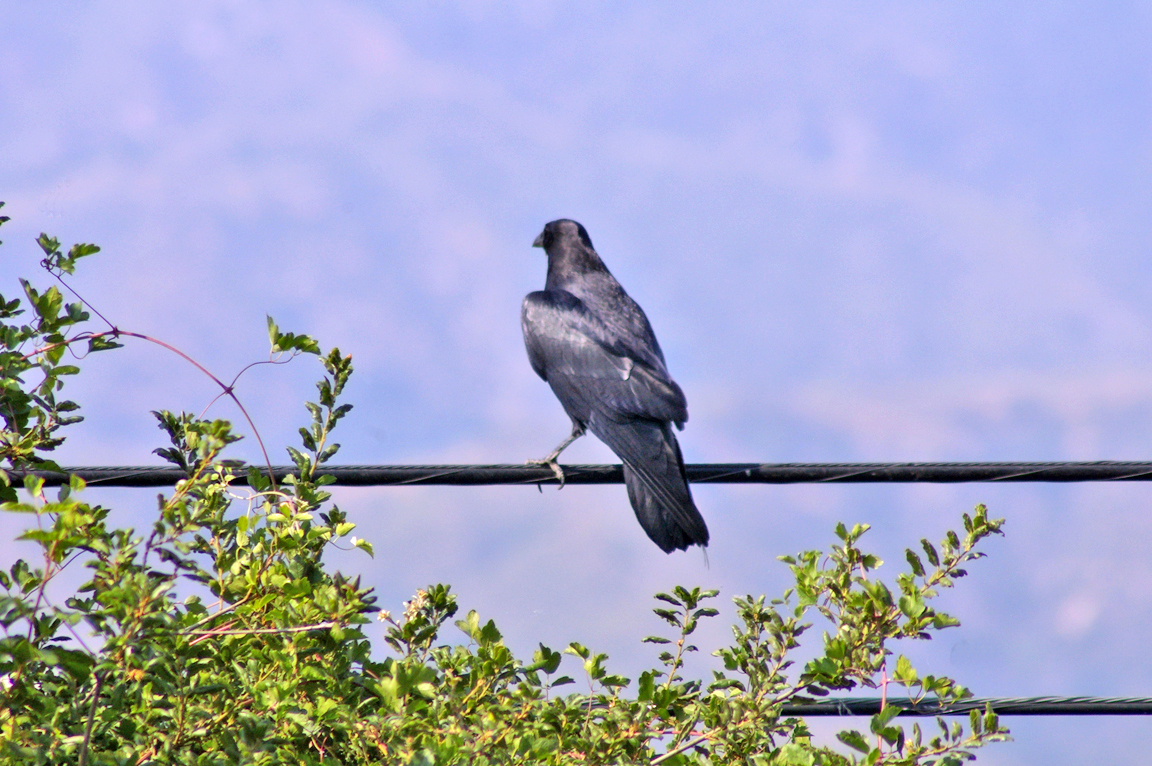
Widespread, common, and obvious, the American Crow is known by most people. What is less well known is how complex its life is. Young crows remain with their parents until they can find a home of their own, and individual relationships may last years.
Interesting Information
-
American Crows congregate in large numbers in winter to sleep in communal roosts. These roosts can be of a few hundred, several thousand, or even up to two million crows. Some roosts have been forming in the same general area for well over 100 years. In the last few decades some of these roosts have moved into urban areas where the noise and mess cause conflicts with people.
-
Young American Crows do not breed until they are at least two years old, and most do not breed until they are four or more. In most, but not all, populations the young stay with their parents and help them raise young in subsequent years. Families may include up to 15 individuals and contain young from five different years.
-
The American Crow appears to be the biggest victim of West Nile virus, a disease recently introduced to North America. Crows die within one week of infection, and few seem able to survive exposure. No other North American bird is dying at the same rate from the disease, and the loss of crows in some areas has been severe.
-
In some areas, the American Crow has a double life. It maintains a territory year-round in which all members of its extended family live and forage together. But during much of the year, individual crows leave the home territory periodically. They join large flocks foraging at dumps and agricultural fields, and sleep in large roosts in winter. Family members go together to the flocks, but do not stay together in the crowd. A crow may spend part of the day at home with its family in town and the rest with a flock feeding on waste grain out in the country.
-
Despite being a common exploiter of roadkill, the American Crow is not specialized to be a scavenger, and carrion is only a very small part of its diet. Its stout bill is not strong enough to break through the skin of even a gray squirrel. It must wait for something else to open a carcass or for the carcass to decompose and become tender enough to eat.
Description
Adult Description
-
Size: 40-53 cm (16-21 in)
-
Wingspan: 85-100 cm (33-39 in)
-
Weight: 316-620 g (11.15-21.89 ounces)
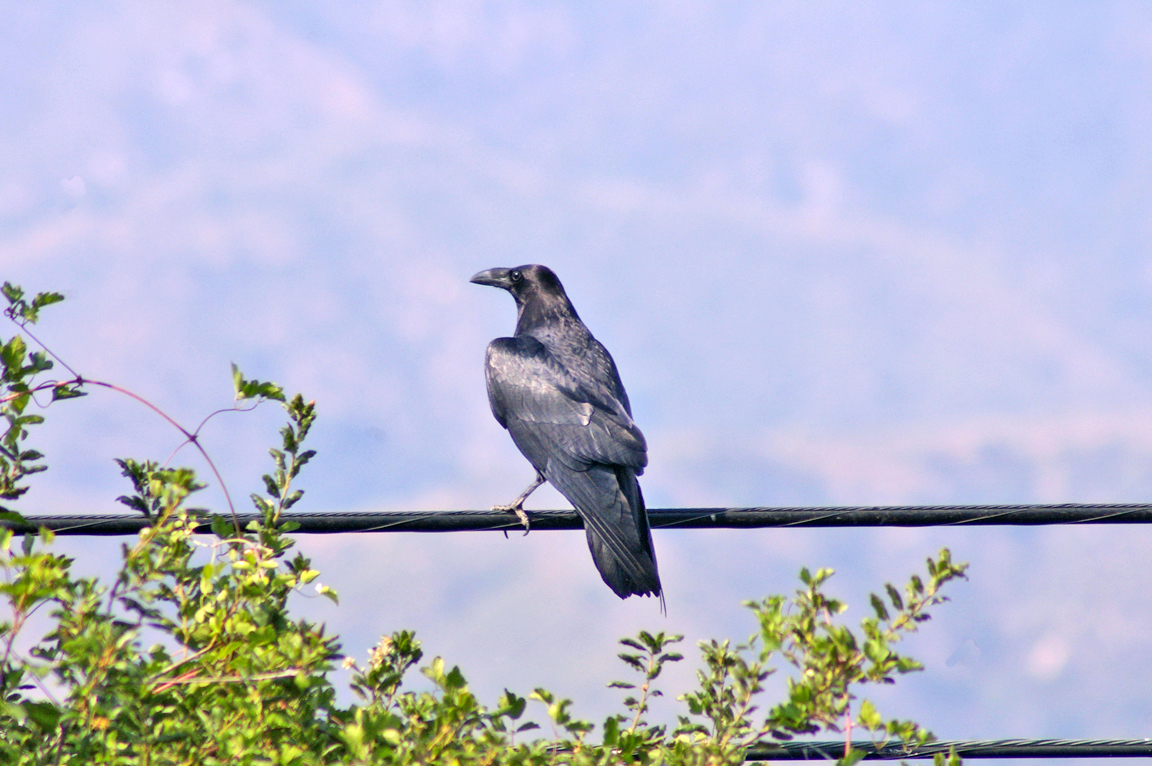
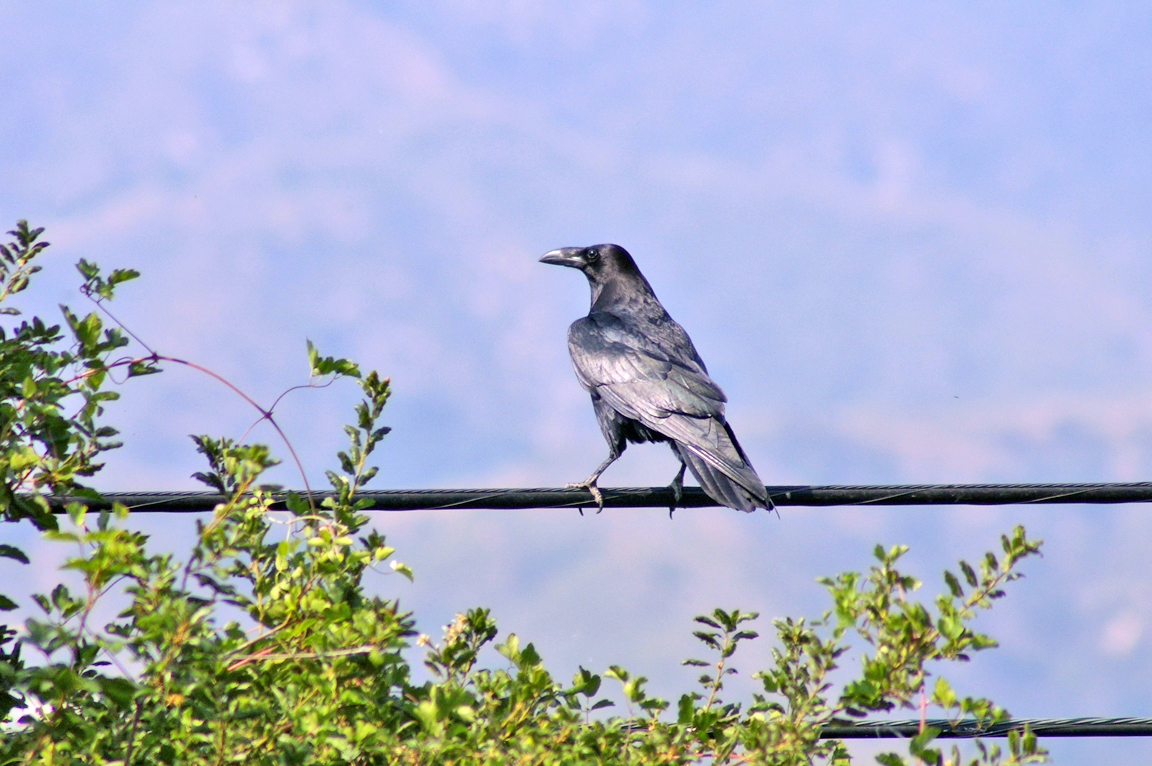
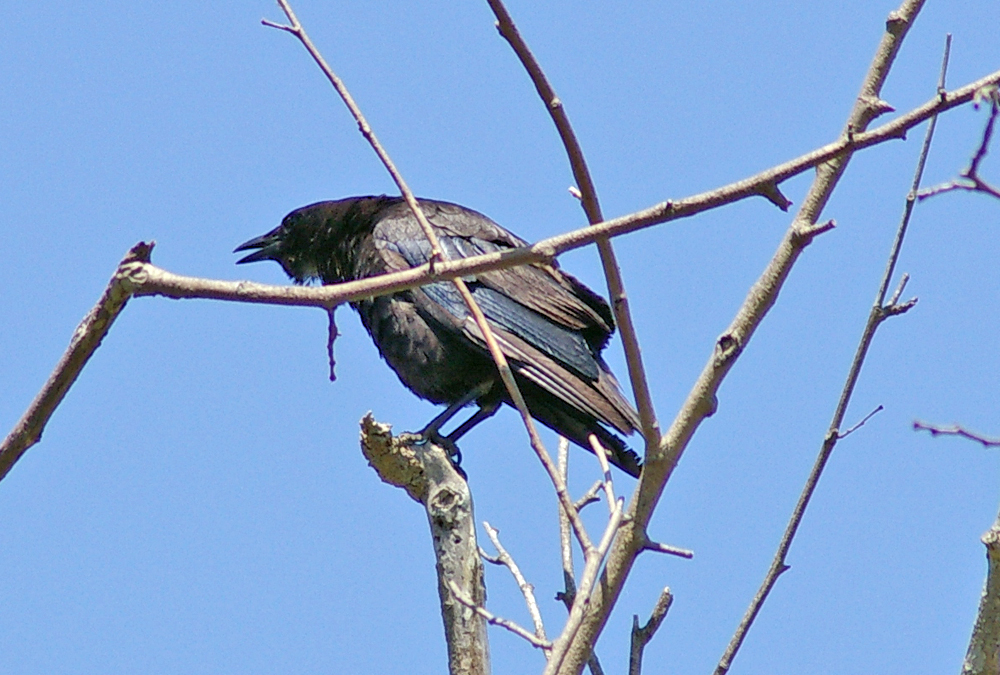
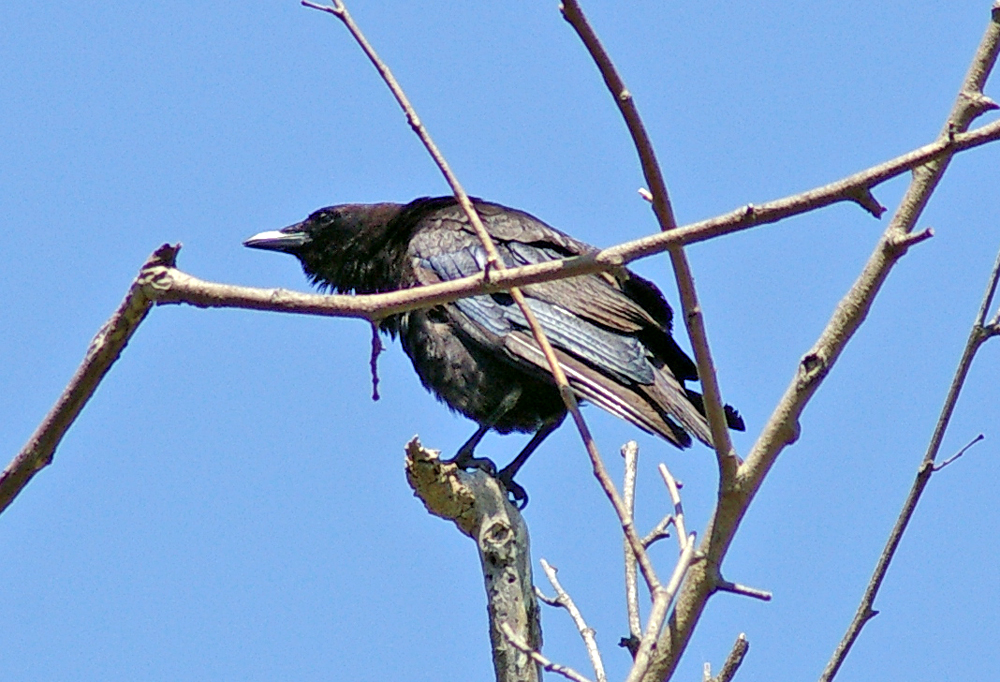
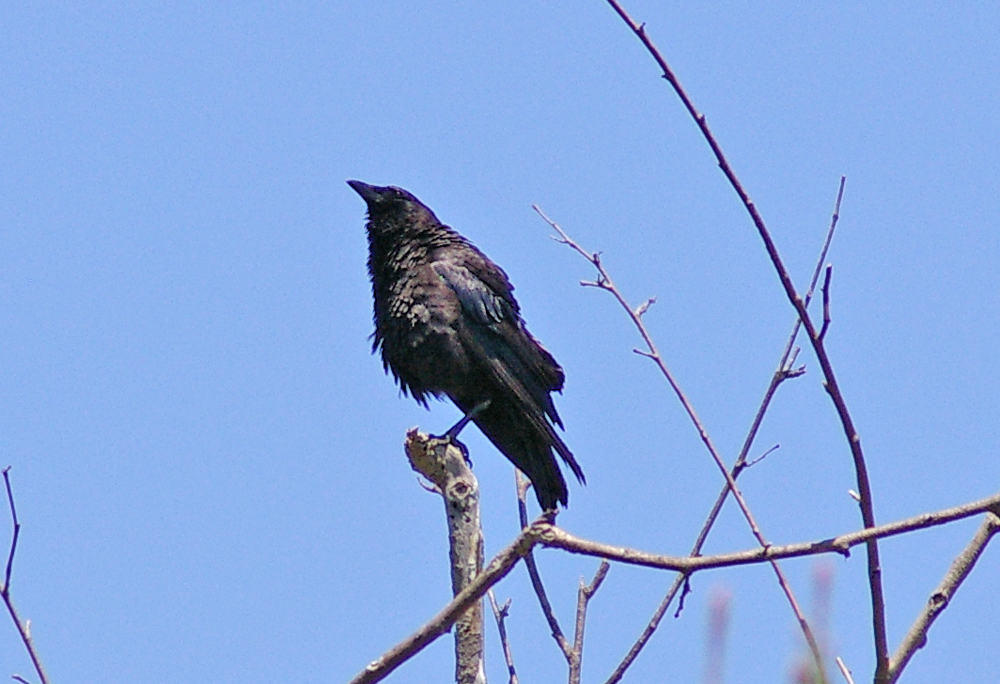
Eyes dark brown.
Legs black.
All feathers black glossed with violet.
Sex Differences
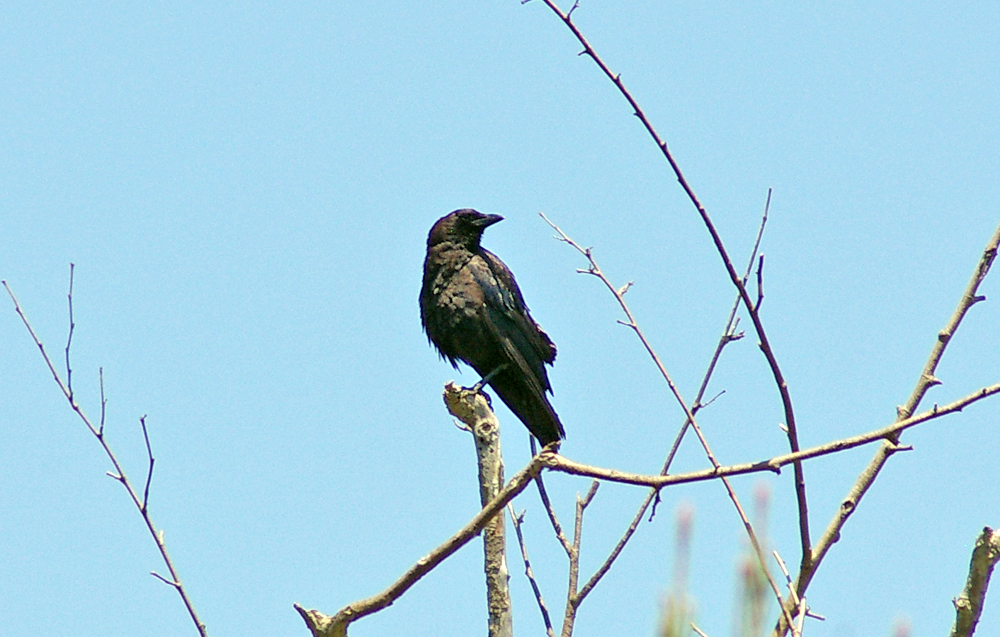
Sexes alike in plumage, but male averages slightly larger.
Immature
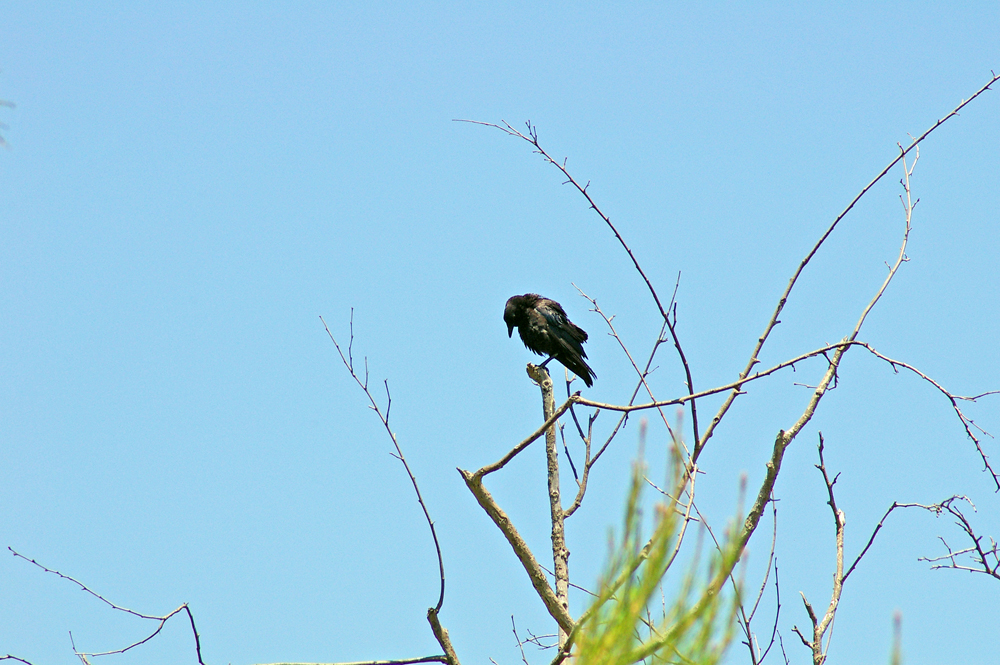
Juvenile similar to adult, but head feathers not glossy and more fluffy, inside of mouth red. Immature wing and tail feathers becoming brownish over the course of the first year.
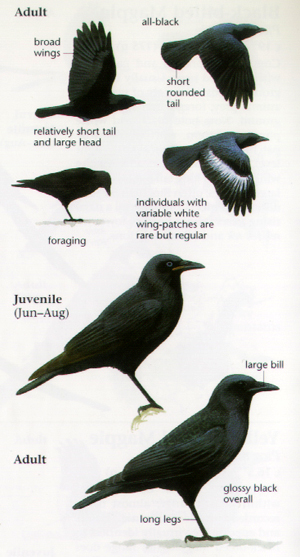
Photo taken from: The Sibley Field Guide by David Allen Sibley
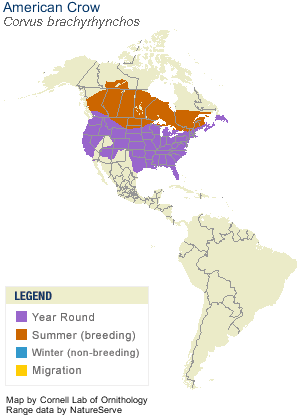
© 2003 Cornell Lab of Ornithology
|
Habitat |
|
Variety of habitats. Requires open ground for feeding and scattered trees for roosting, nesting, and refuge. |
|
Behavior |
|
Forages mostly on ground. Pecks from surface and digs through litter. Caches food for later use. |
|
Food |
|
Omnivorous. Waste grain, earthworms, insects, carrion, garbage, seeds, amphibians, reptiles, mice, fruit, bird eggs and nestlings. |
Taxonomy
| Kingdom: | Animalia |
| Phylum: | Chordata |
| Subphylum: | Vertebrata |
| Class: | Aves |
| Order: | Apodiformes |
| Family: | Trochilidae |
| Subfamily: | Trochilinae |
| Genus: | Selasphorus |
| Species: | Selasphorus sasin |
| Subspecies: | Selasphorus sasin sasin |
| Selasphorus sasin sedentarius |
Similar Species |
|
|
Bird Sound |
|
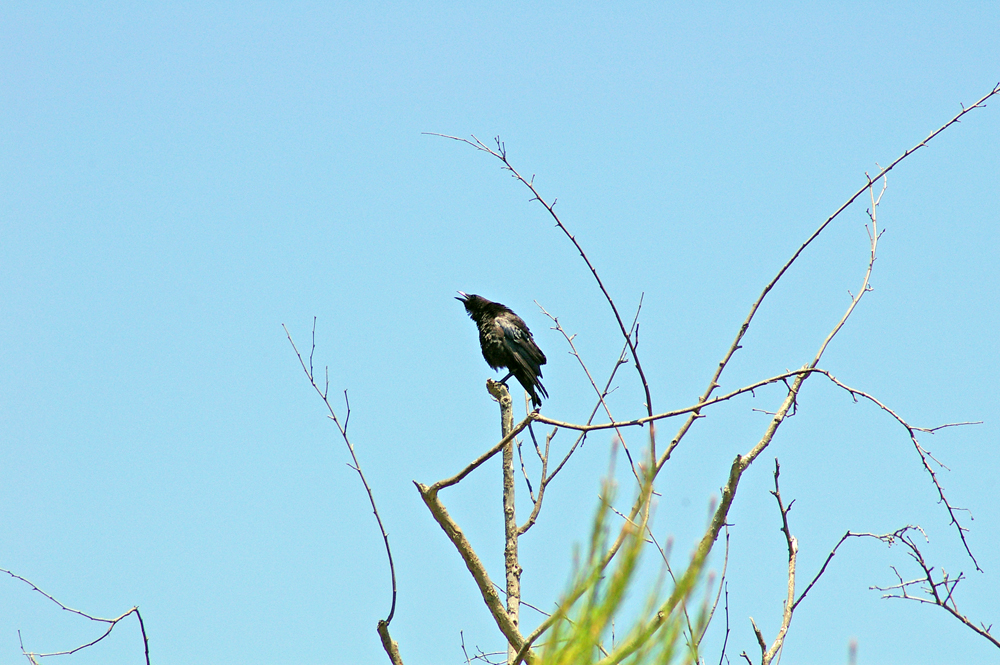
Common call a harsh "caw." Also a variety of rattles, coos, and clear notes. |
|
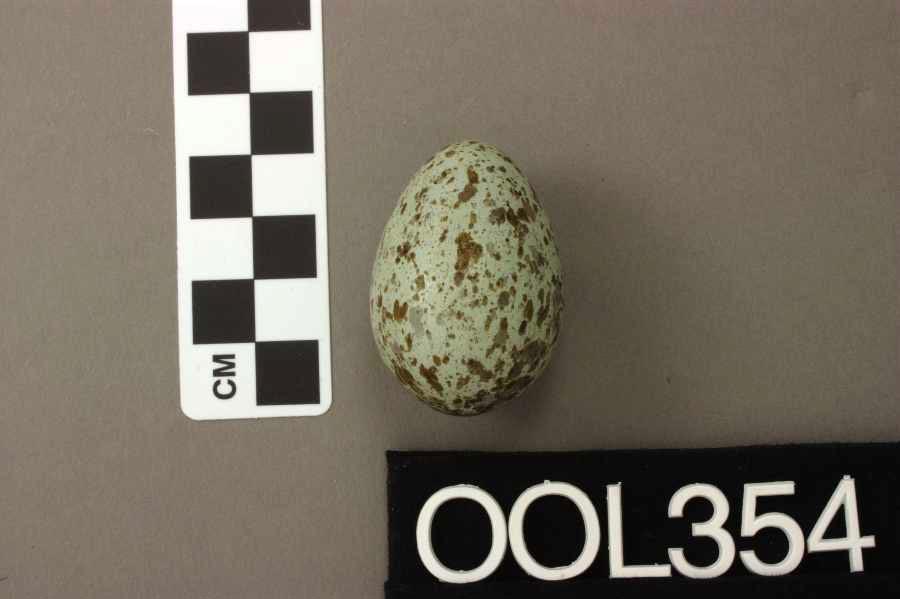
Eggs look like this |
|
Photo taken from: ARCTOS Collaborative Collection Management Solution |
Videos
American Crow
Fighting over Peanuts
American Crow
Collecting Peanuts



.png)


|
|
Sources Used To Construct This Page |
|||
|
Verbeek, N. A. M., and C. Caffrey. 2002. American Crow (Corvus brachyrhynchos). In The Birds of North America, No. 647 (A. Poole and F. Gill, eds.). The Birds of North America, Inc., Philadelphia, PA. |
||||
 |
 |
 |
 |
|
| All photos and videos © Rick Swartzentrover - Free for non-profit use. | ||||