|
|
|
 |
American Robin
|
| Turdus migratorius | |
The American Robin is a familiar sight pulling up worms on suburban lawns. Although it's at home breeding in deep, mature forests, the robin is the most widespread thrush in North American thanks to a tolerance for human-modified habitats.
Interesting Information
-
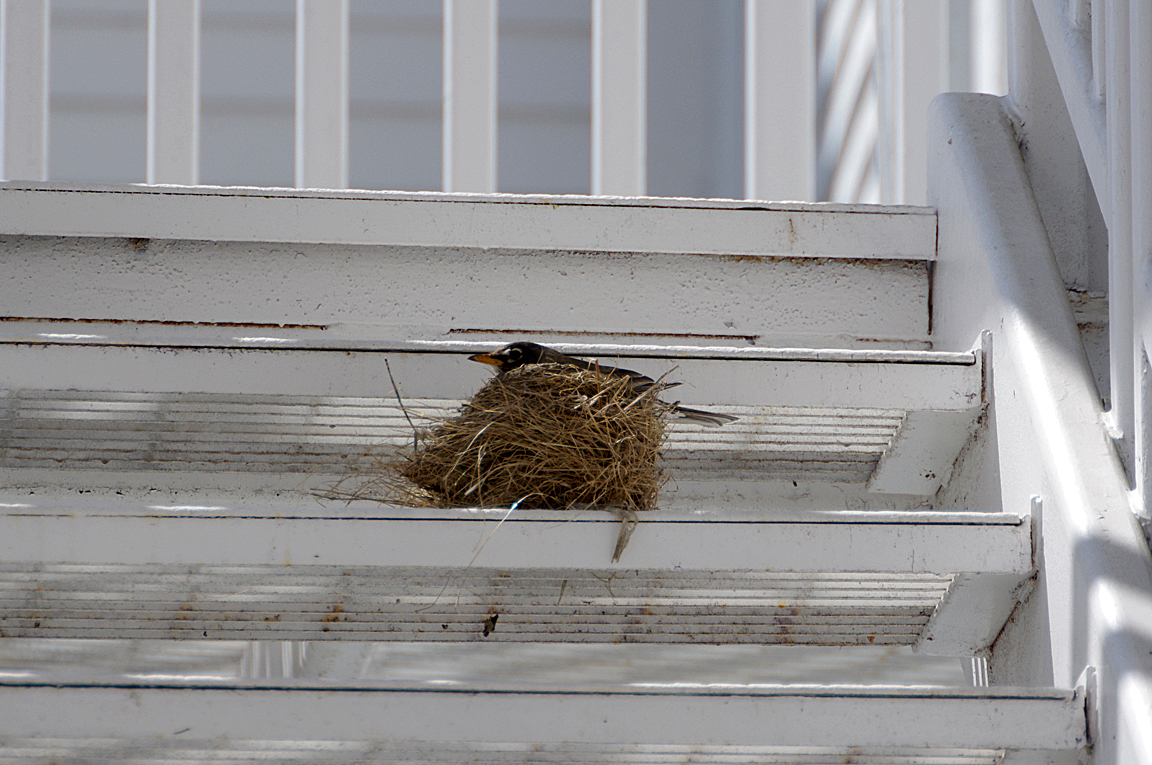
Hundreds of thousands of American Robins can gather in a single winter roost. In summer, females sleep on the nests and males congregate in roosts. As young robins become independent, they join the males in the roost. Female adults go to the roosts only after they have finished nesting.
-
The American Robin eats both fruit and invertebrates. Earthworms are important during the breeding season, but fruit is the main diet during winter. Robins eat different types of food depending on the time of day; they eat earthworms early in the day and more fruit later in the day. Because the robin forages largely on lawns, it is vulnerable to pesticide poisoning and can be an important indicator of chemical pollution.
-
An American Robin can produce three successful broods in one year. On average, though, only 40 percent of nests successfully produce young. Only 25 percent of those fledged young survive to November. From that point on, about half of the robins alive in any year will make it to the next. Despite the fact that a lucky robin can live to be 14 years old, the entire population turns over on average every six years.
-
Although the appearance of a robin is considered a harbinger of spring, the American Robin actually spends the winter in much of its breeding range. However, because they spend less time in yards and congregate in large flocks during winter, you're much less likely to see them. The number of robins present in the northern parts of the range varies each year with the local conditions.
Description
Adult Description
-
Size: 20-28 cm (8-11 in)
-
Wingspan: 31-40 cm (12-16 in)
-
Weight: 77 g (2.72 ounces)
-
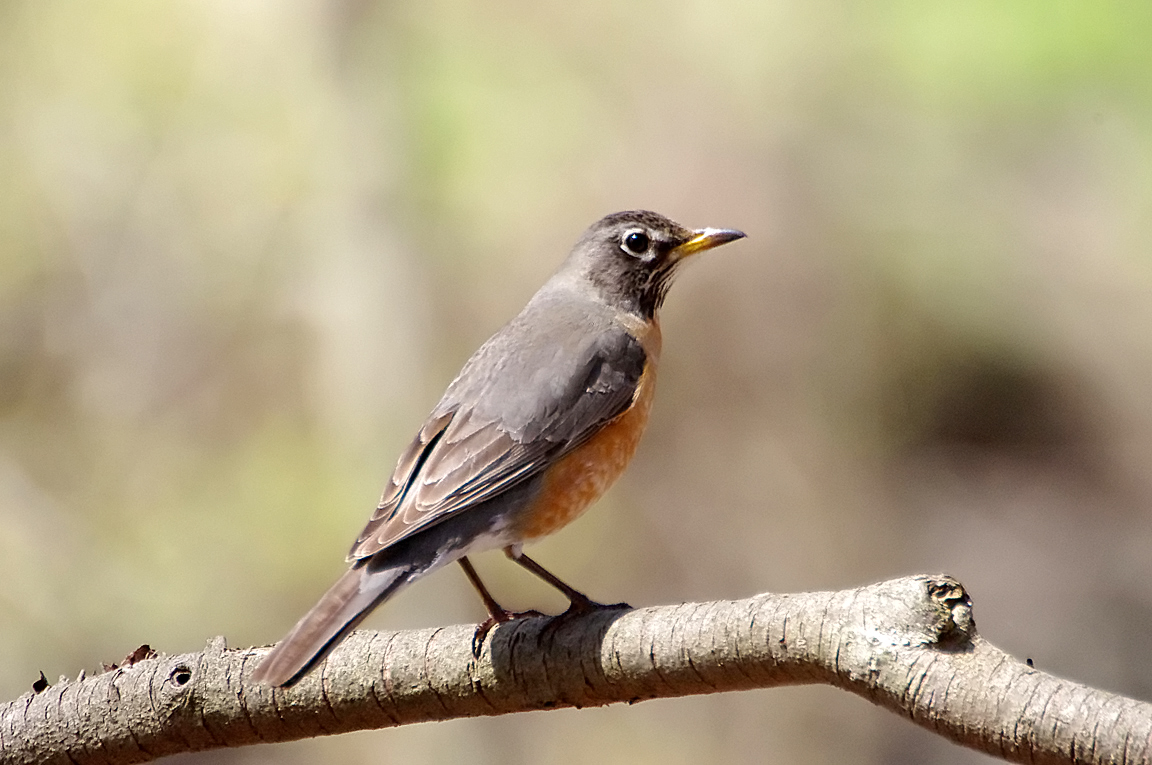
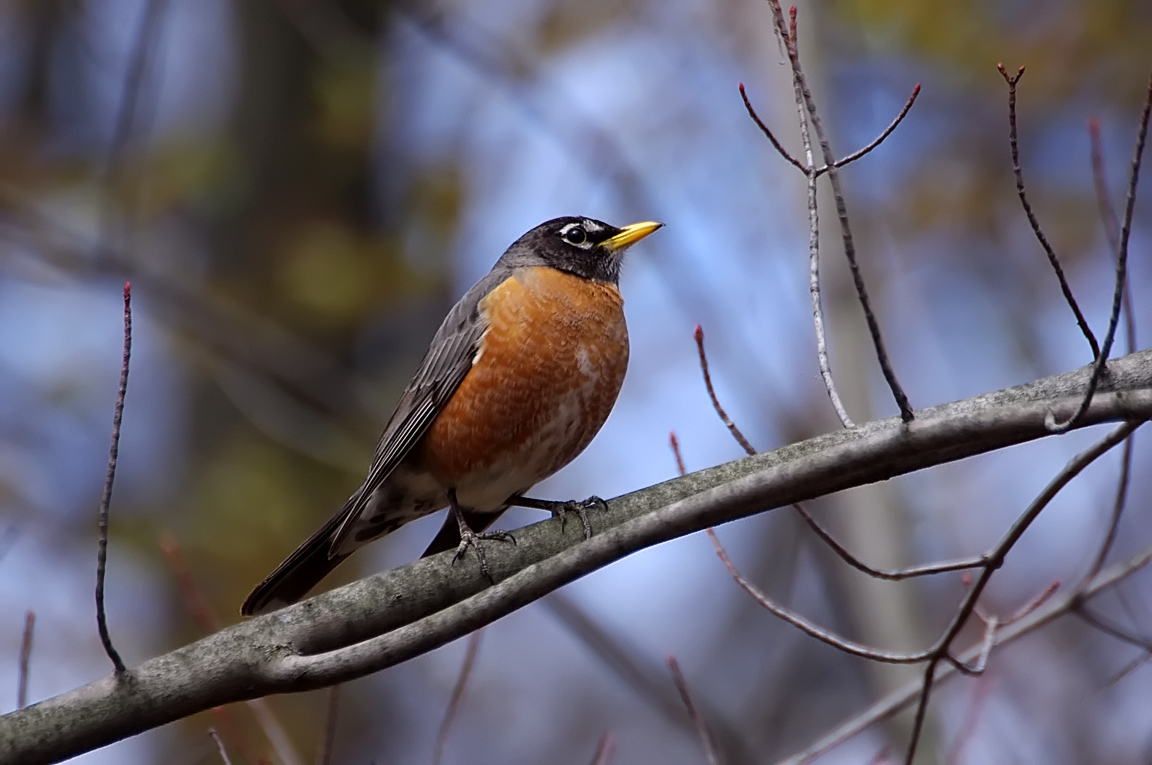
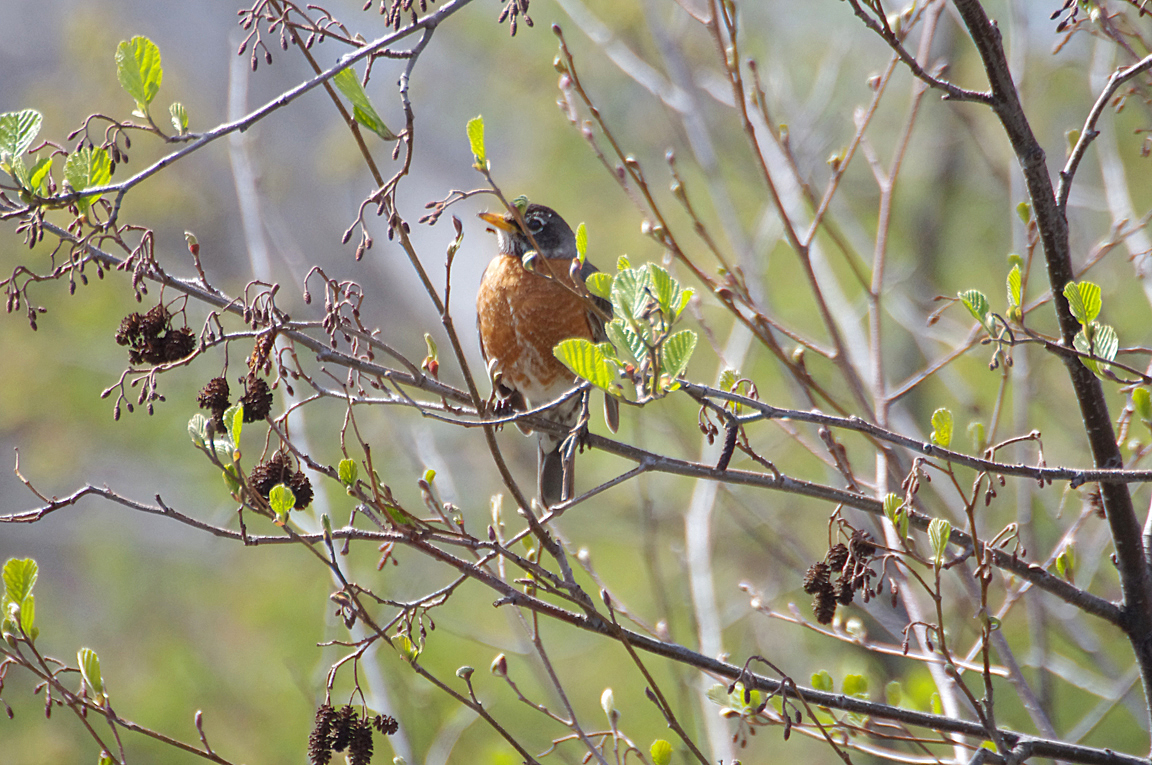
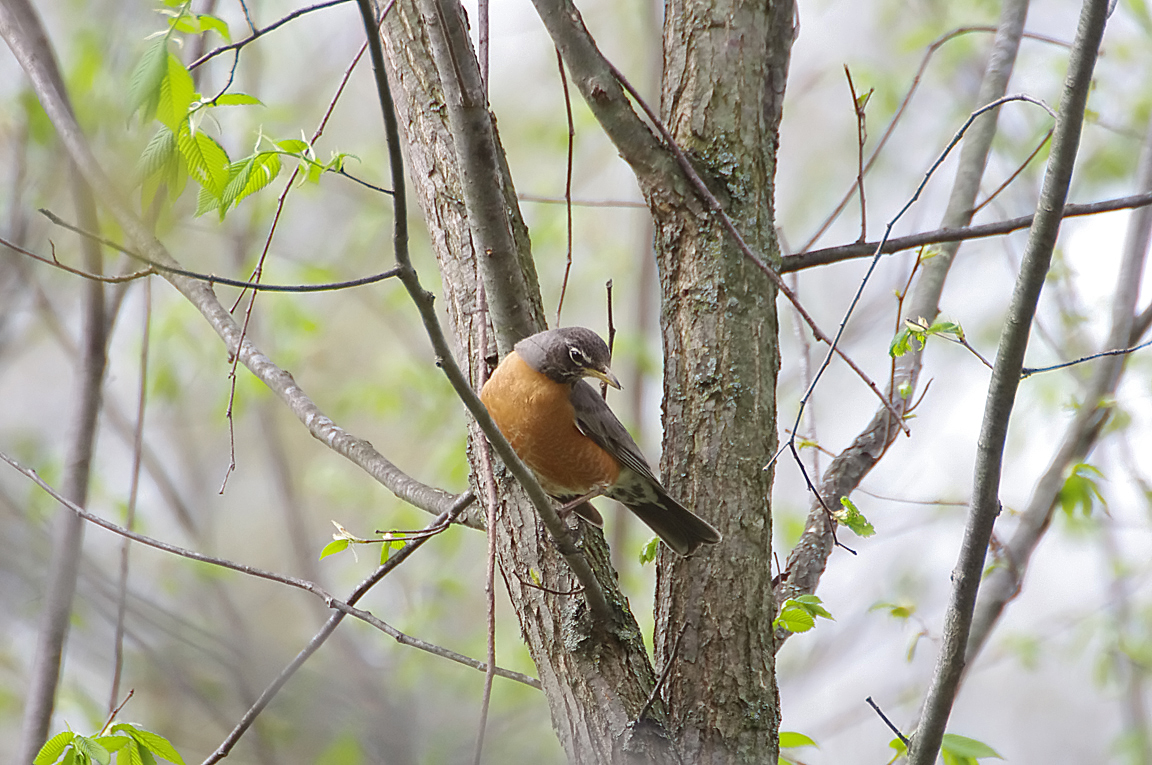
Large thrush.
-
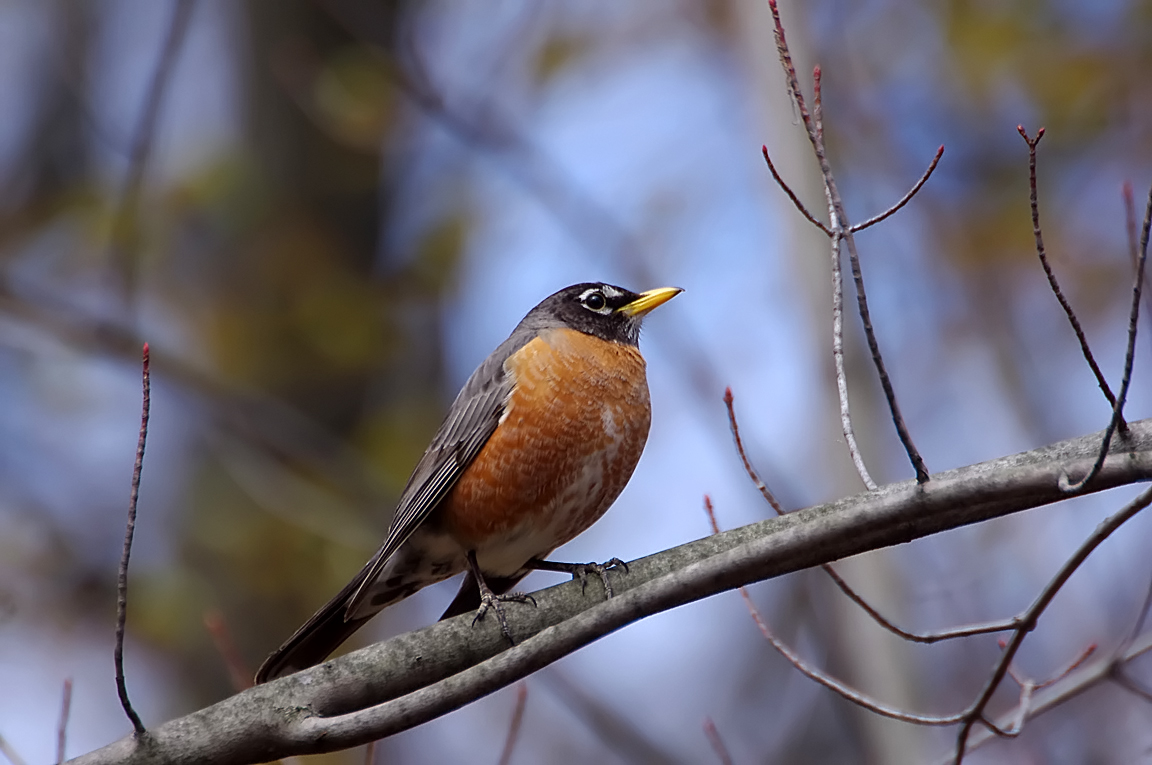
Back and wings gray.
-
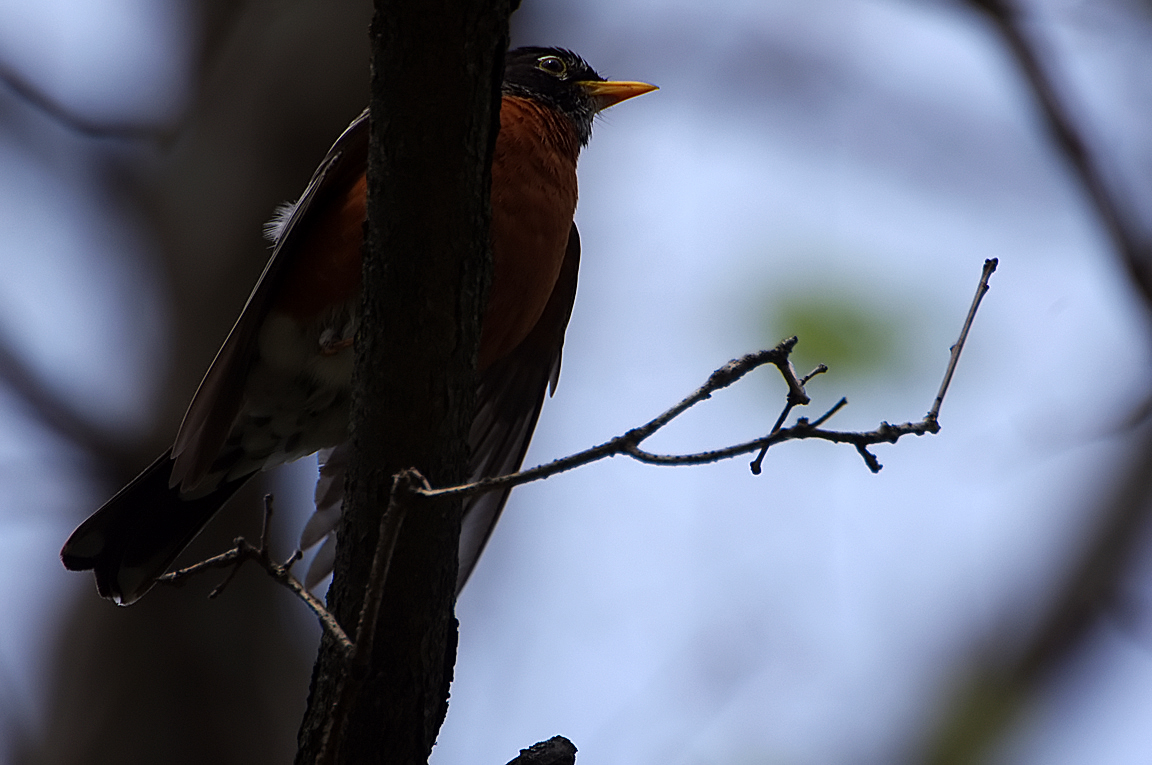
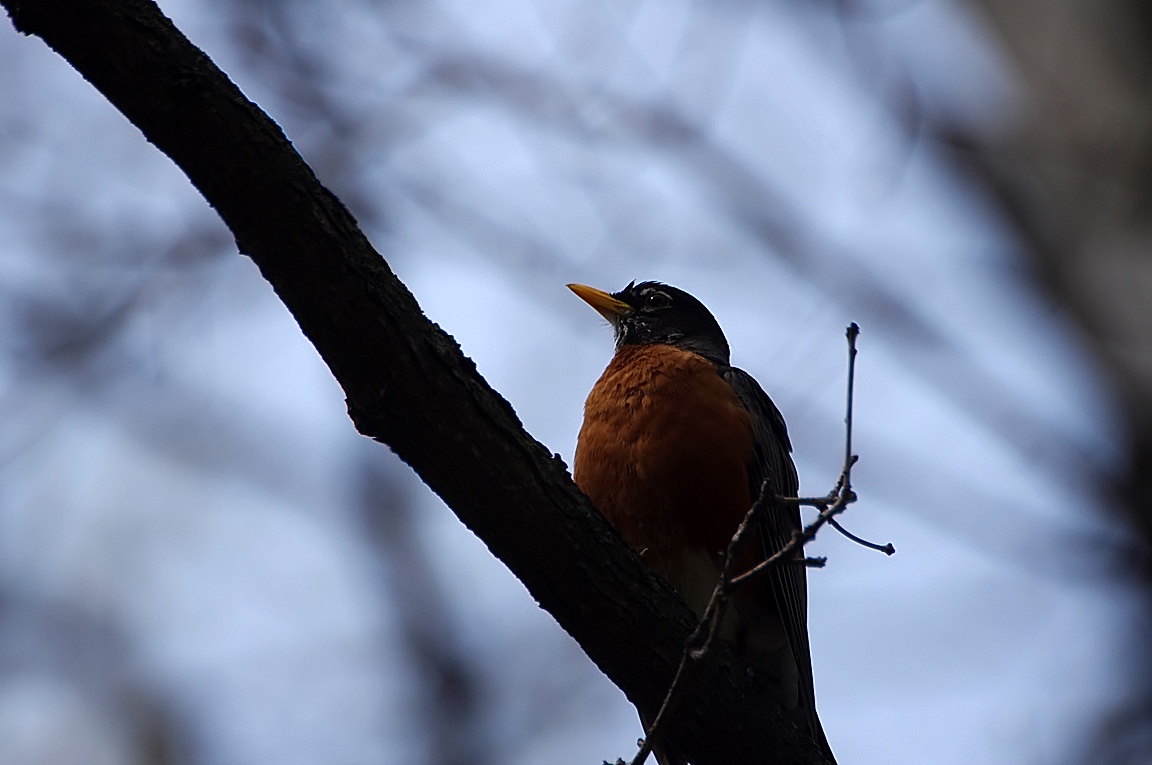
Underparts red.
-
Dark head with white eye crescents.
-
Throat white with black streaks.
-
Lower belly and under tail white.
-
Gray tail moderately long with white spots at corners of outer tail feathers.
-
Bill yellow.
-
Occasionally show pale eyestripes on pale individuals.
Sex Differences
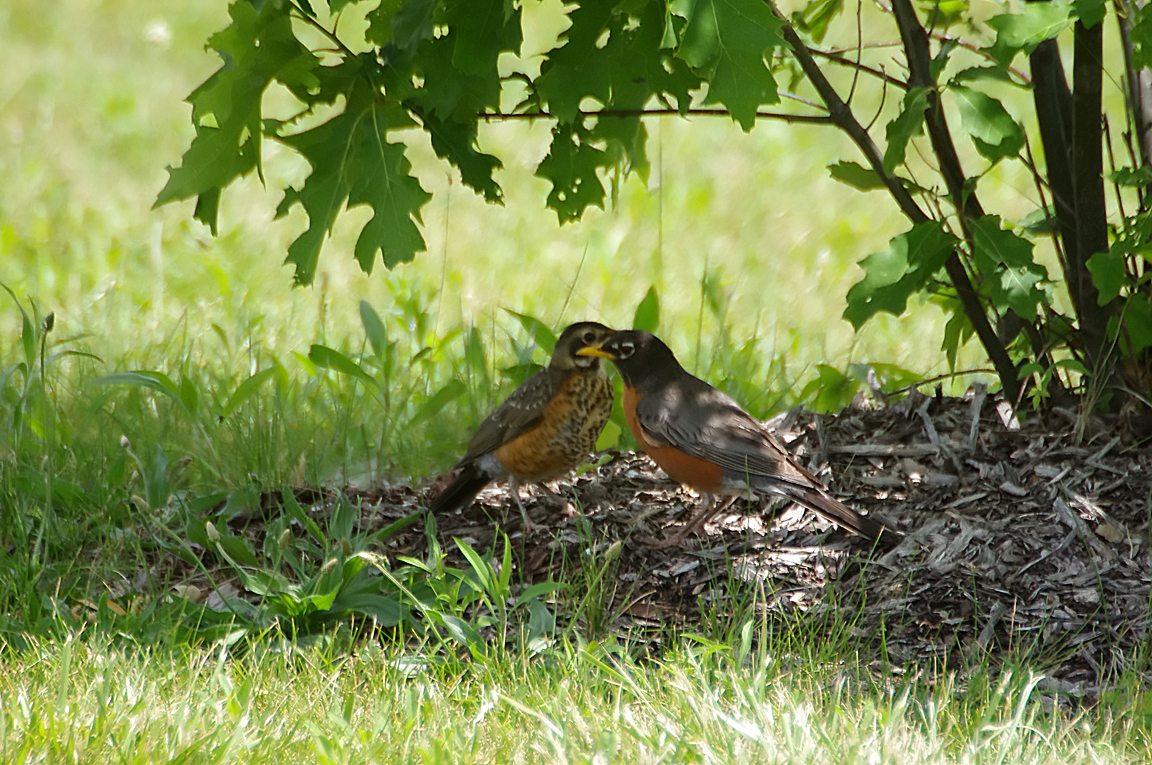
Sexes look similar; female paler, especially on head.
Immature
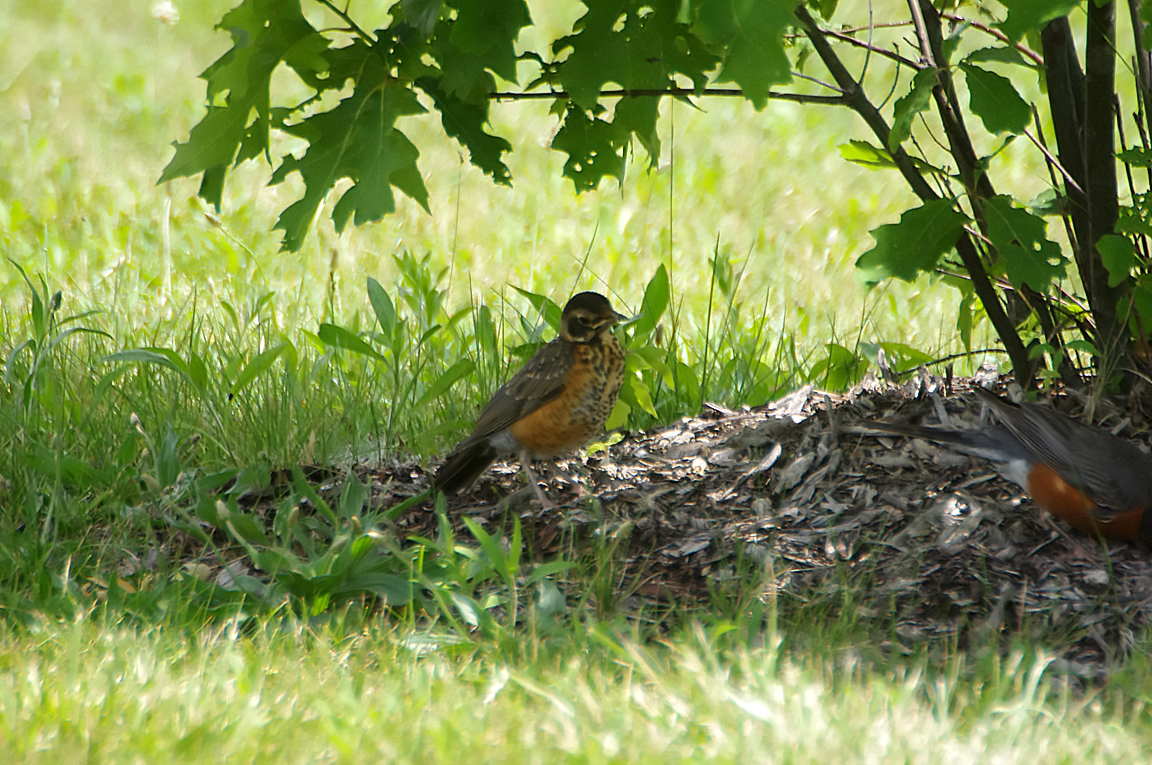
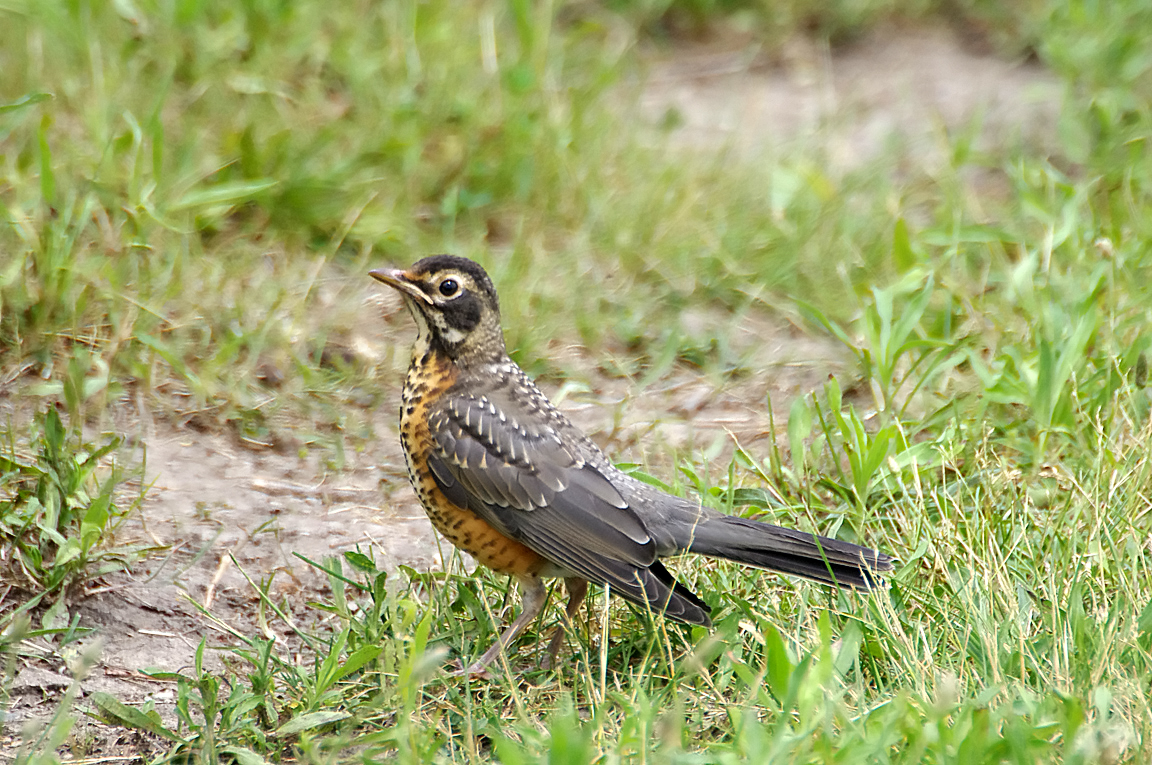
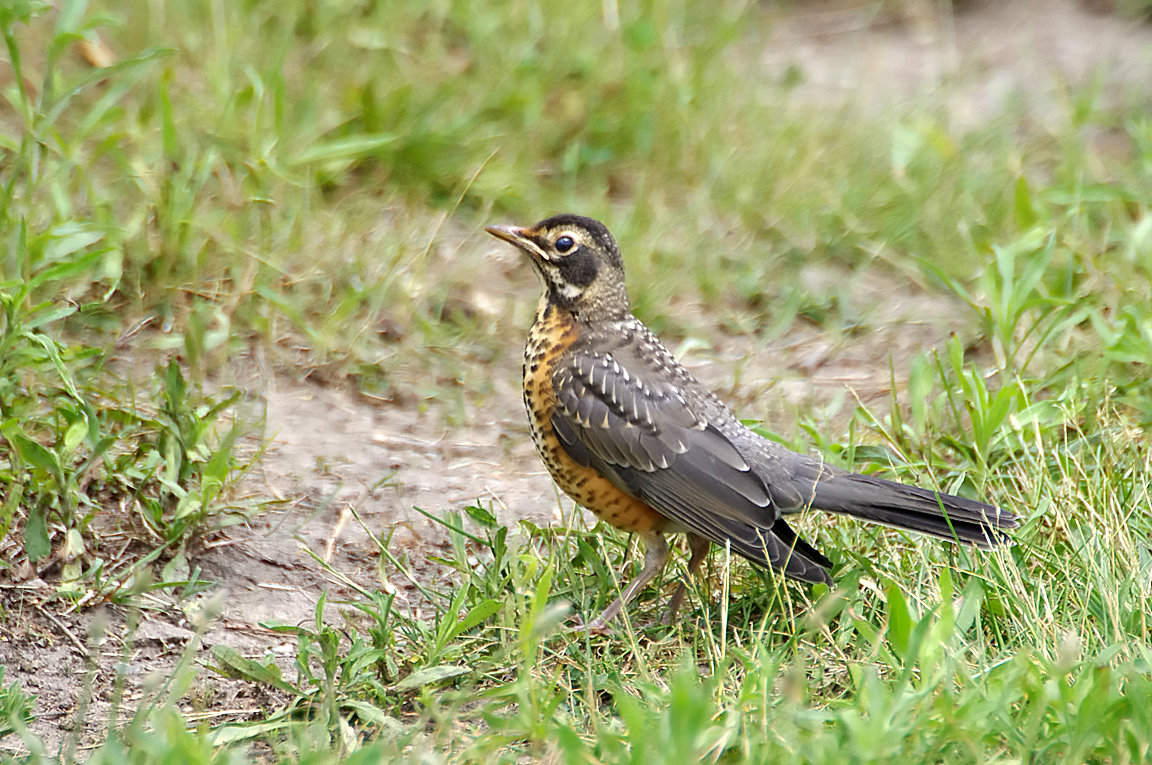
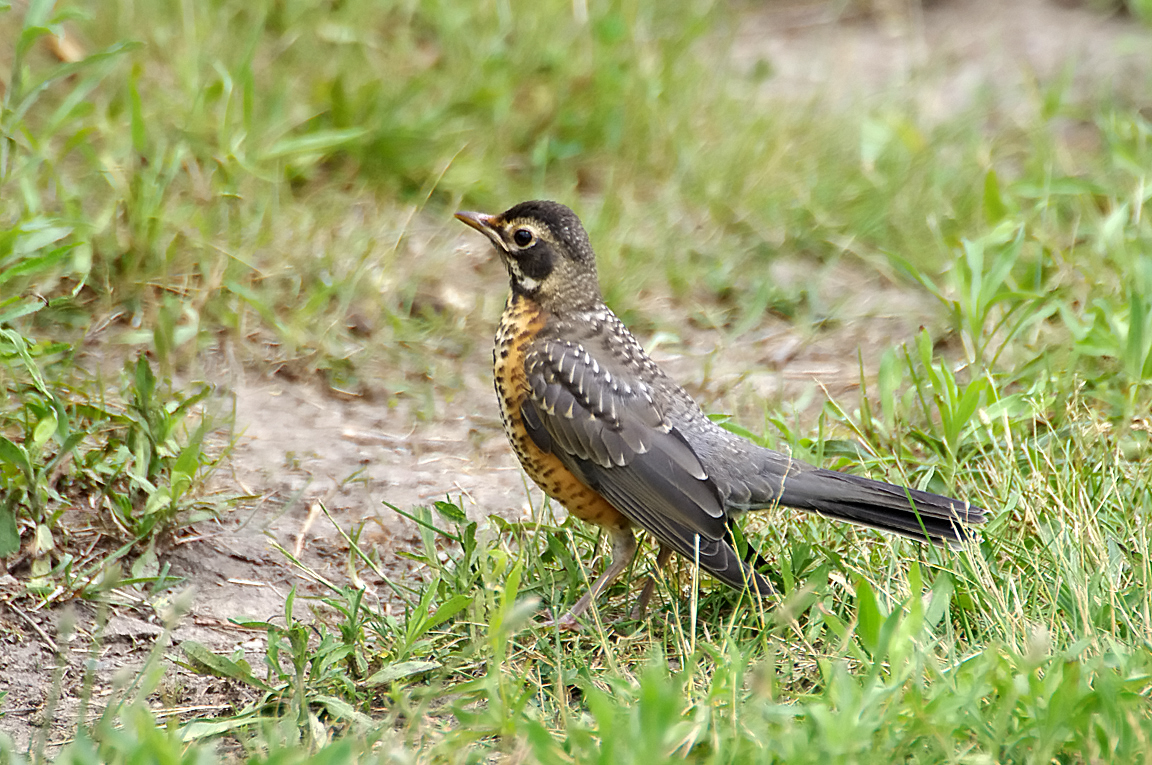
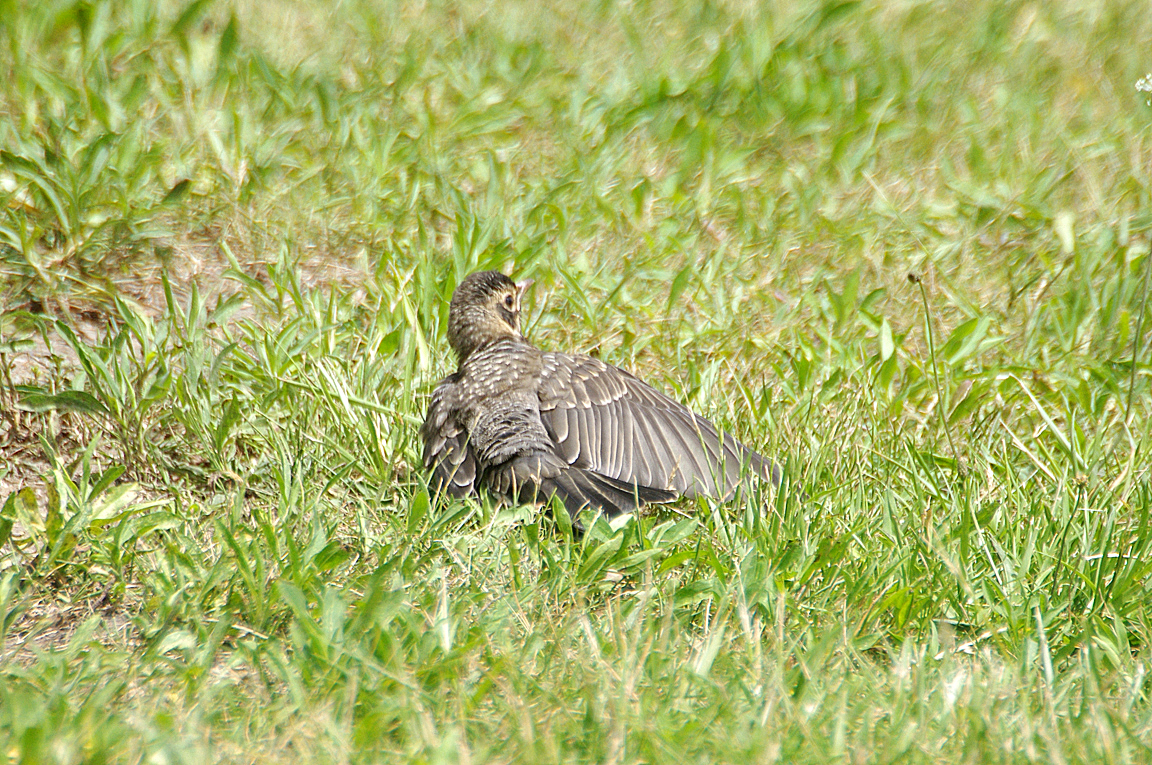
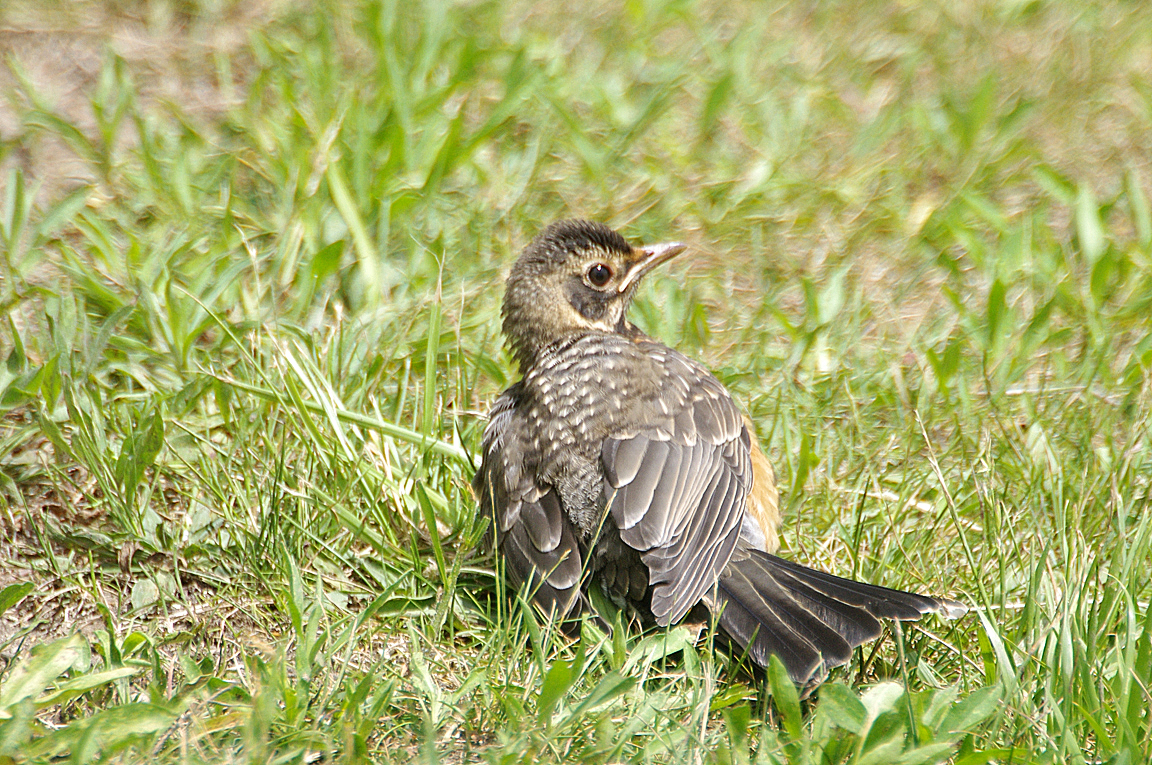
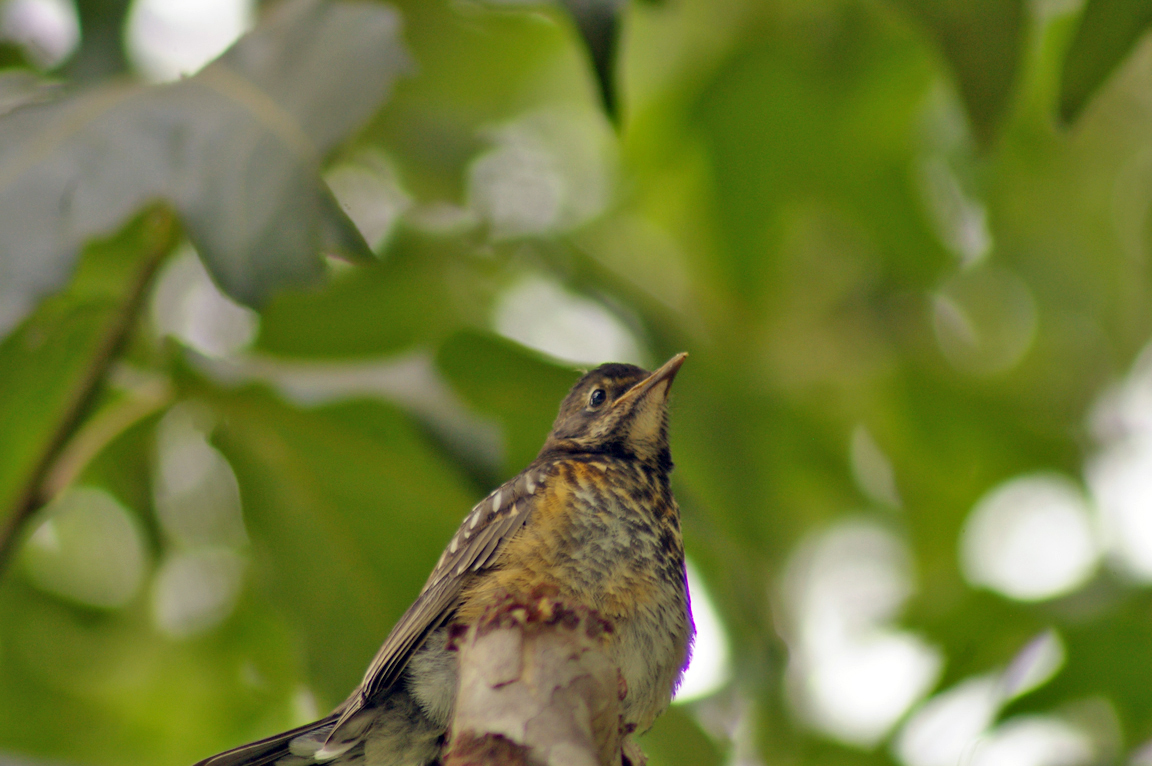
Juvenile looks somewhat similar to adult, but has black spotting on underparts, pale spotting on upperparts, white throat, and paler head.
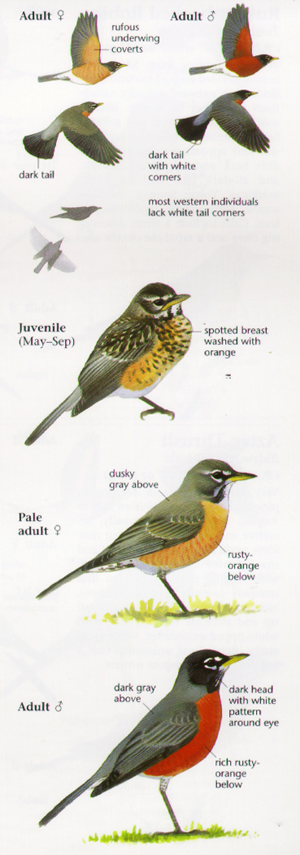
Photo taken from: The Sibley Field Guide by David Allen Sibley
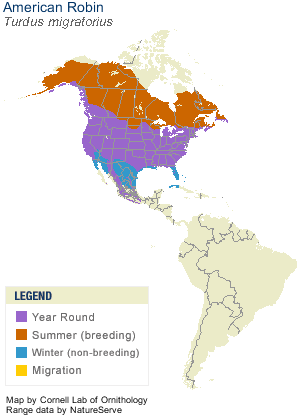
© 2003 Cornell Lab of Ornithology
|
Habitat |
|
|
Behavior |
|
Forages primarily on the ground for soft-bodied invertebrates. Finds worms by sight, then pounces on them and pulls them up. |
|
Food |
|
Invertebrates, especially earthworms, and fruit. |
Taxonomy
| Kingdom: | Animalia |
| Phylum: | Chordata |
| Subphylum: | Vertebrata |
| Class: | Aves |
| Order: | Passeriformes |
| Family: | Turdidae |
| Genus: | Turdus |
| Species: | Turdus migratorius |
| Subspecies: | Turdus migratorius achrusterus |
| Turdus migratorius caurinus | |
| Turdus migratorius confinis | |
| Turdus migratorius migratorius | |
| Turdus migratorius nigrideus | |
| Turdus migratorius propinquus |
Similar Species |
|
|
Bird Sound |
|
Song a musical whistled phrase, "cheerily, cheer up, cheer up, cheerily, cheer up." Call note a sharp "chup." Also a very high-pitched thin whistling note. |
|
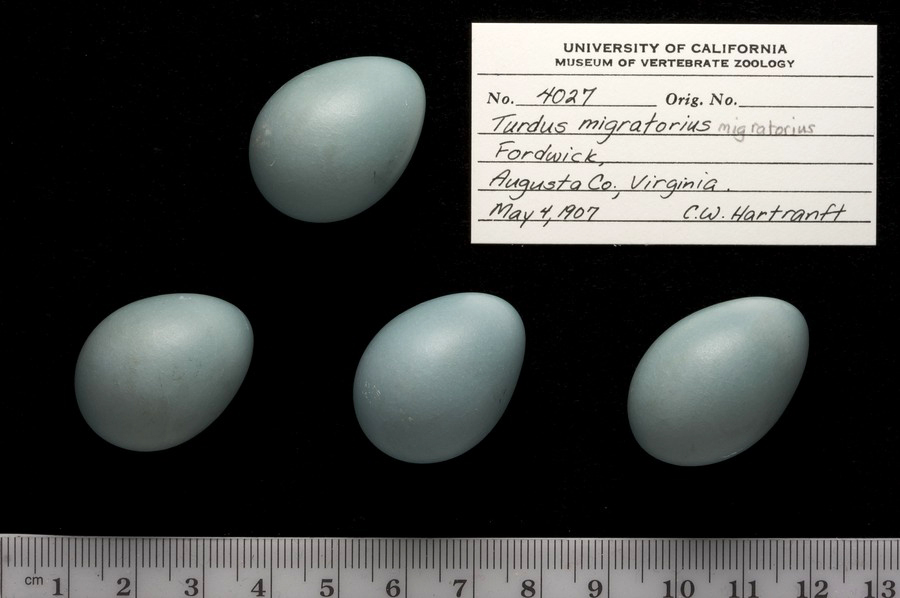
Eggs look like this |
|
Photo taken from: ARCTOS Collaborative Collection Management Solution |



.png)


|
|
Sources Used To Construct This Page |
|||
|
||||
 |
 |
 |
 |
|
| All photos and videos © Rick Swartzentrover - Free for non-profit use. | ||||