|
|
|
 |
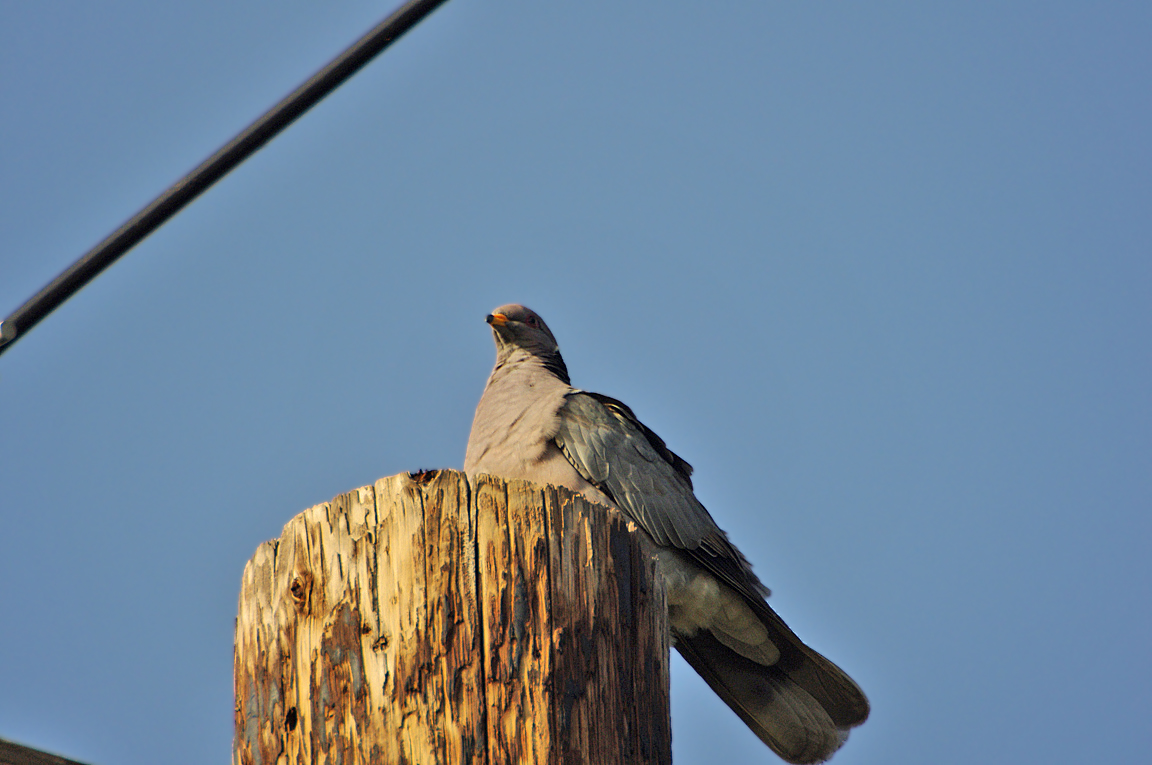
Band-tailed Pigeon
|
| Columba fasciata | |
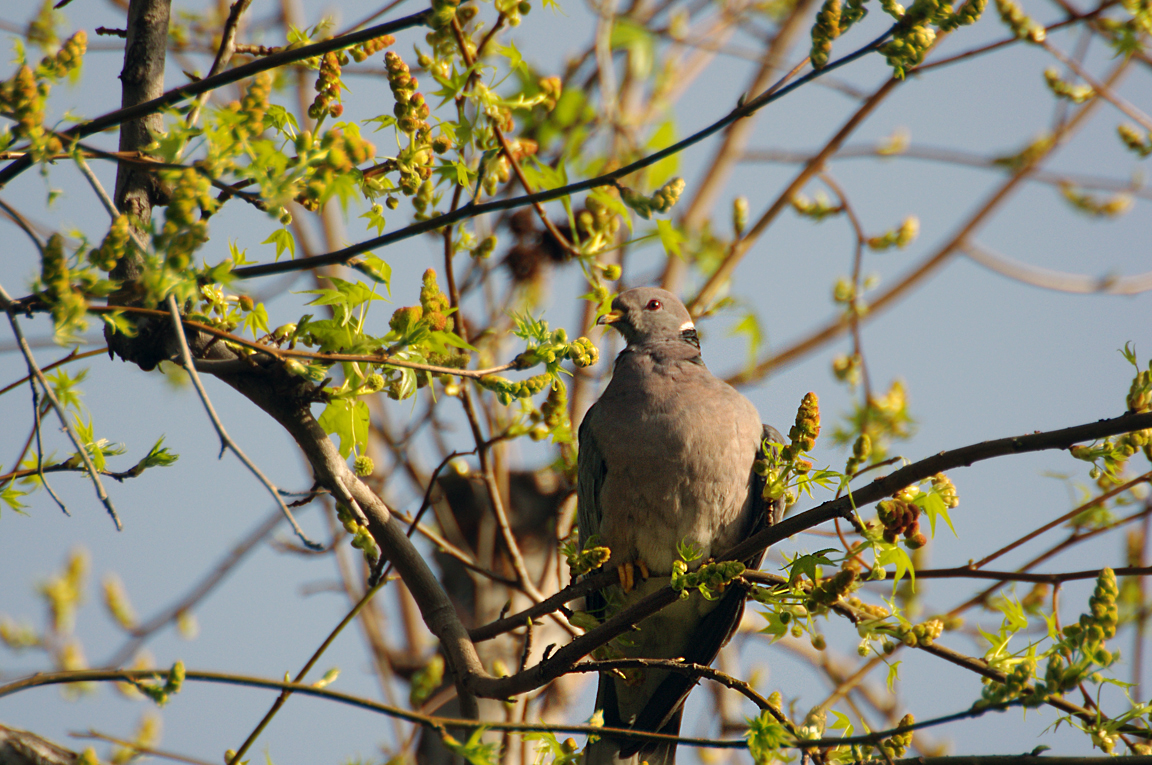
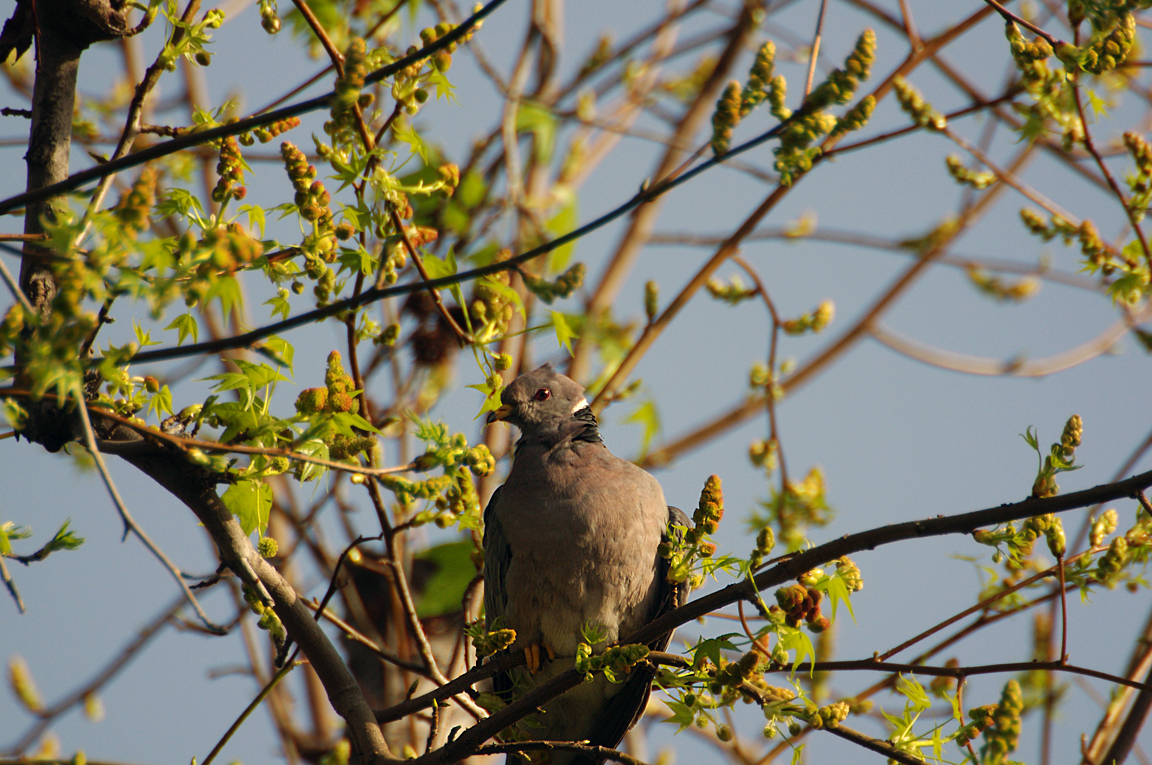
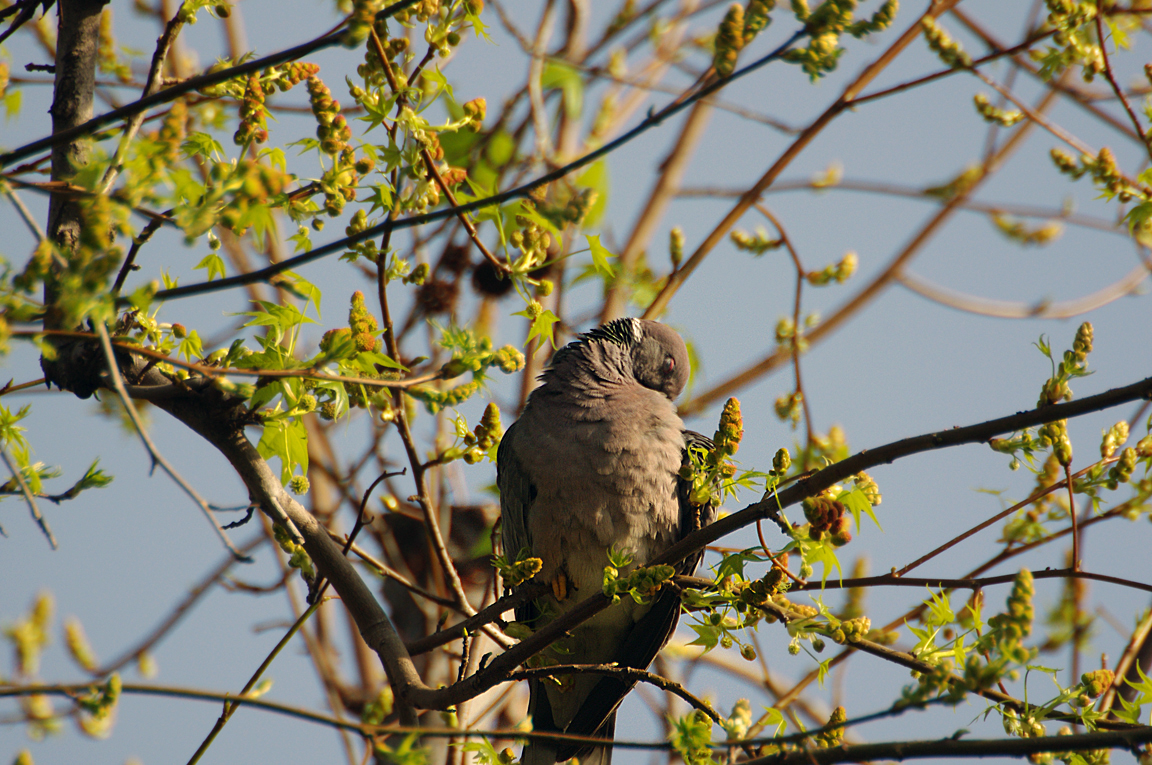
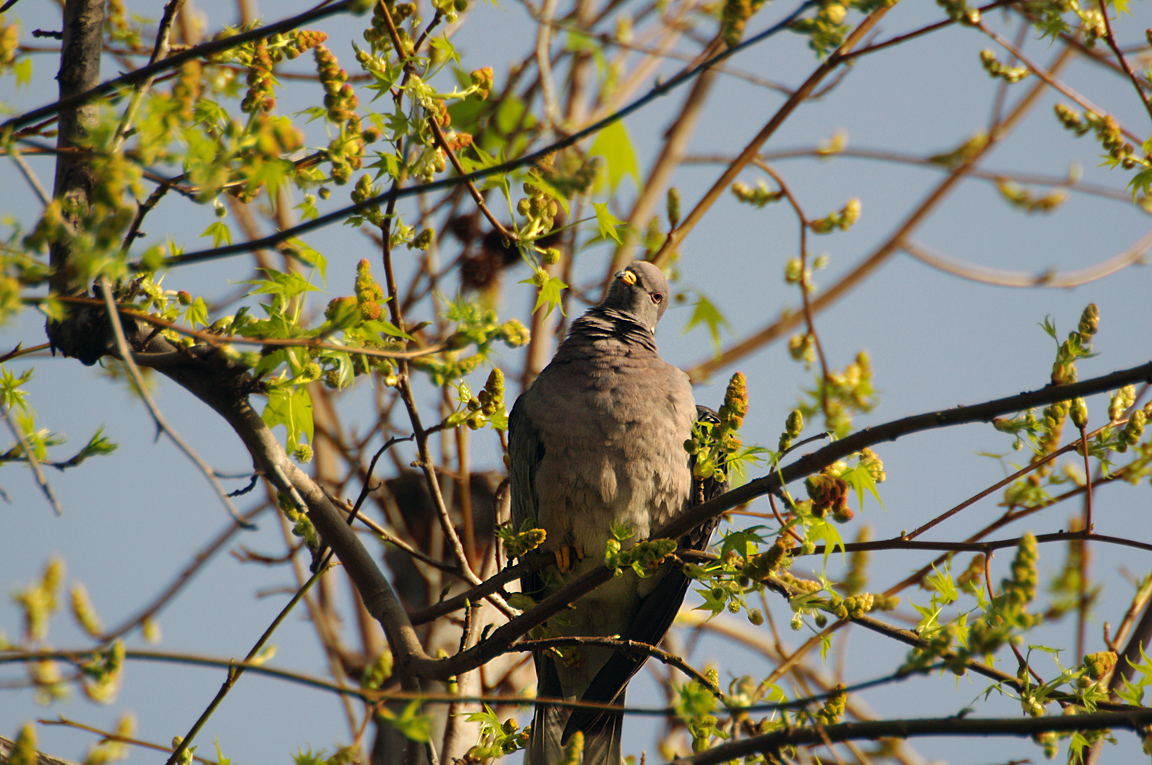
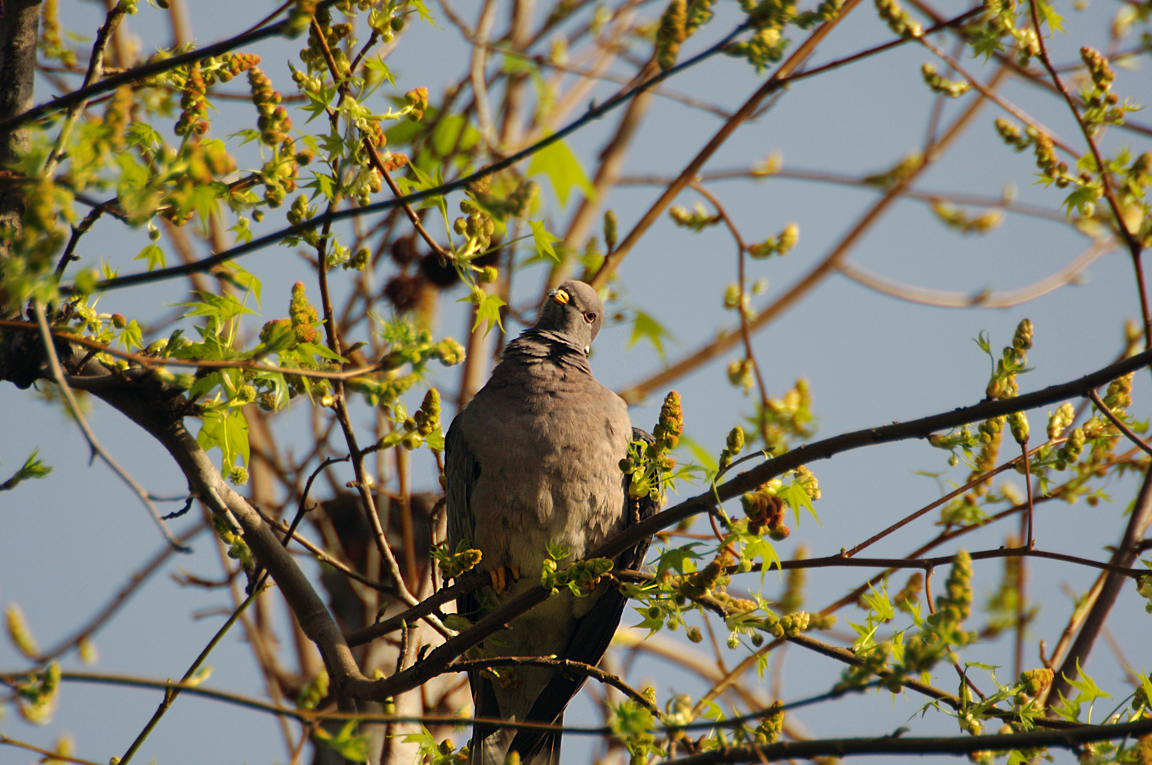
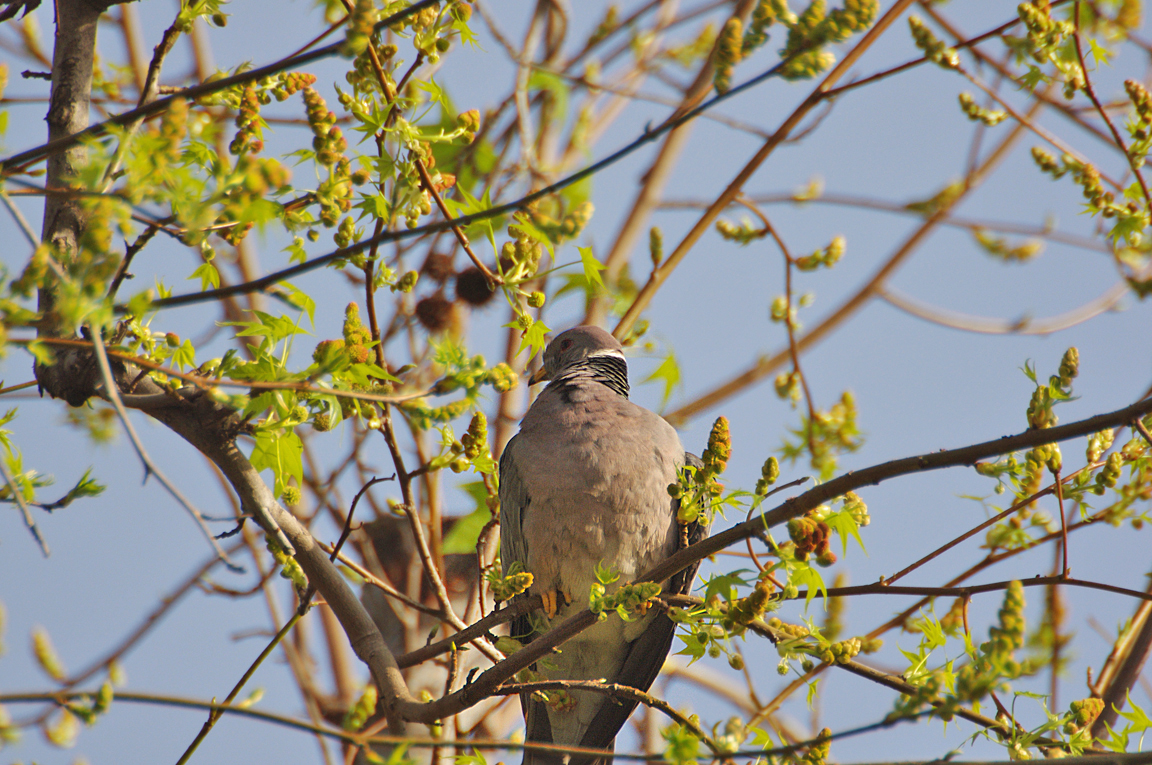
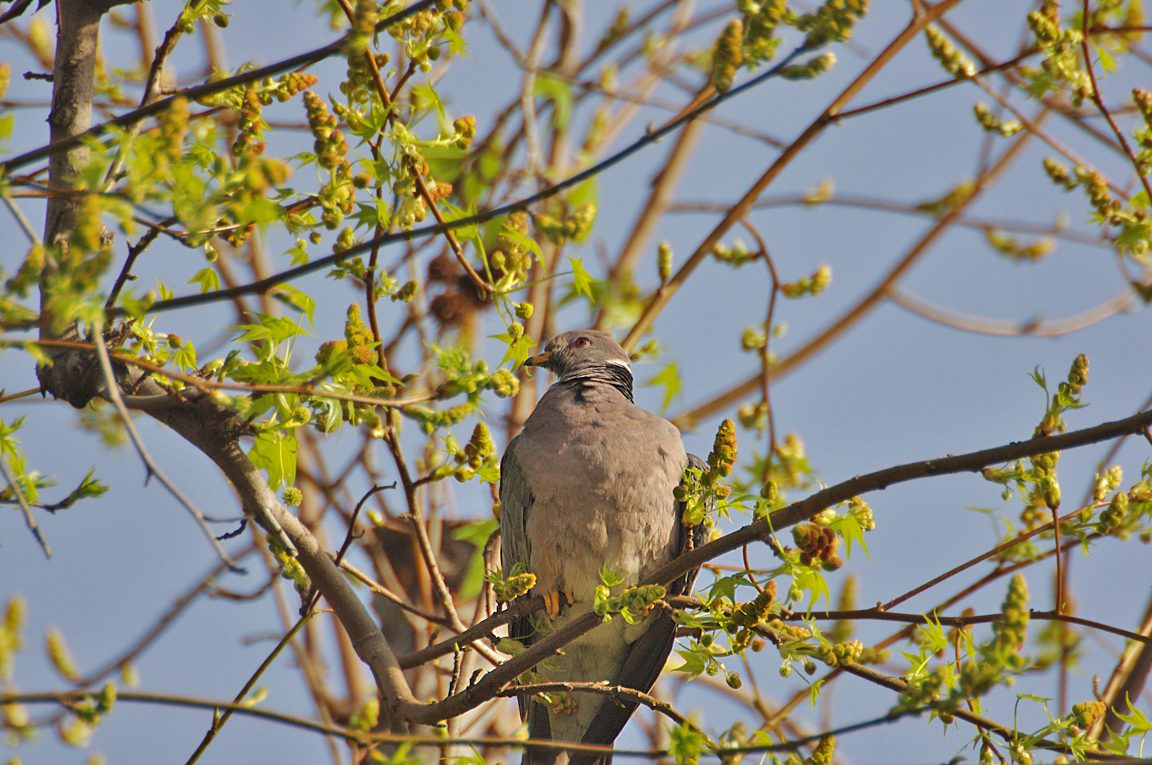
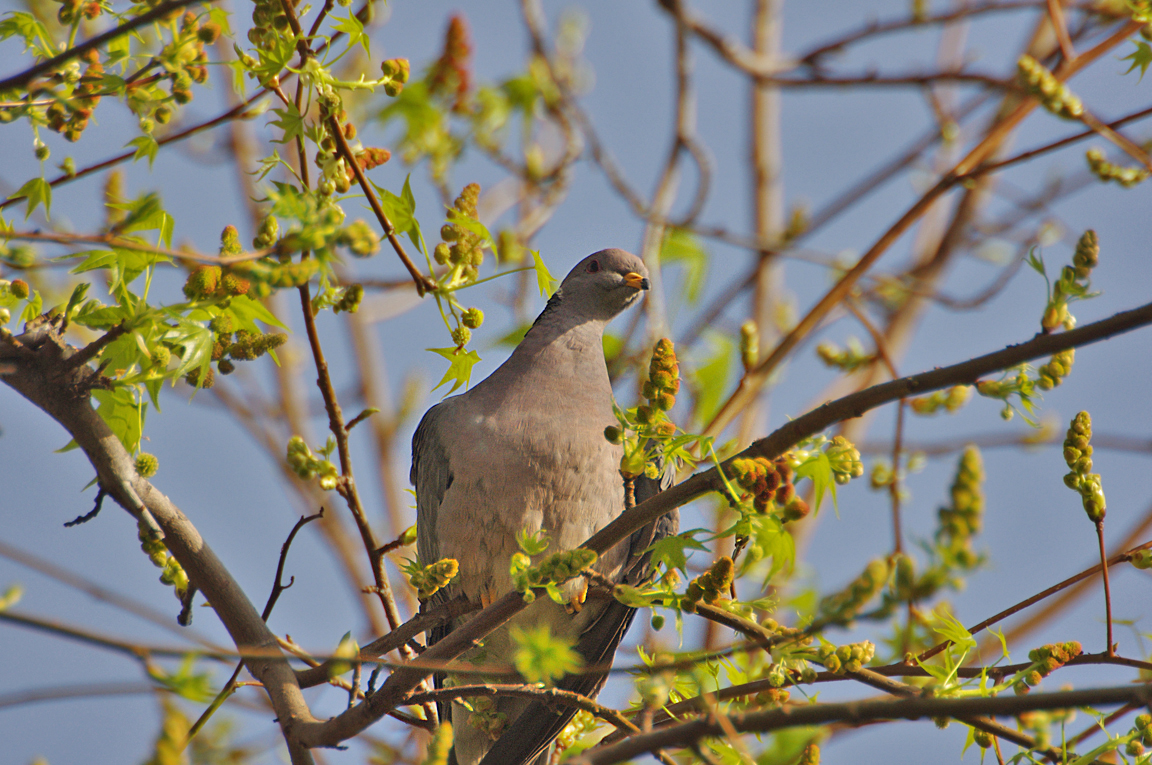
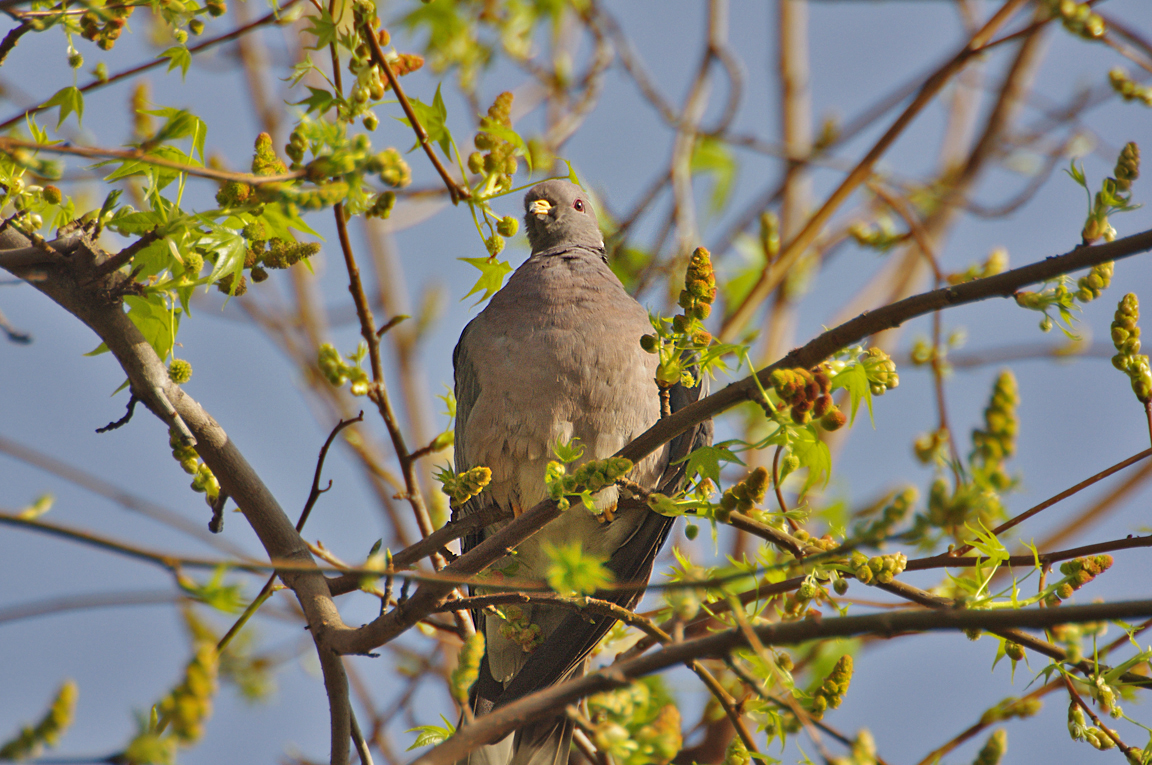
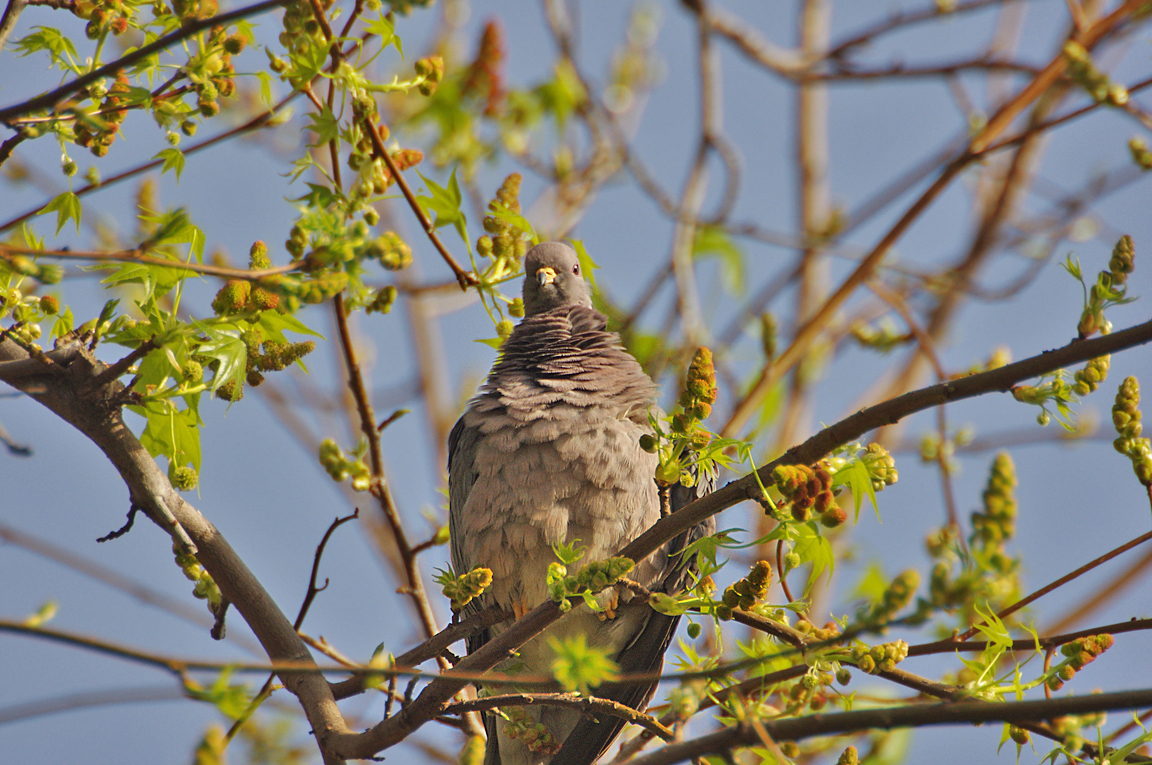
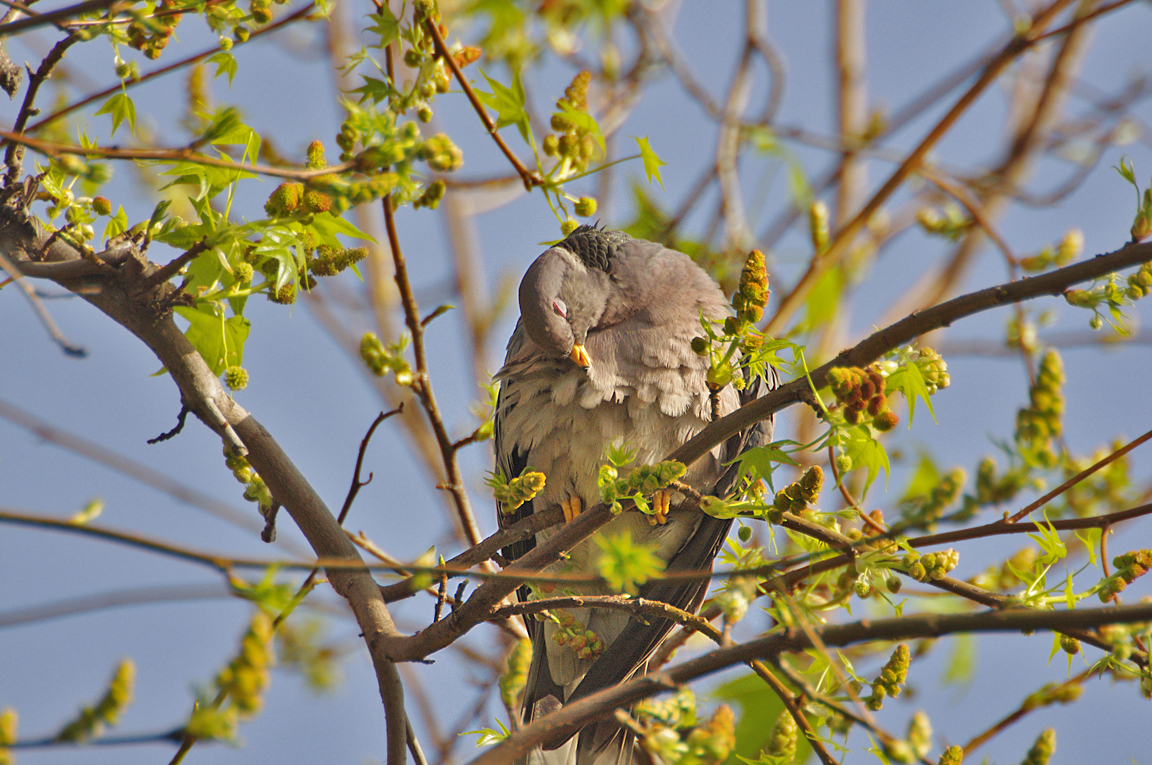
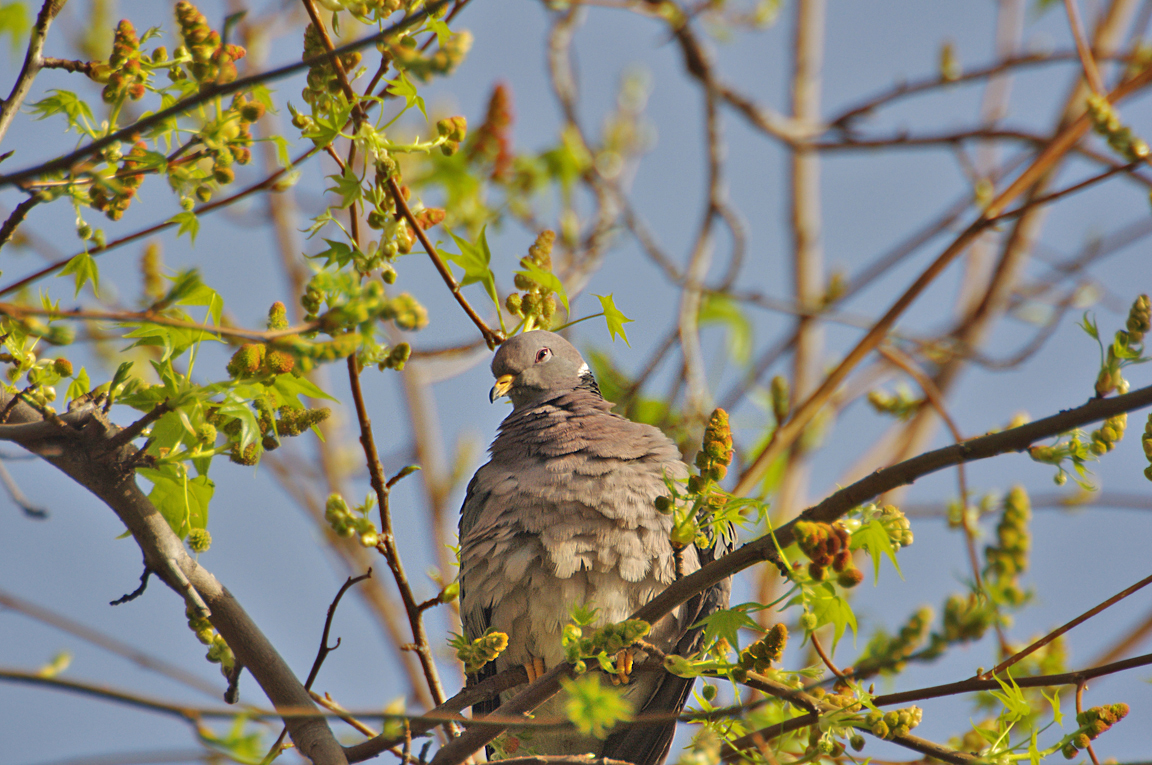
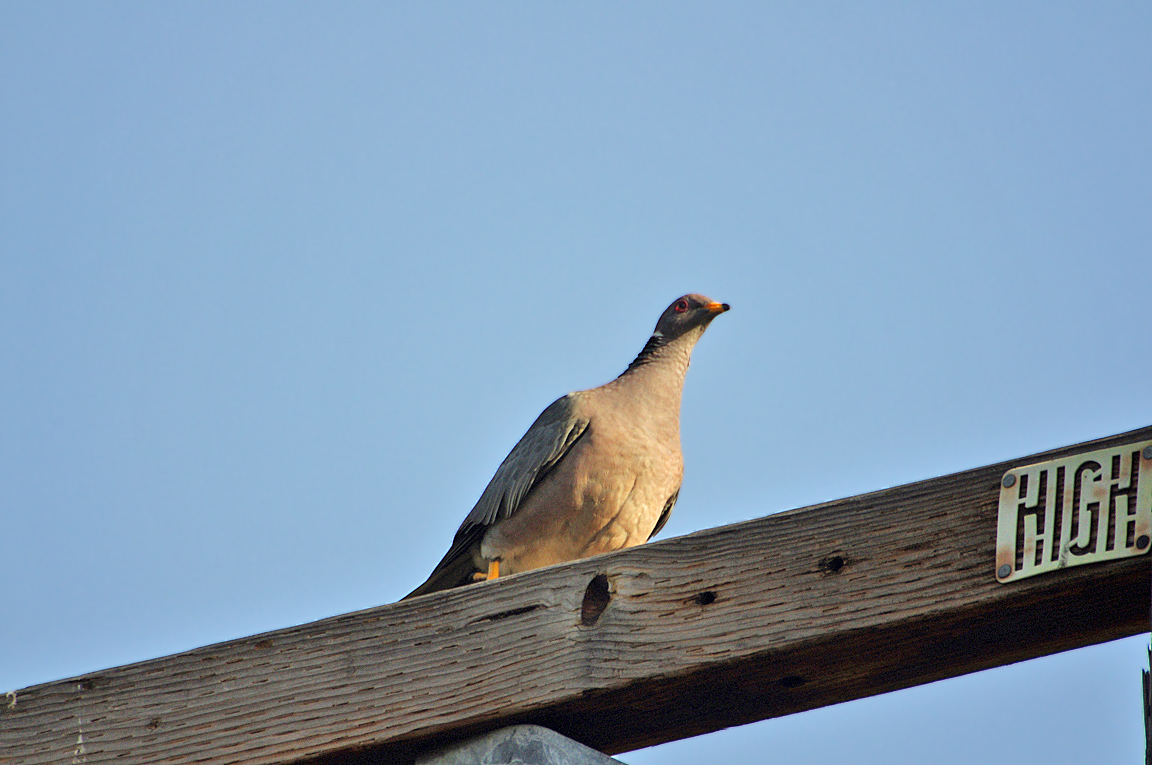
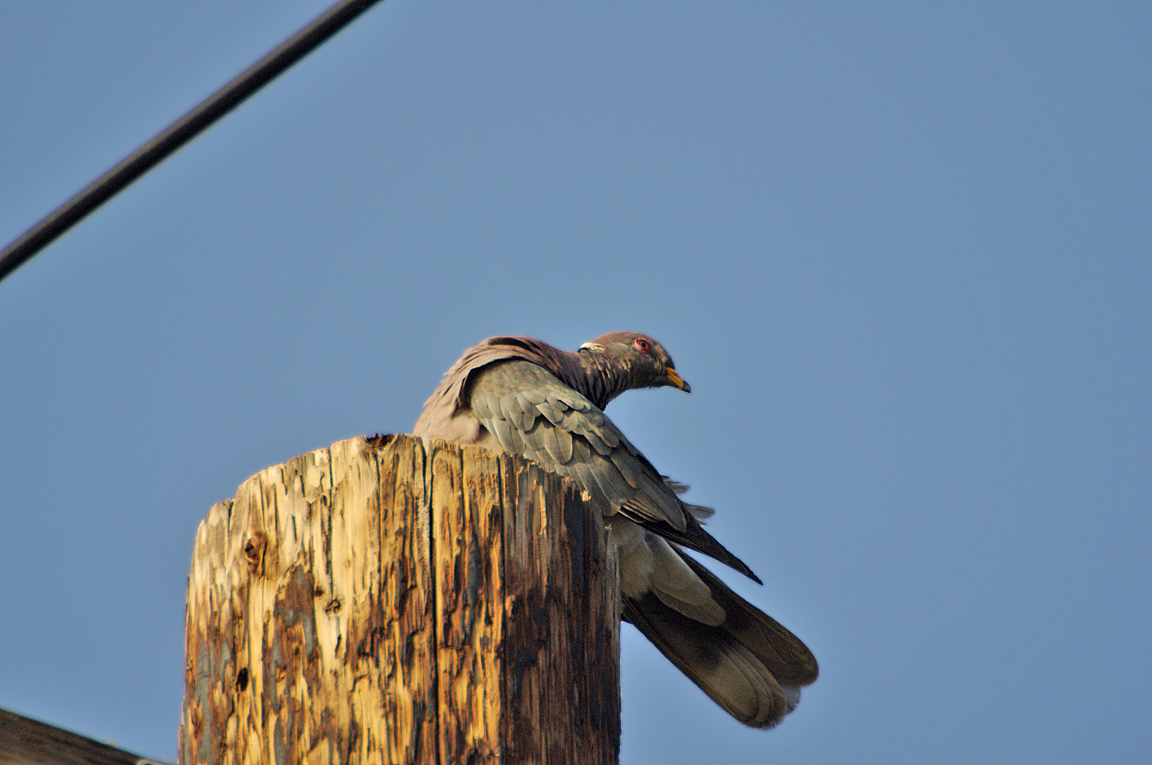
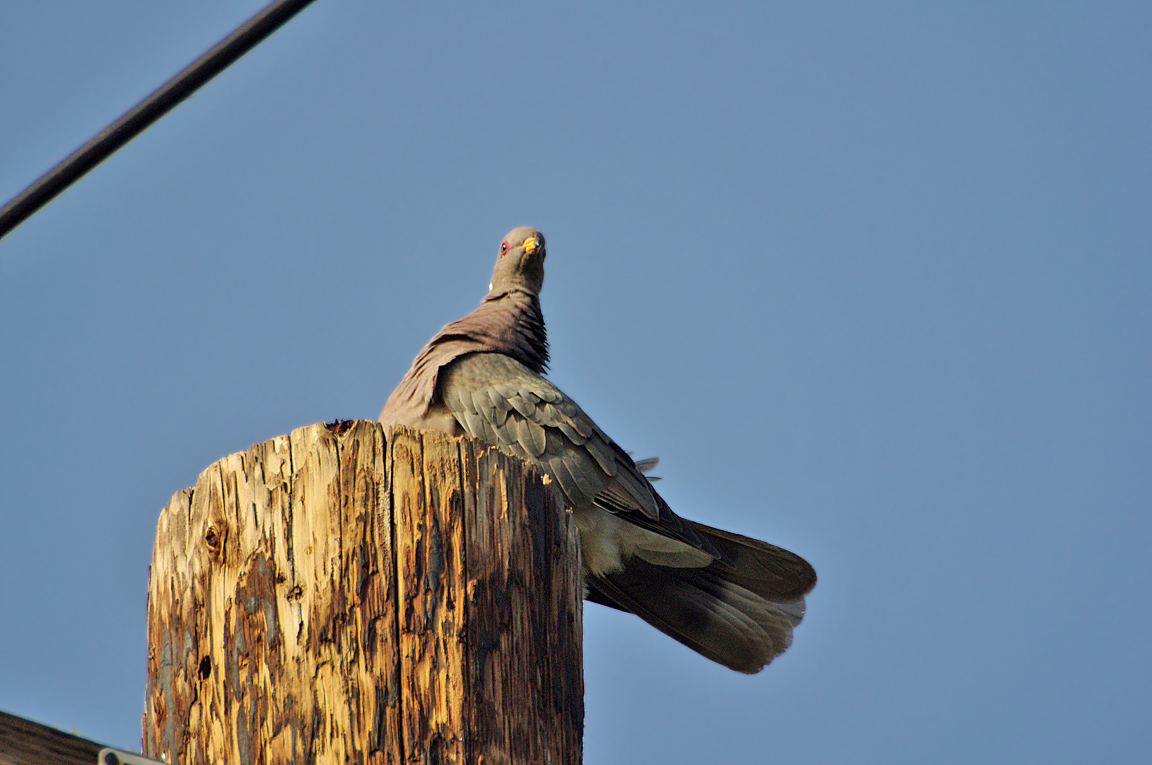
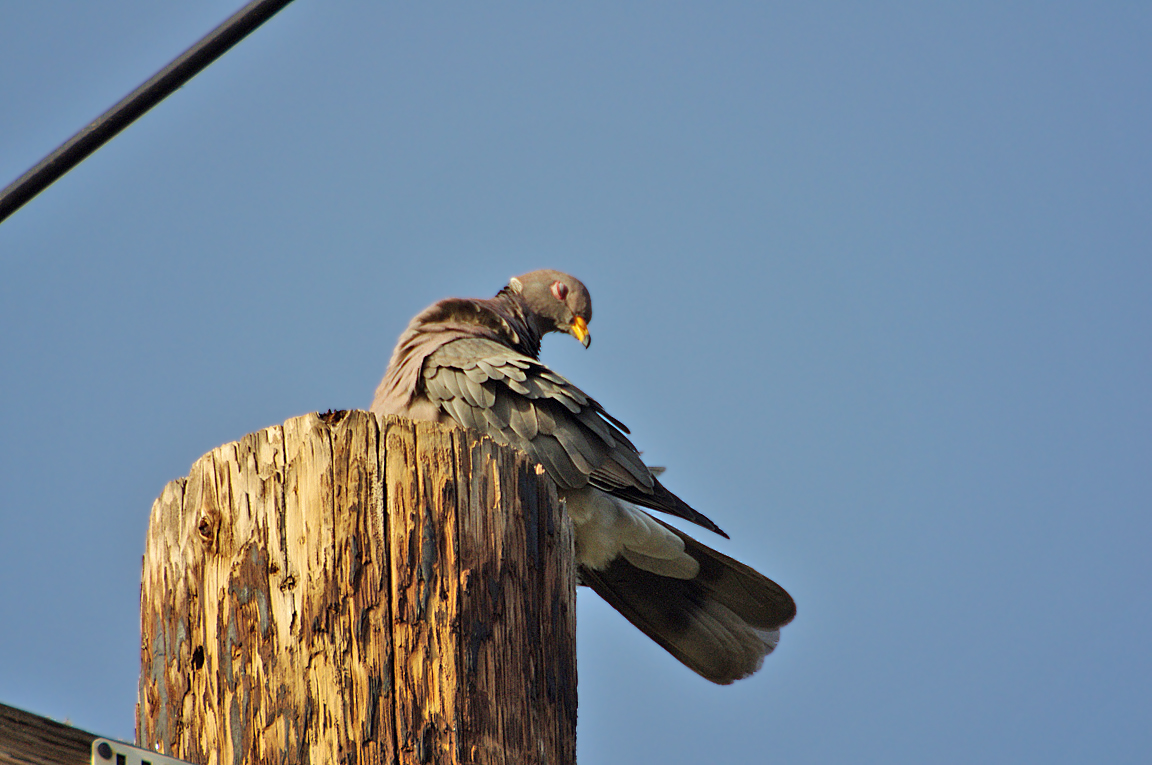
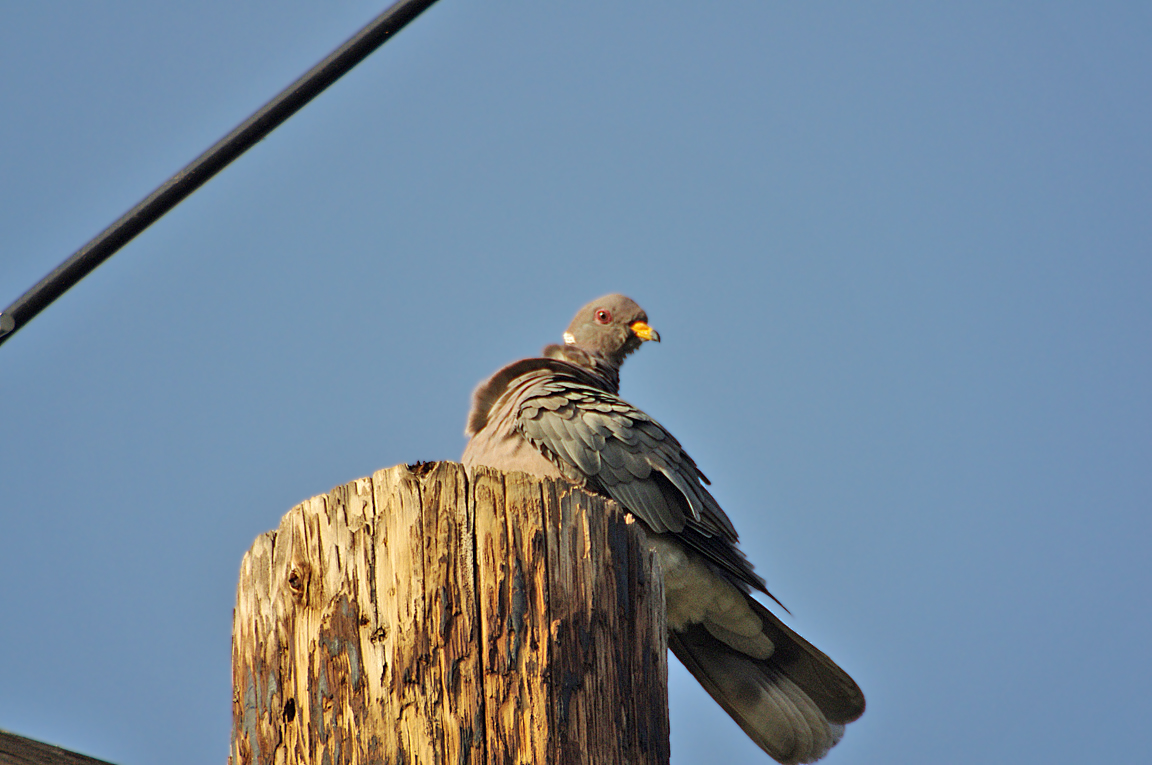
Although this large pigeon looks a lot like the introduced Rock Pigeon, it's a native. The Band-tailed Pigeon is found in two distinct regions in the American West, as well as throughout Central and South America
Interesting Information
-
Though the species has two distinct breeding populations in the United States, individuals do move from one region to the other. One Band-tailed Pigeon banded in Oregon was shot a year later in Florida, well outside the normal range.
-
An Oregon study found that the average distance a Band-tailed Pigeon traveled from its nest to a feeding site was 5 km (3.1 mi).
-
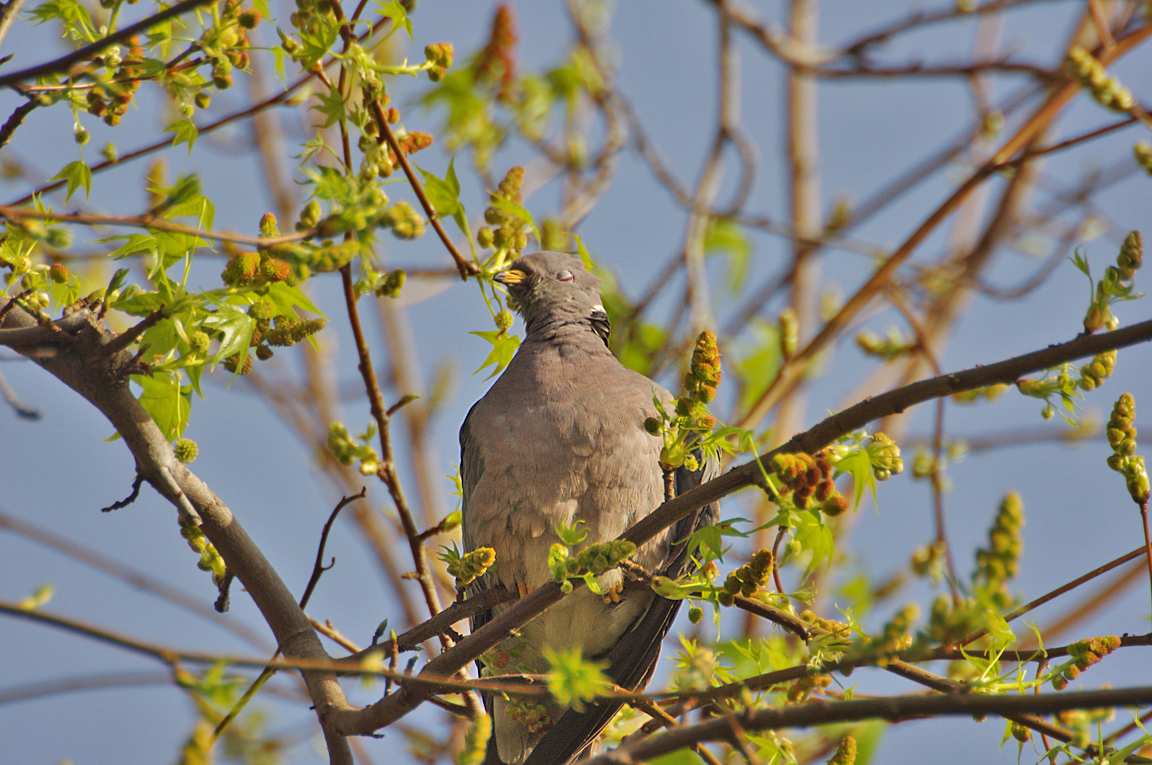
In June, and again in the late summer, they congregate at mineral springs where they ingest salts. Unlike most birds, including other pigeons, they are able to drink without raising their head.
-
The Band-tailed Pigeon is the largest in North America.
-
The parasitic louse Columbicola extinctus, believed to have become extinct with the extinction of the Passenger Pigeon, was recently rediscovered on the Band-tailed Pigeon.
Description
Adult Description
-
Length Range: 36-38 cm (14-15 in)
-
Weight: 354 g (12.5 oz)
-
Size: Medium (9 - 16 in)
-
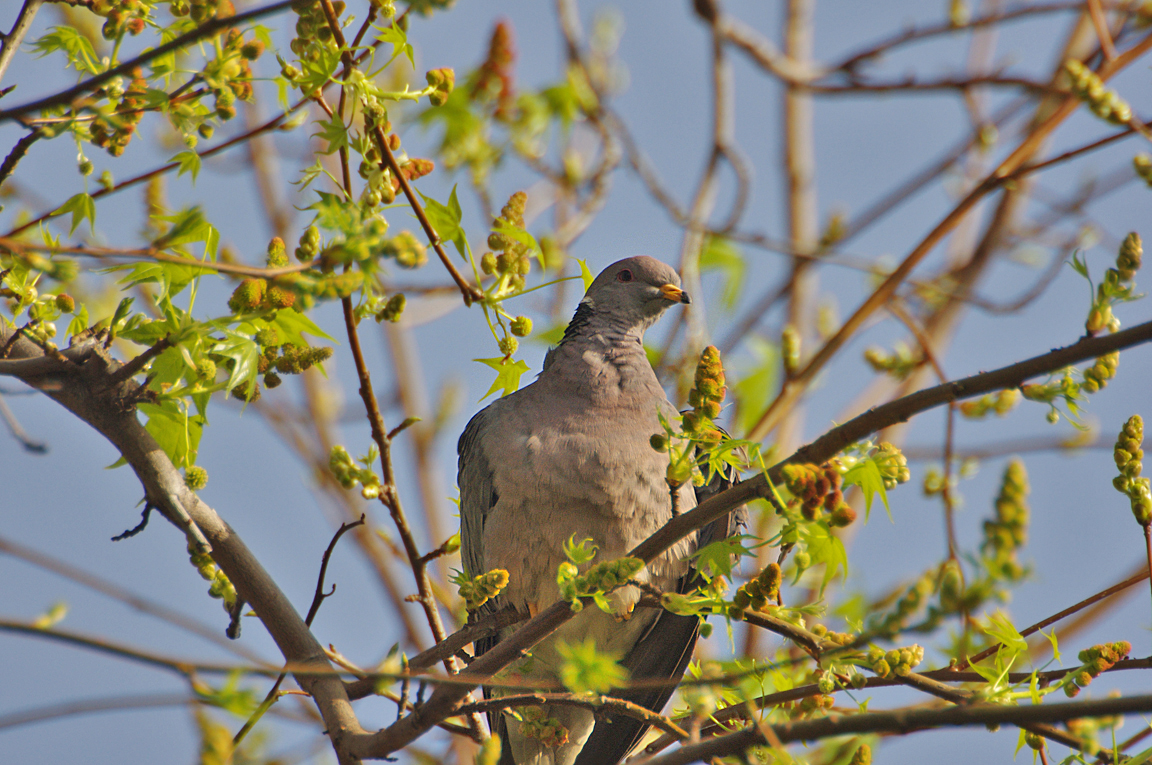
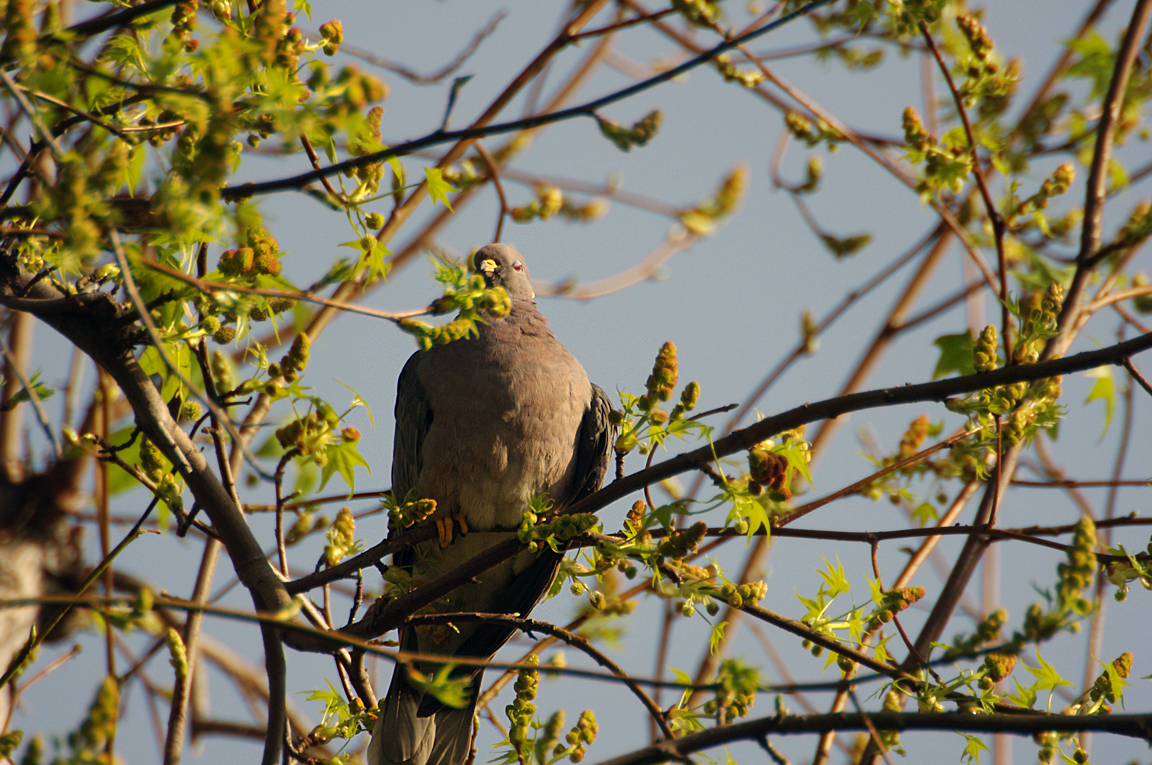
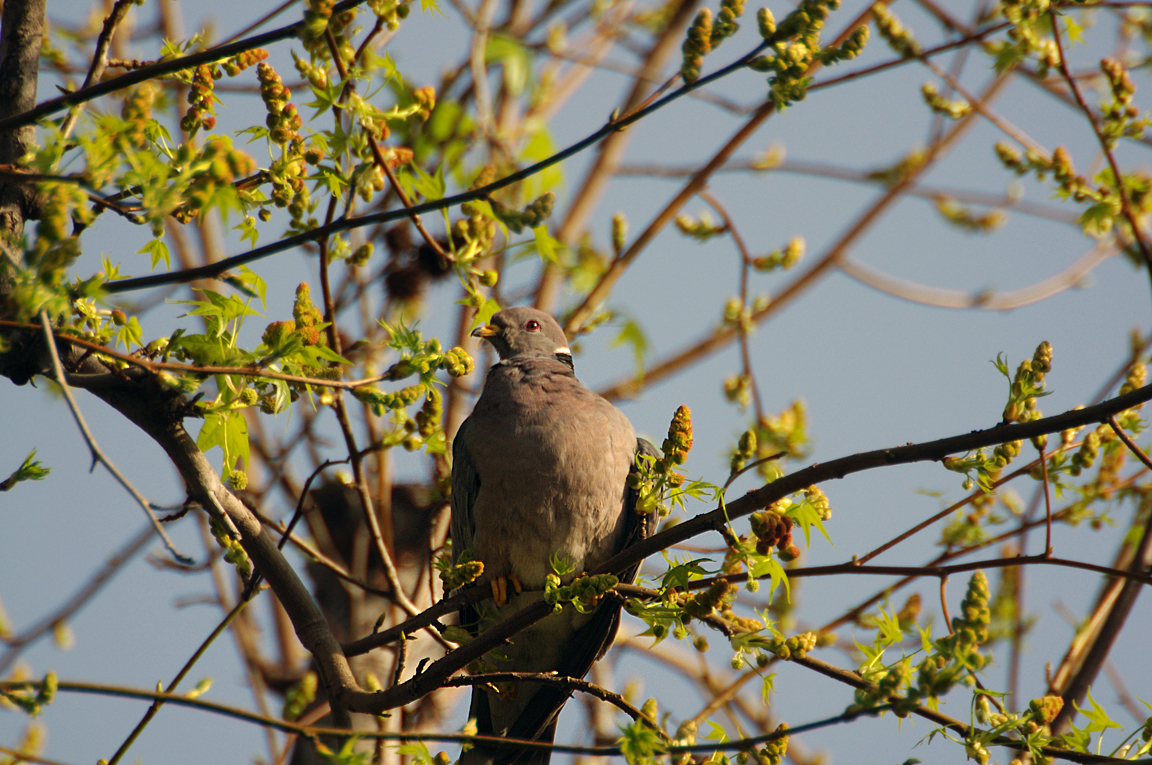
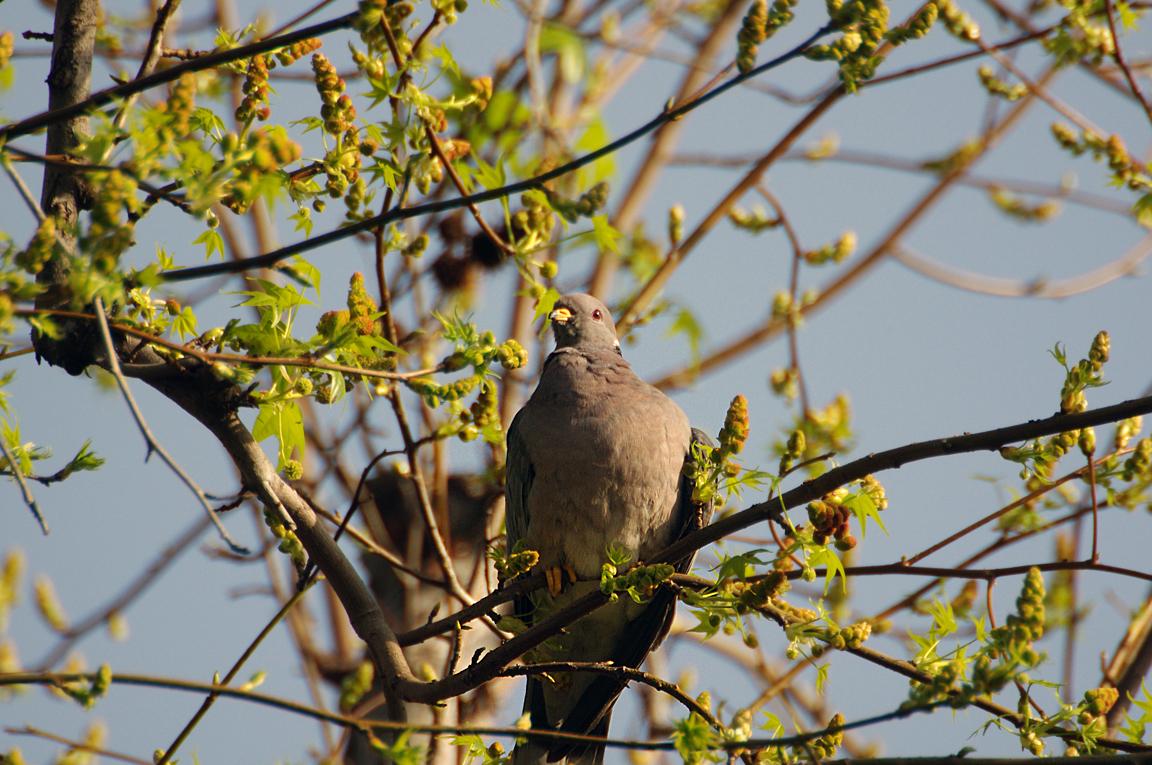
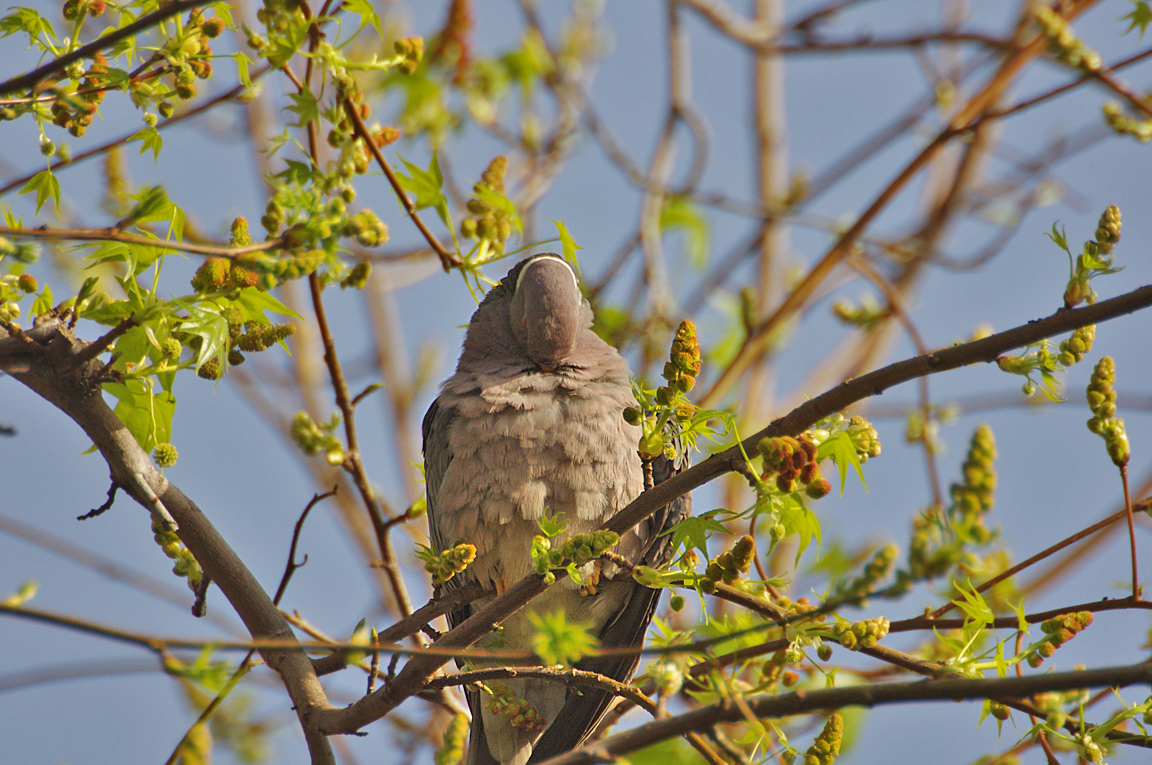
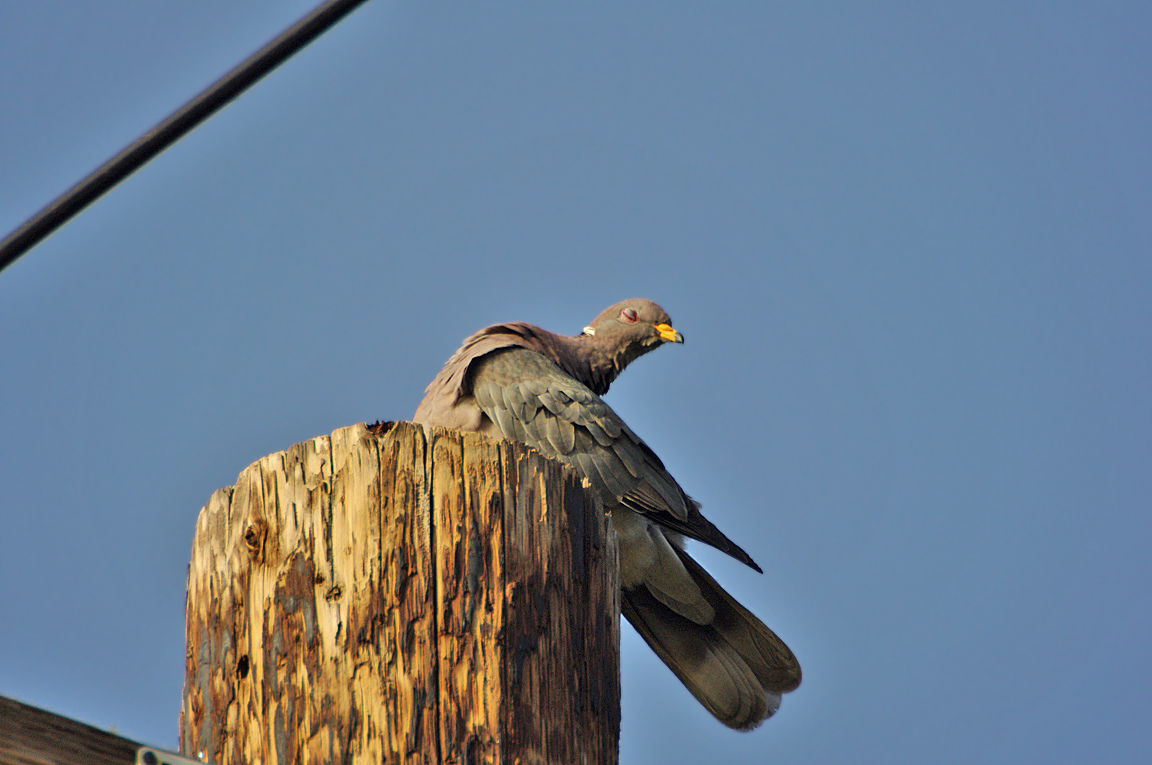
Dark overall.
-
White collar on nape.
-
Tail dark gray at base, light gray across the tip.
-
Feet yellow.
Sex Differences
Sexes Similar
Immature
Juvenile lacks white crescent and iridescent patch on nape.
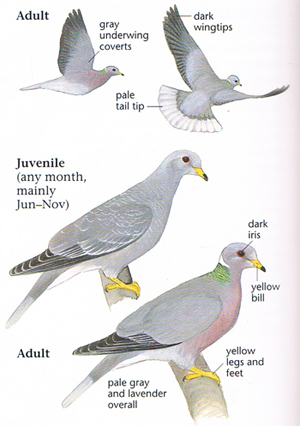
Photo taken from: The Sibley Field Guide by David Allen Sibley
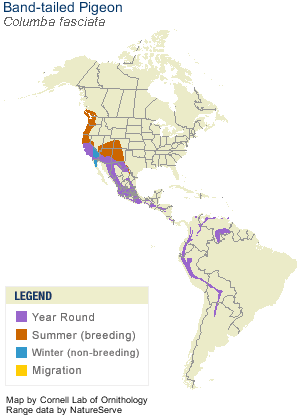
© 2003 Cornell Lab of Ornithology
|
Habitat |
|
|
Behavior |
|
Feeds on ground and in trees in small flocks. Travels long distances to gather food. |
|
Food |
|
Seeds, fruit, acorns, pine nuts, and flowers. |
Taxonomy
| Kingdom: | Animalia |
| Phylum: | Chordata |
| Subphylum: | Vertebrata |
| Class: | Aves |
| Order: | Columbiformes |
| Family: | Columbidae |
| Subfamily: | Columbinae |
| Genus: | Patagioenas |
| Species: | Patagioenas fasciata |
| Subspecies: | Patagioenas fasciata albilinea |
| Patagioenas fasciata crissalis | |
| Patagioenas fasciata fasciata | |
| Patagioenas fasciata letonai | |
| Patagioenas fasciata monilis | |
| Patagioenas fasciata parva | |
| Patagioenas fasciata roraimae | |
| Patagioenas fasciata vioscae |
Similar Species |
|
Rock Pigeon has pale to white rump, a dark, not light, band to tip of tail, red legs and feet, and a dark bill. |
|
Bird Sound |
|
Repeated deep hooting coos, rising slightly in pitch. Wing clap on taking flight. |
|
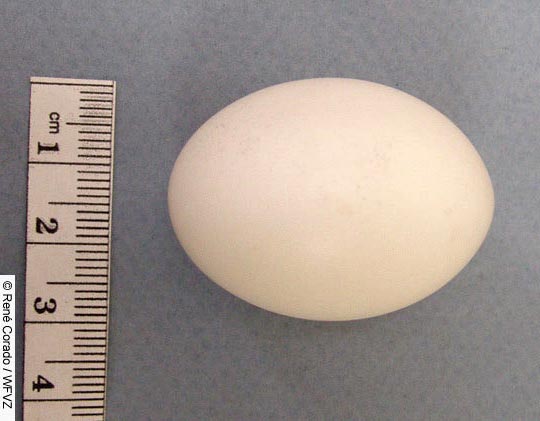
Eggs look like this |
|
Photo taken from: ARCTOS Collaborative Collection Management Solution |



.png)


|
|
Sources Used To Construct This Page |
|||
|
Keppie, D. M., and C. E. Braun. 2000. Band-tailed Pigeon (Columba fasciata). In The Birds of North America, No. 530 (A. Poole and F. Gill, eds.). The Birds of North America, Inc., Philadelphia, PA. |
||||
 |
 |
 |
 |
|
| All photos and videos © Rick Swartzentrover - Free for non-profit use. | ||||