|
|
|
 |
Northern Flicker
|
| Colaptes auratus | |
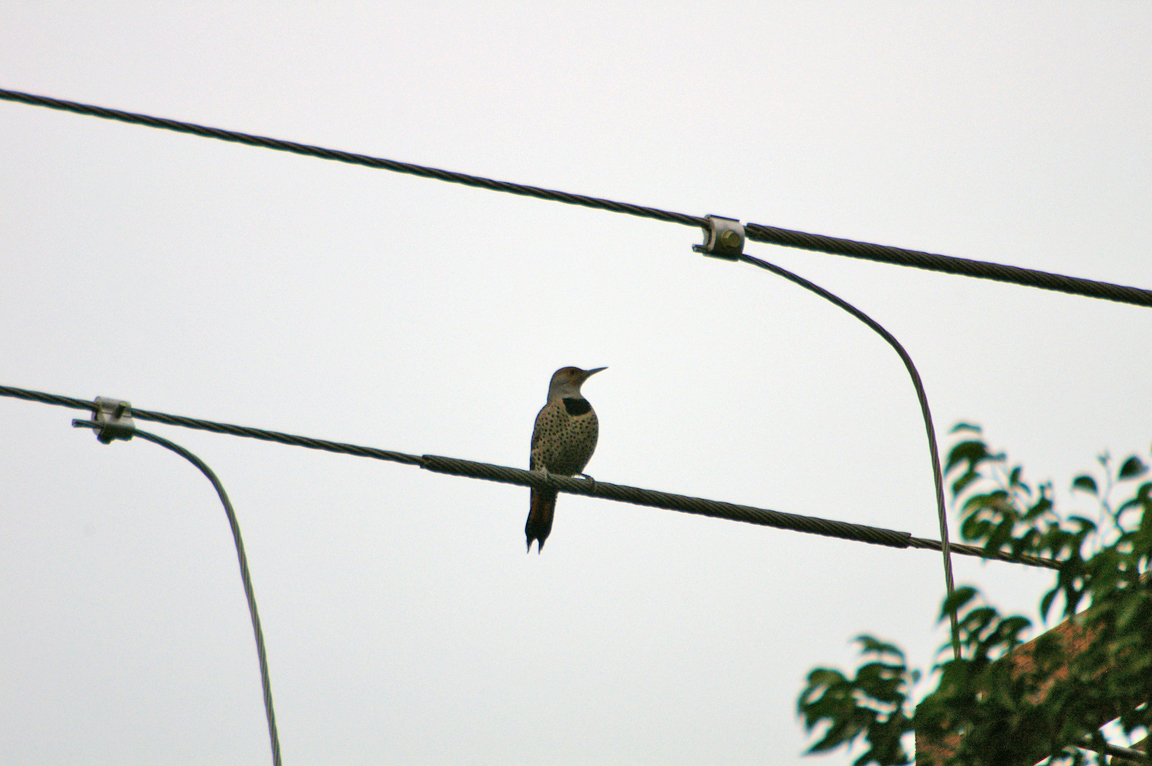
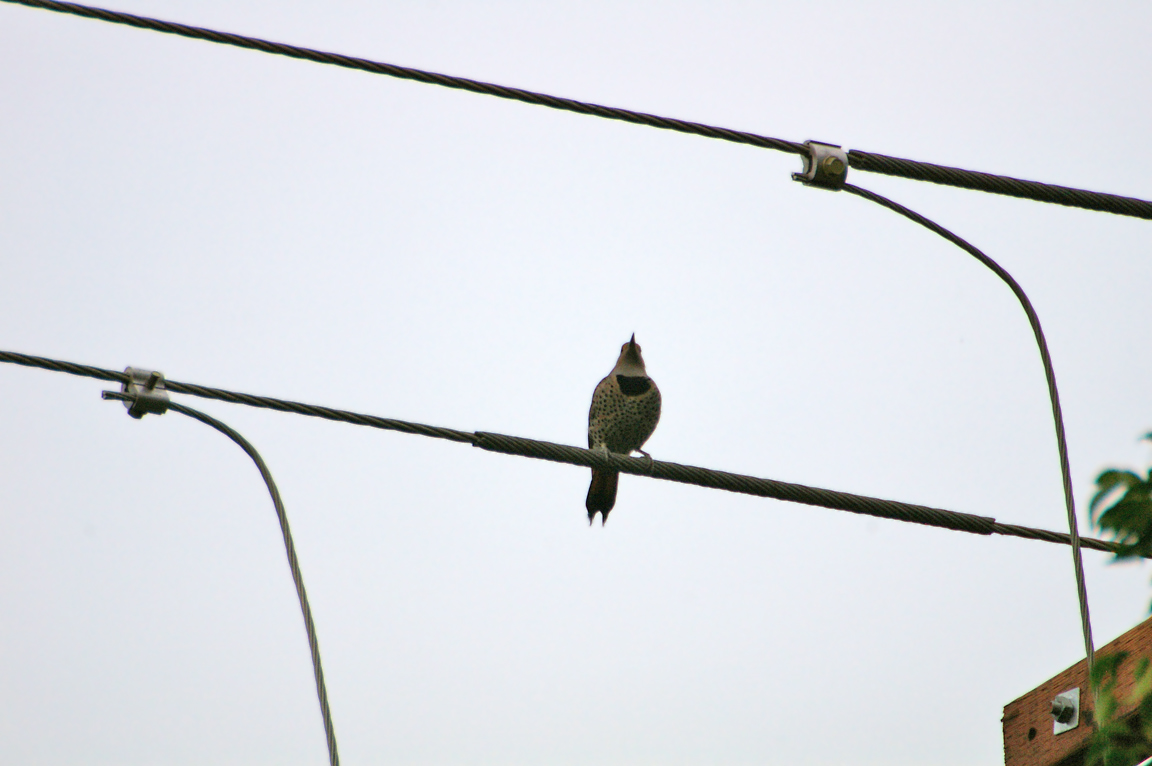
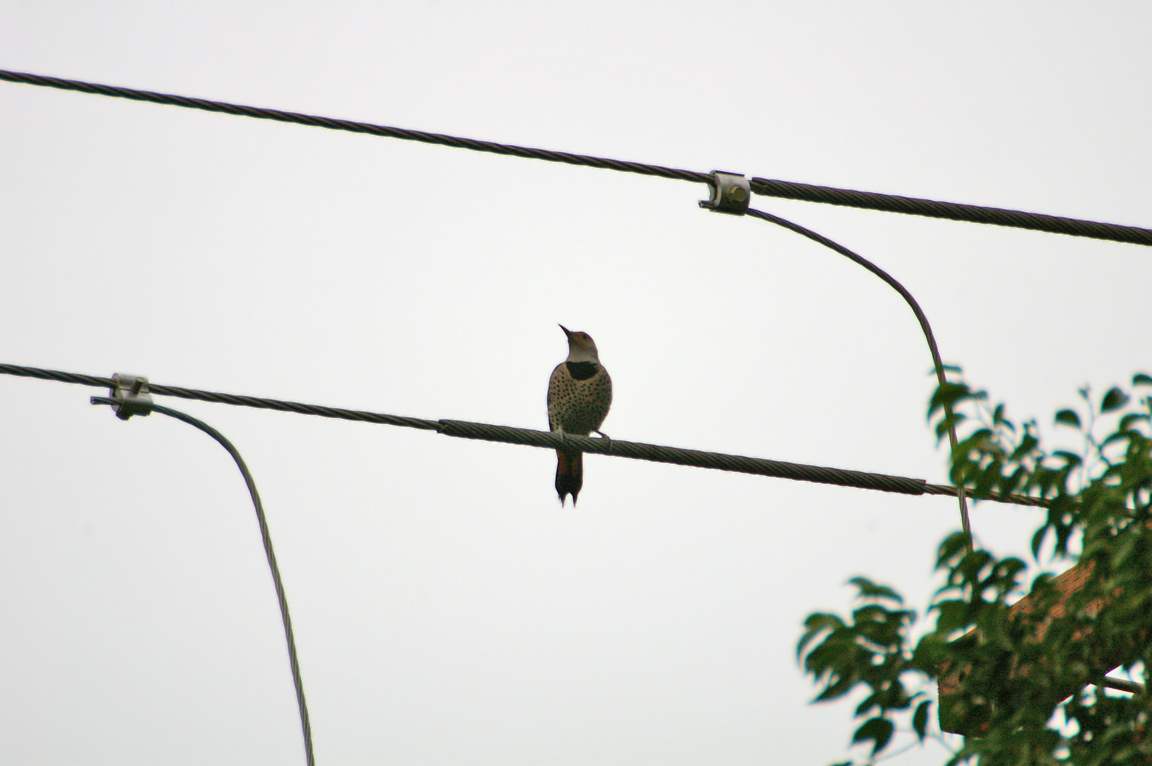
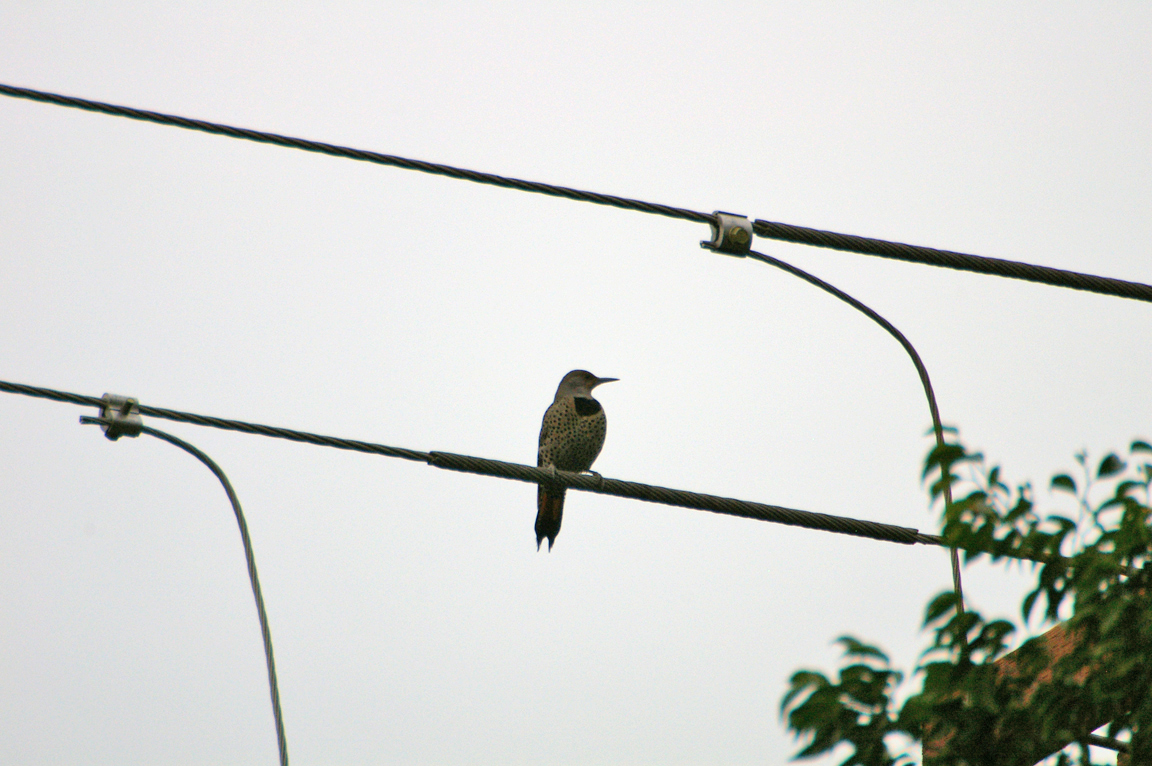
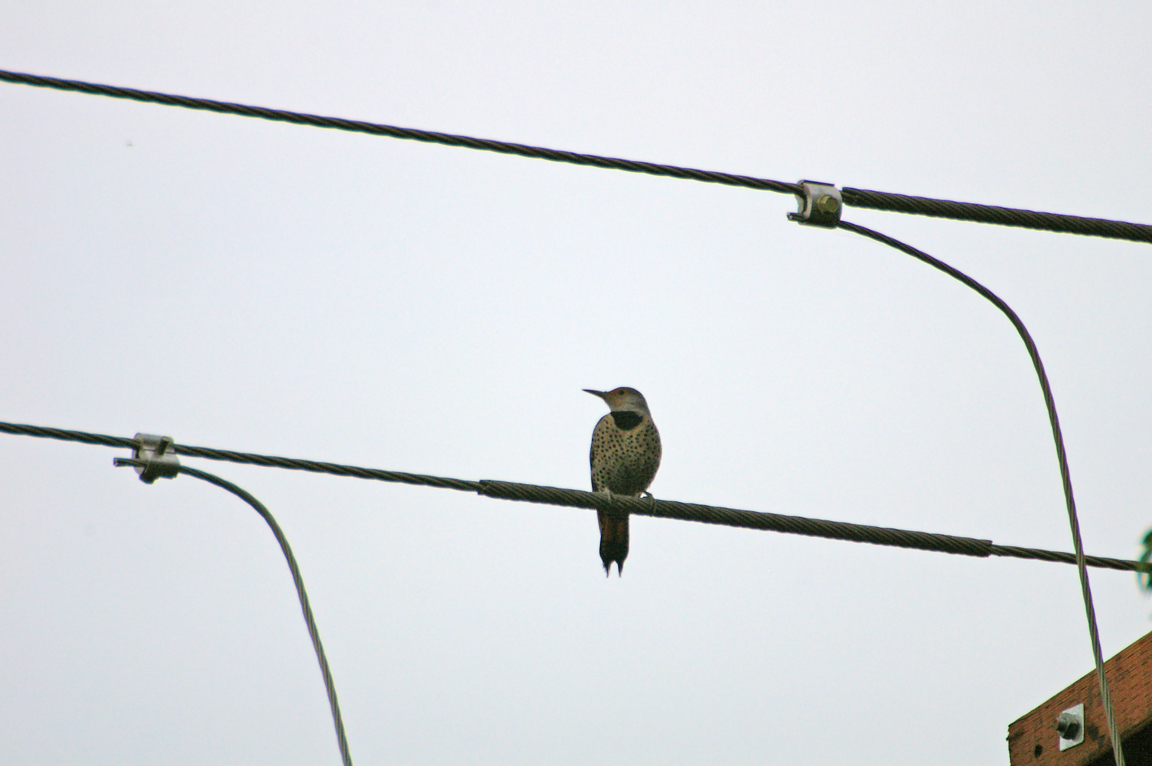
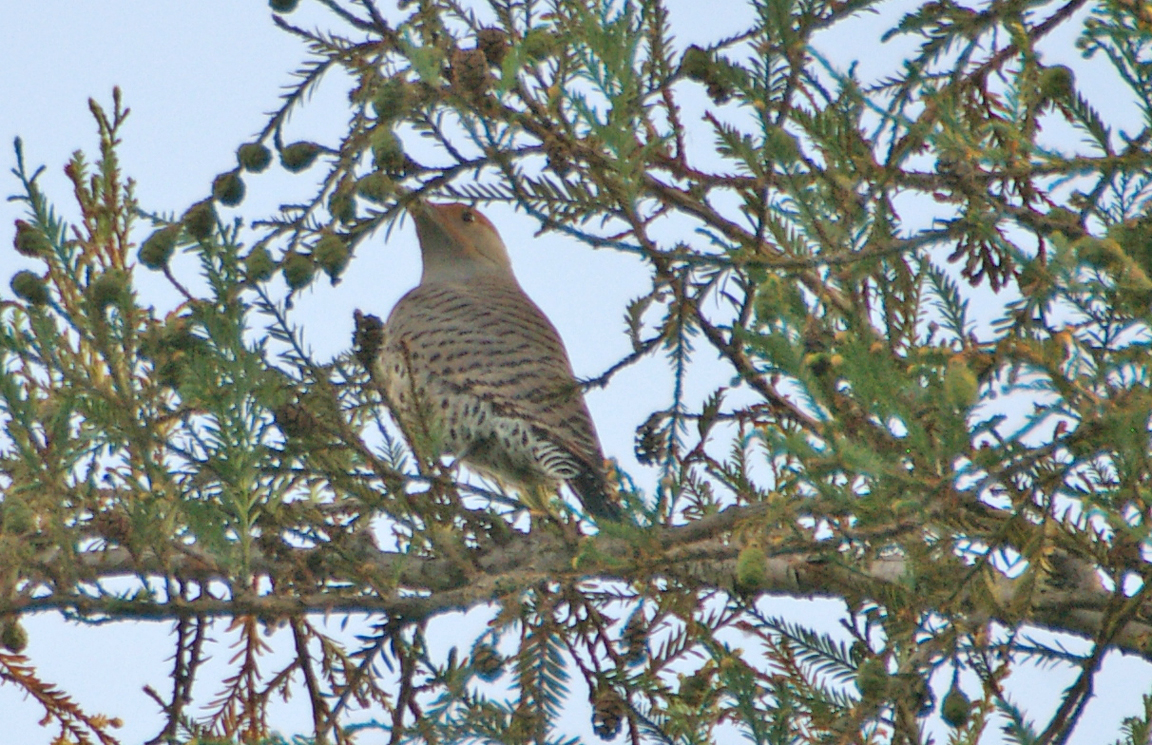
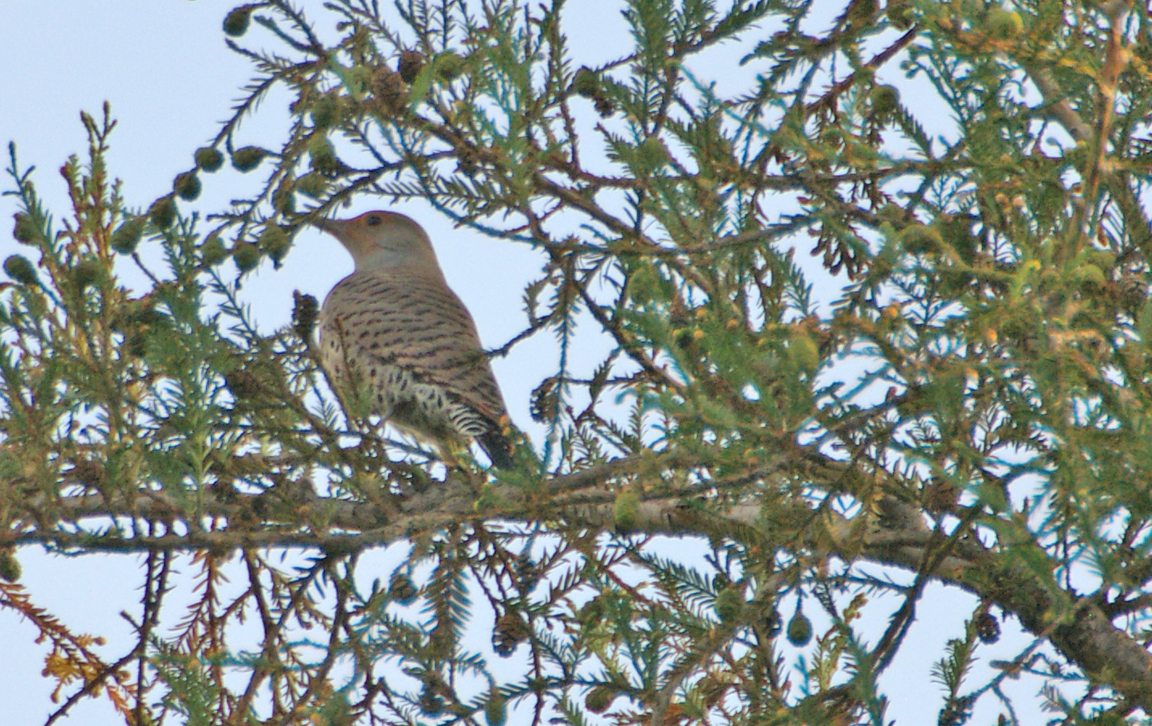
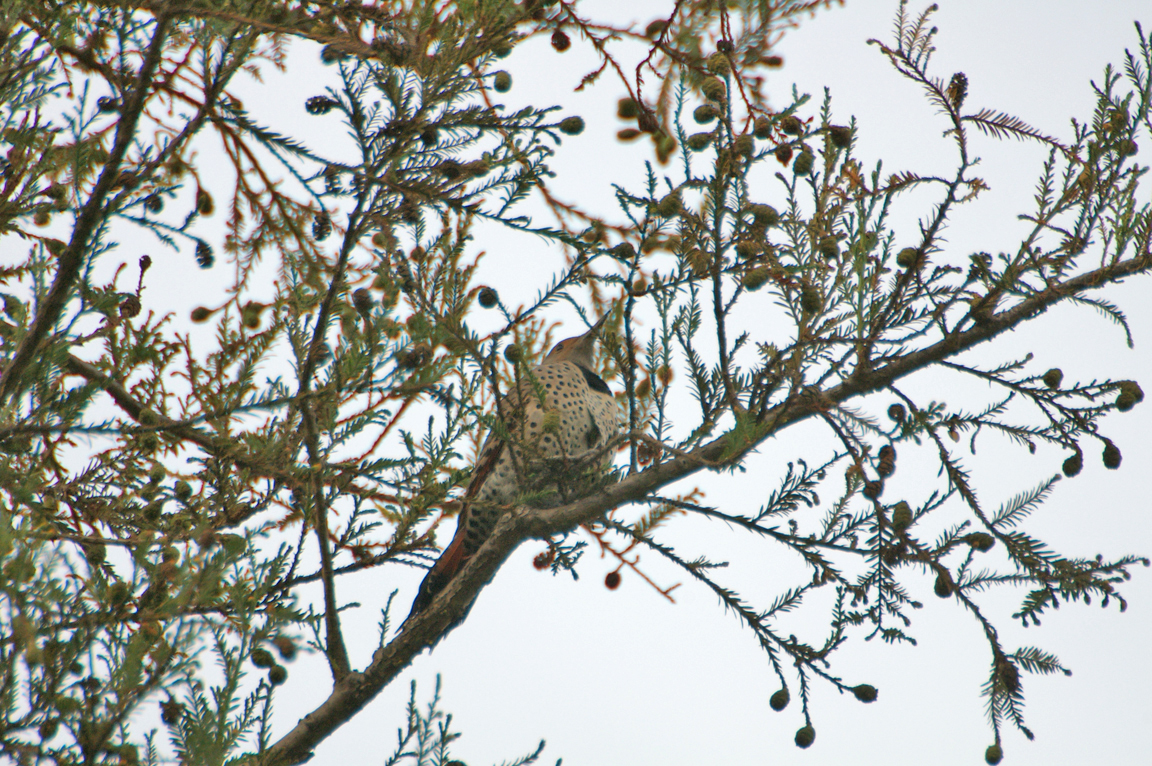
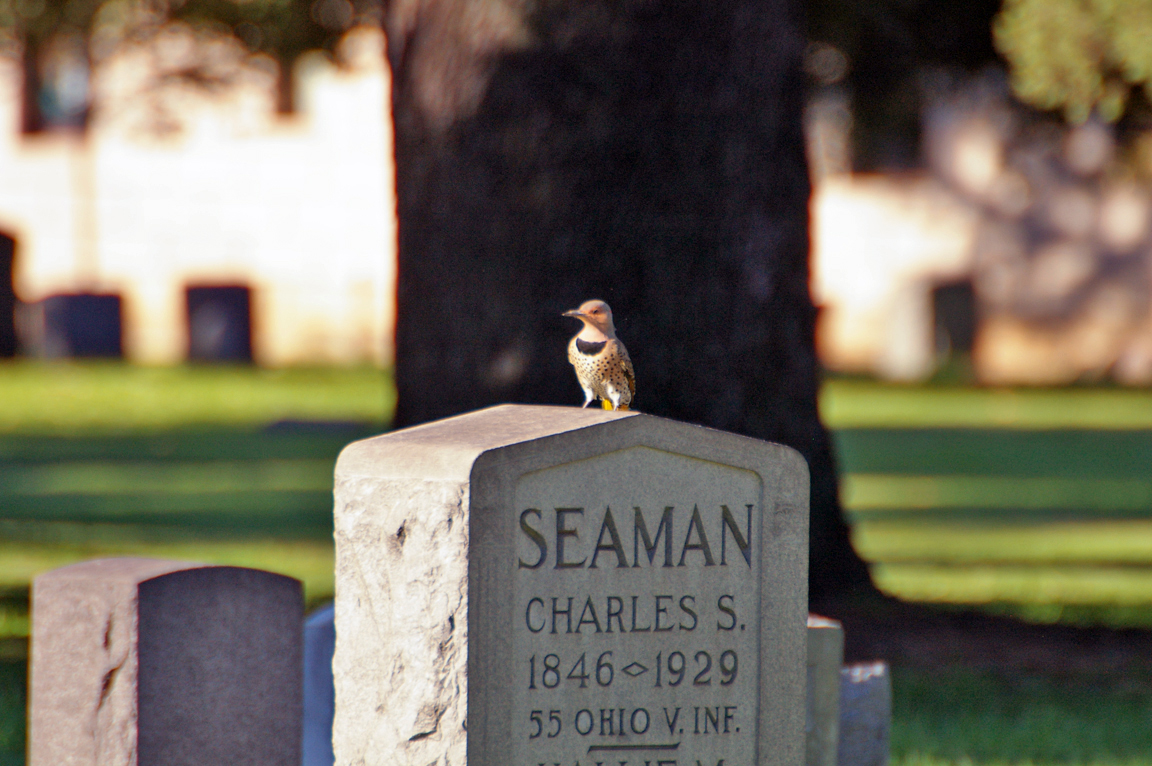
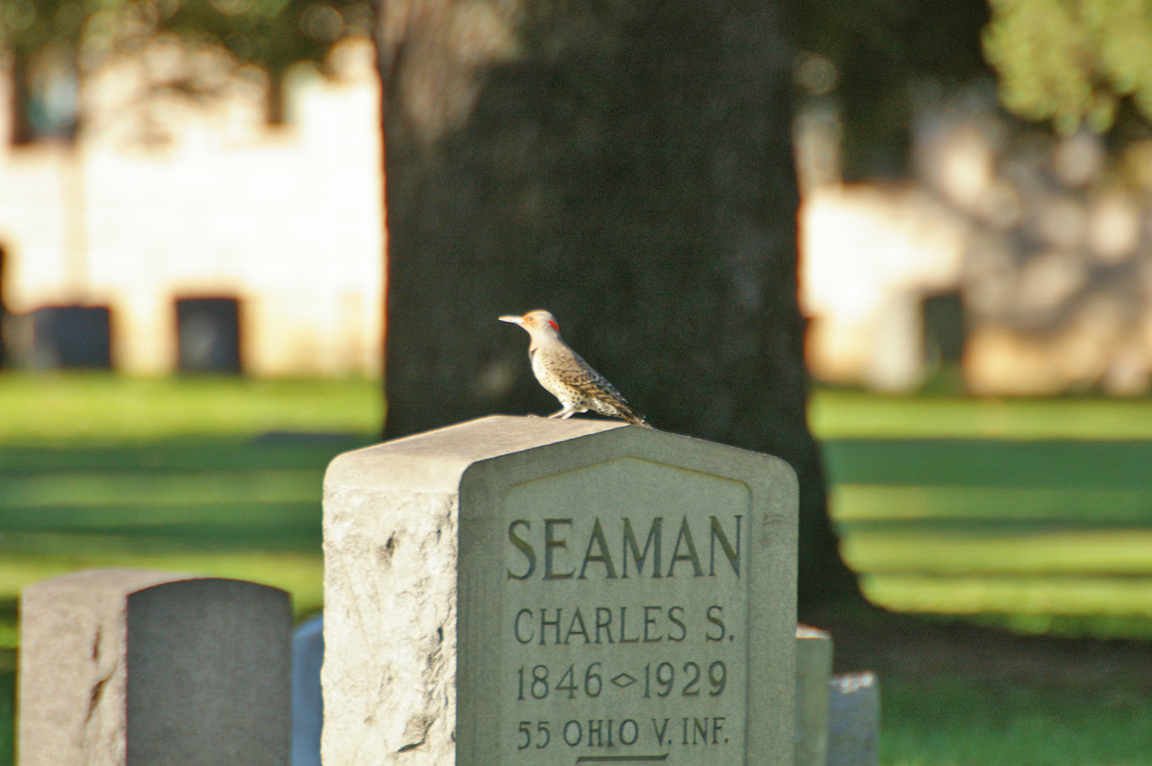
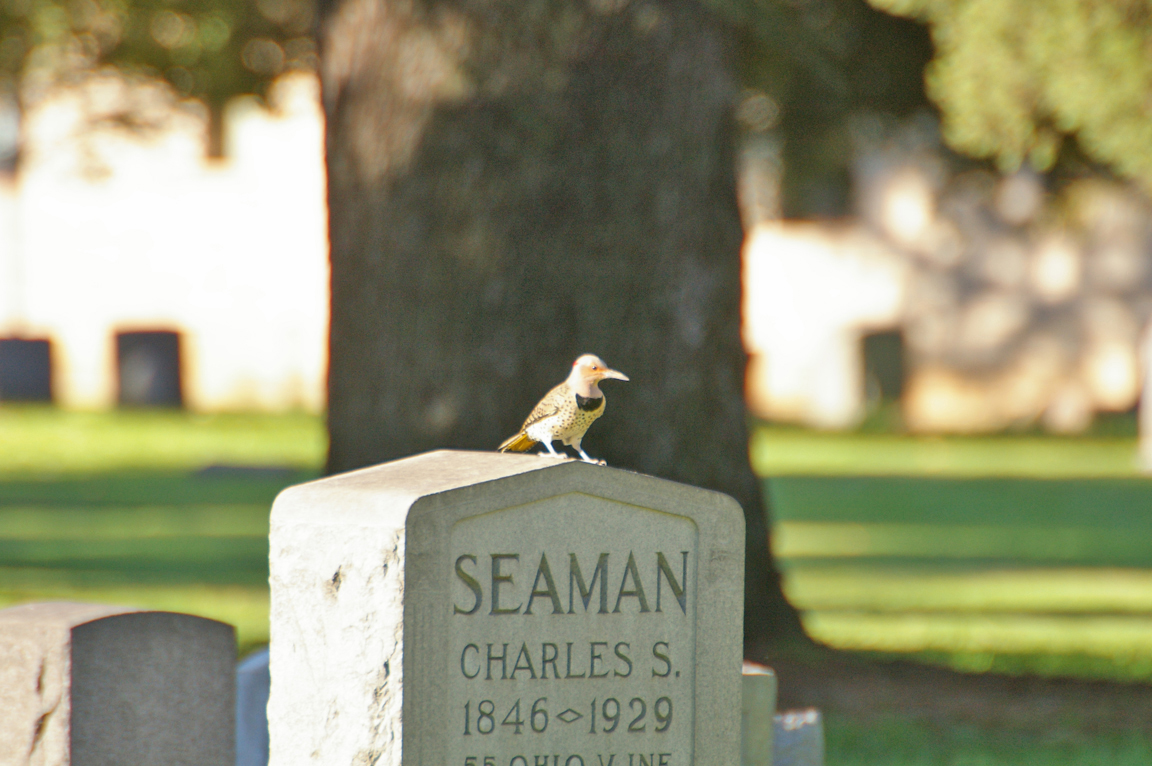
Northern Flickers are large, brown woodpeckers with a gentle expression and handsome black-scalloped plumage. On walks, don't be surprised if you scare one up from the ground. It's not where you'd expect to find a woodpecker, but flickers eat mainly ants and beetles, digging for them with their unusual, slightly curved bill. When they fly you'll see a flash of color in the wings - yellow if you're in the East, red if you're in the West - and a bright white flash on the rump.
Interesting Information
-
Although it can climb up the trunks of trees and hammer on wood like other woodpeckers, the Northern Flicker prefers to find food on the ground. Ants are its main food, and the flicker digs in the dirt to find them. It uses its long barbed tongue to lap up the ants.
-
The red-shafted and yellow-shafted forms of the Northern Flicker formerly were considered different species. The two forms hybridize extensively in a wide zone from Alaska to the panhandle of Texas. A hybrid often has some traits from each of the two forms and some traits that are intermediate between them. The Red-shafted Flicker also hybridizes with the Gilded Flicker, but less frequently.
-
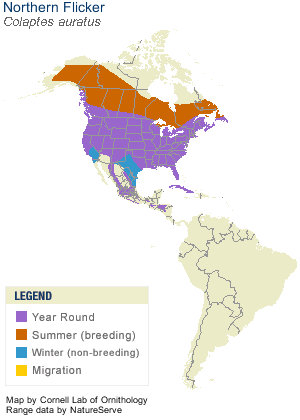
The Northern Flicker is one of the few North American woodpeckers that is strongly migratory. Flickers in the northern parts of their range move south for the winter, although a few individuals often stay rather far north.
-
Northern Flickers generally nest in holes in trees like other woodpeckers. Occasionally, they've been found nesting in old, earthen burrows vacated by Belted Kingfishers or Bank Swallows.
-
Like most woodpeckers, Northern Flickers drum on objects as a form of communication and territory defense. In such cases, the object is to make as loud a noise as possible, and that's why woodpeckers sometimes drum on metal objects. One Northern Flicker in Wyoming could be heard drumming on an abandoned tractor from a half-mile away.
-
The oldest known "yellow-shafted" Northern Flicker lived to be at least 9 years 2 months old, and the oldest "red-shafted" Northern Flicker lived to be at least 8 years 9 months old.
Description
Adult Description
-
Length Range: 32-36 cm (12.75-14 in)
-
Weight: 71 g (2.5 oz)
Flickers are fairly large woodpeckers with a slim, rounded head, slightly downcurved bill, and long, flared tail that tapers to a point.
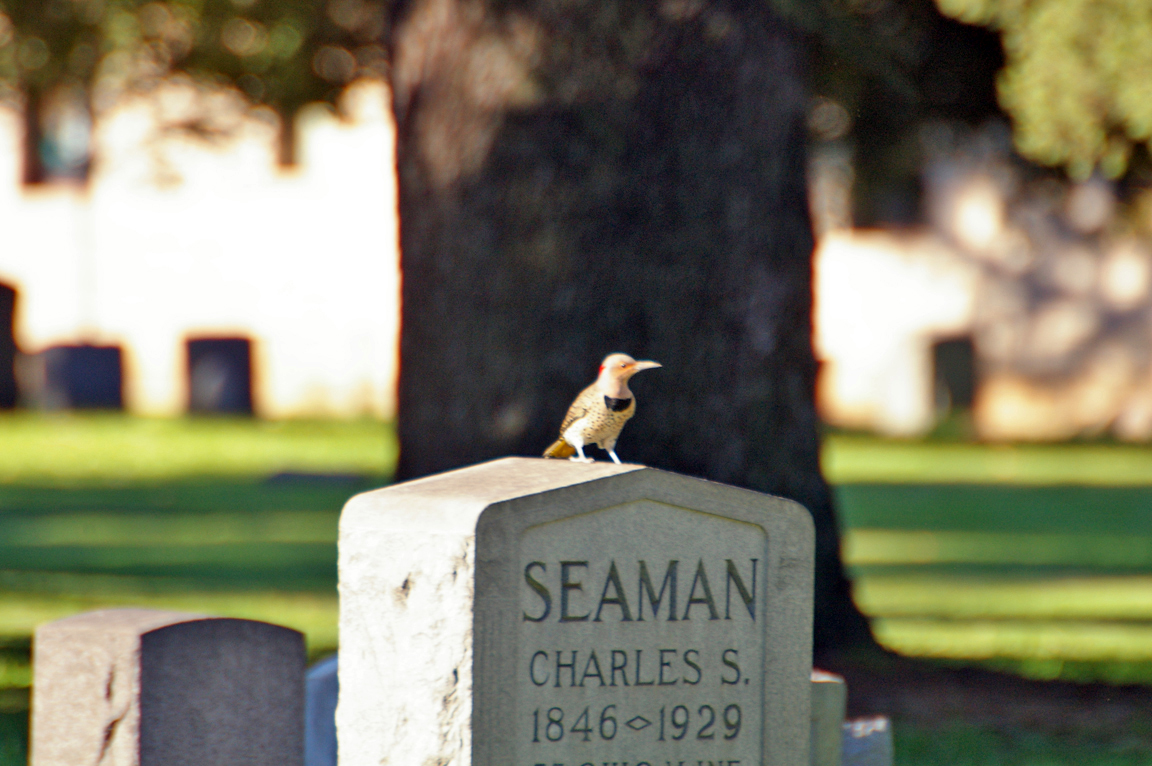
Flickers appear brownish overall with a white rump patch that's conspicuous in flight and often visible when perched. The undersides of the wing and tail feathers are bright yellow, for eastern birds, or red, in western birds. With a closer look you'll see the brown plumage is richly patterned with black spots, bars, and crescents.
Sex Differences
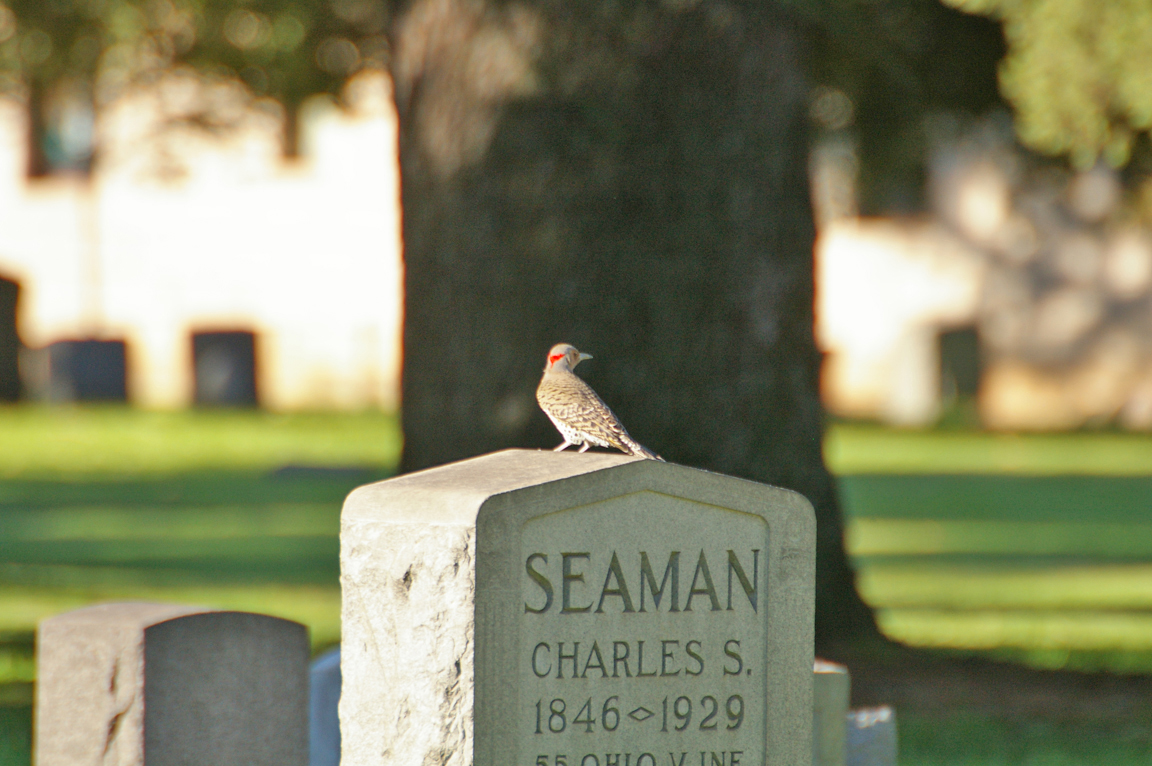
Sexes Similar except that males have a red malar patch on their cheek
Immature
Similar to females
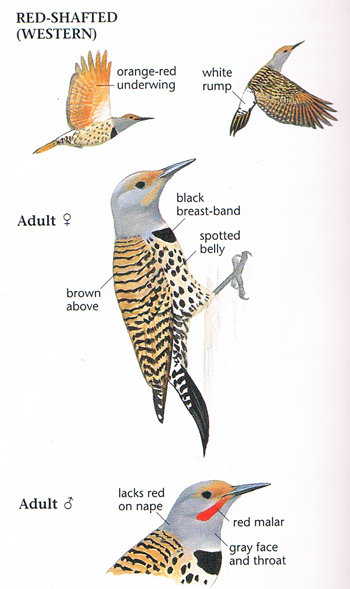
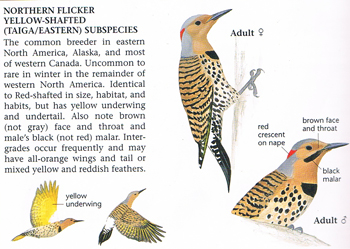
Photo taken from: The Sibley Field Guide by David Allen Sibley
© 2003 Cornell Lab of Ornithology
|
Habitat |
|
Look for flickers in open habitats near trees, including woodlands, edges, yards, and parks. In the West you can find them in mountain forests all the way up to treeline. |
|
Behavior |
|
Northern Flickers spend lots of time on the ground, and when in trees they're often perched upright on horizontal branches instead of leaning against their tails on a trunk. They fly in an up-and-down path using heavy flaps interspersed with glides, like many woodpeckers. |
|
Food |
|
Northern Flickers eat mainly insects, especially ants and beetles that they gather from the ground. They also eat fruits and seeds, especially in winter. Flickers often go after ants underground (where the nutritious larvae live), hammering at the soil the way other woodpeckers drill into wood. They've been seen breaking into cow patties to eat insects living within. Their tongues can dart out 2 inches beyond the end of the bill to snare prey. Other invertebrates eaten include flies, butterflies, moths, and snails. Flickers also eat berries and seeds, especially in winter, including poison oak and ivy, dogwood, sumac, wild cherry and grape, bayberries, hackberries, and elderberries, and sunflower and thistle seeds. |
Taxonomy
| Kingdom: | Animalia |
| Phylum: | Chordata |
| Subphylum: | Vertebrata |
| Class: | Aves |
| Order: | Passeriformes |
| Family: | Picidae |
| Subfamily: | Picinae |
| Genus: | Colaptes |
| Species: | Colaptes auratus |
| Subspecies: | Colaptes auratus auratus |
| Colaptes auratus cafer | |
| Colaptes auratus chrysocaulosus | |
| Colaptes auratus collaris | |
| Colaptes auratus gundlachi | |
| Colaptes auratus luteus | |
| Colaptes auratus mexicanoides | |
| Colaptes auratus mexicanus | |
| Colaptes auratus nanus | |
| Colaptes auratus rufipileus |
Similar Species |
|
|
Bird Sound |
|
Northern Flickers make a loud, rolling rattle with a piercing tone that rises and falls in volume several times. The call lasts 7 or 8 seconds and is quite similar to the call of the Pileated Woodpecker. You'll hear it in the spring and early summer, while pairs are forming and birds are establishing their territories. Flickers also make a loud single-note call, often sounding like kyeer, about a half-second long. When birds are close together and displaying they may make a quiet, rhythmic wick-a, wick-a call. |
|
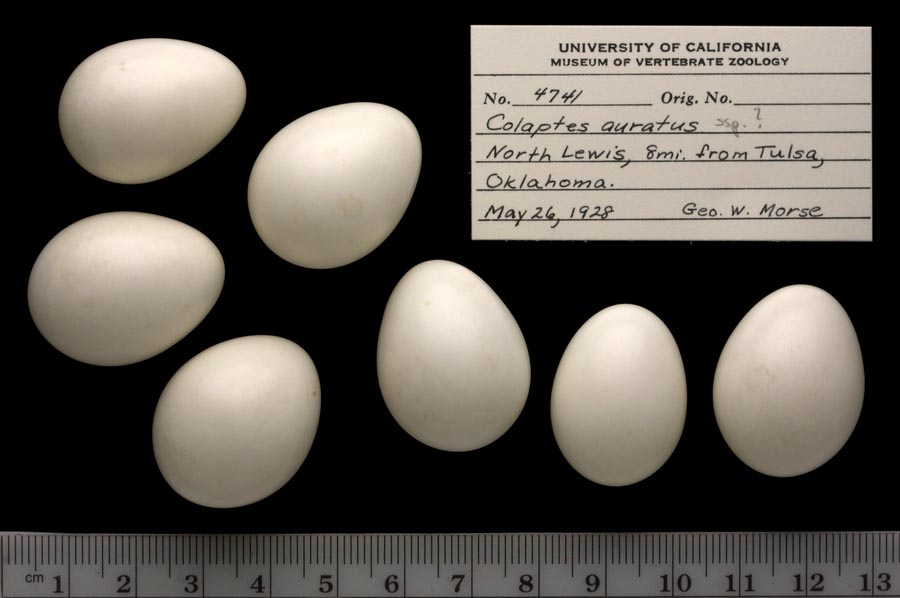
Eggs look like this |
|
Photo taken from: ARCTOS Collaborative Collection Management Solution |



.png)


|
|
Sources Used To Construct This Page |
|||
|
Wiebe, Karen L. and William S. Moore. 2008. Northern Flicker (Colaptes auratus), The Birds of North America Online (A. Poole, Ed.). Ithaca: Cornell Lab of Ornithology; Retrieved from the Birds of North America Online: http://bna.birds.cornell.edu/bna/species/166a Dunne, P. 2006. Pete Dunne's essential field guide companion. Houghton Mifflin, Boston. Ehrlich, P. R., D. S. Dobkin, and D. Wheye. 1988. The birder's handbook. Simon & Schuster Inc., New York. Patuxent Wildlife Research Center longevity records |
||||
 |
 |
 |
 |
|
| All photos and videos © Rick Swartzentrover - Free for non-profit use. | ||||