|
|
|
 |
Northern Mockingbird
|
| Mimus polyglottos | |
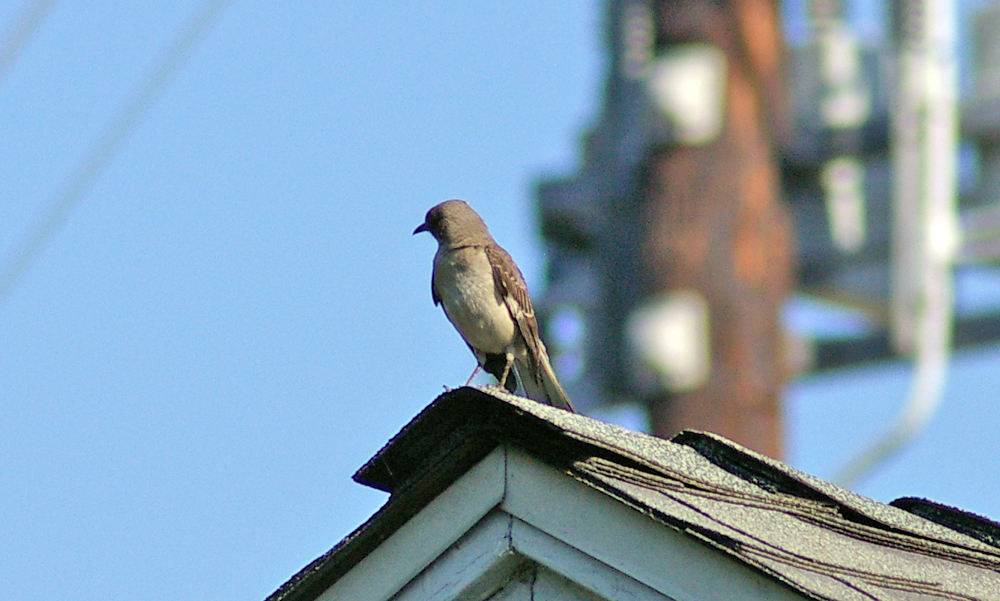
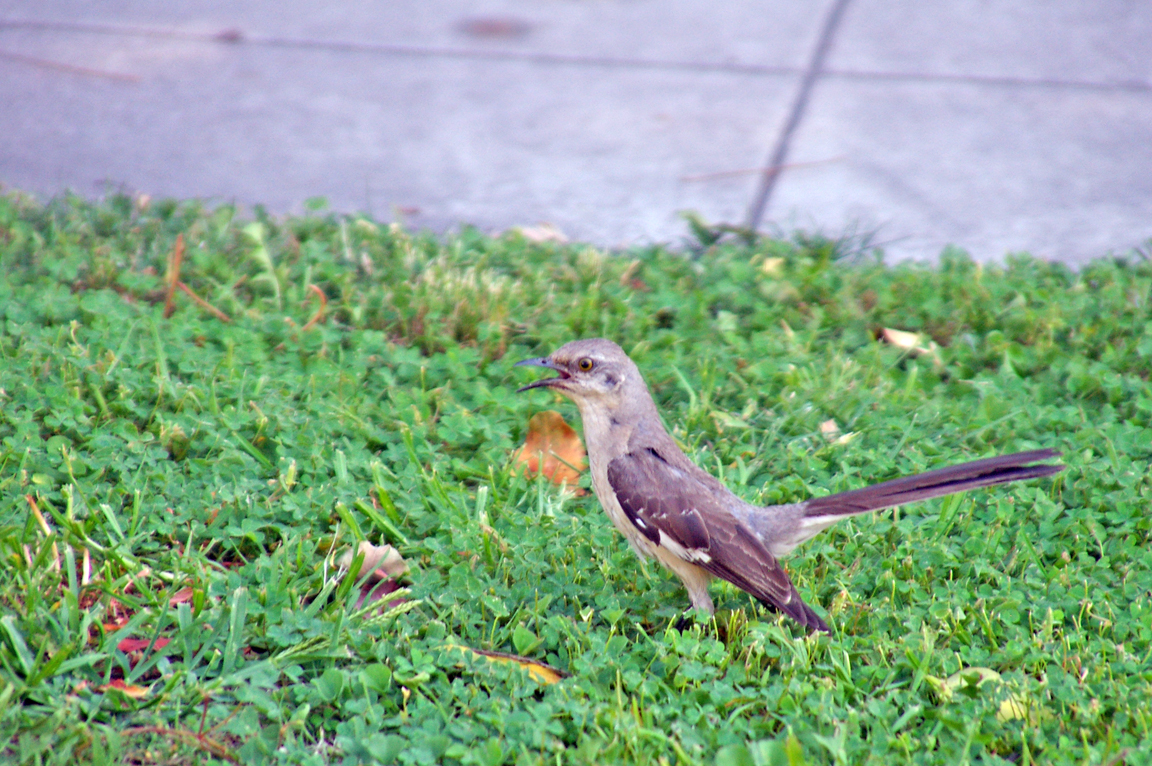
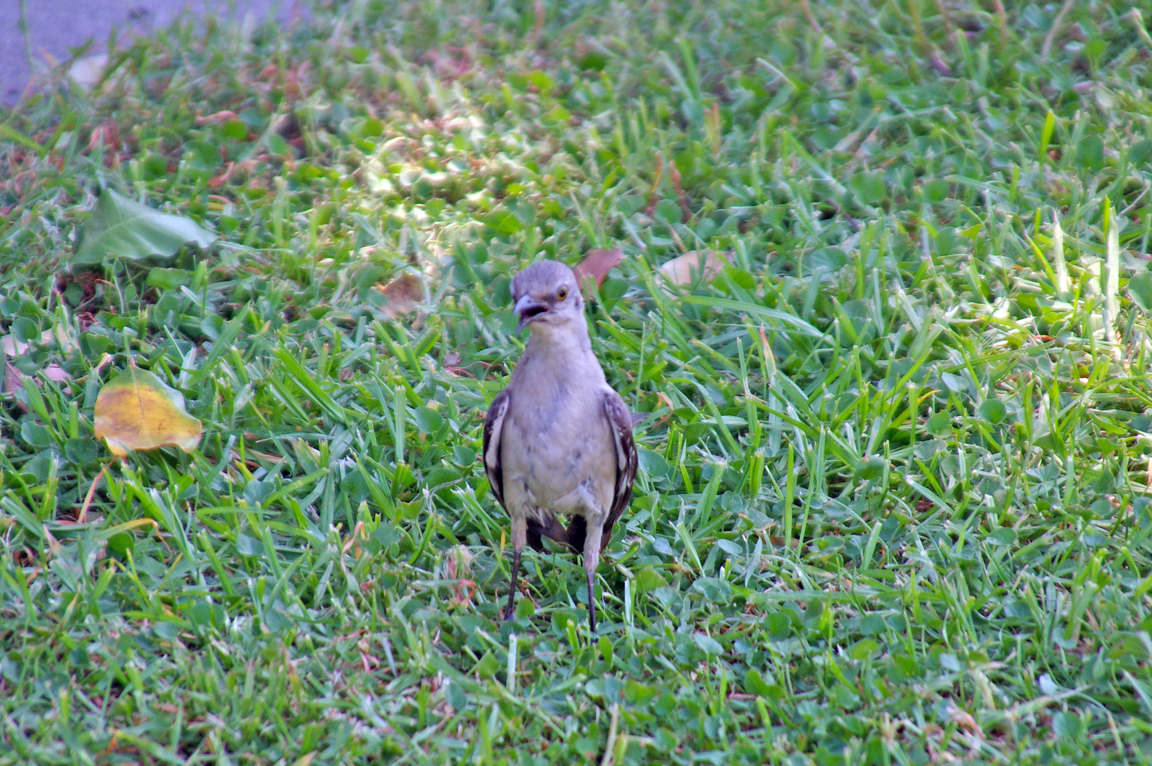
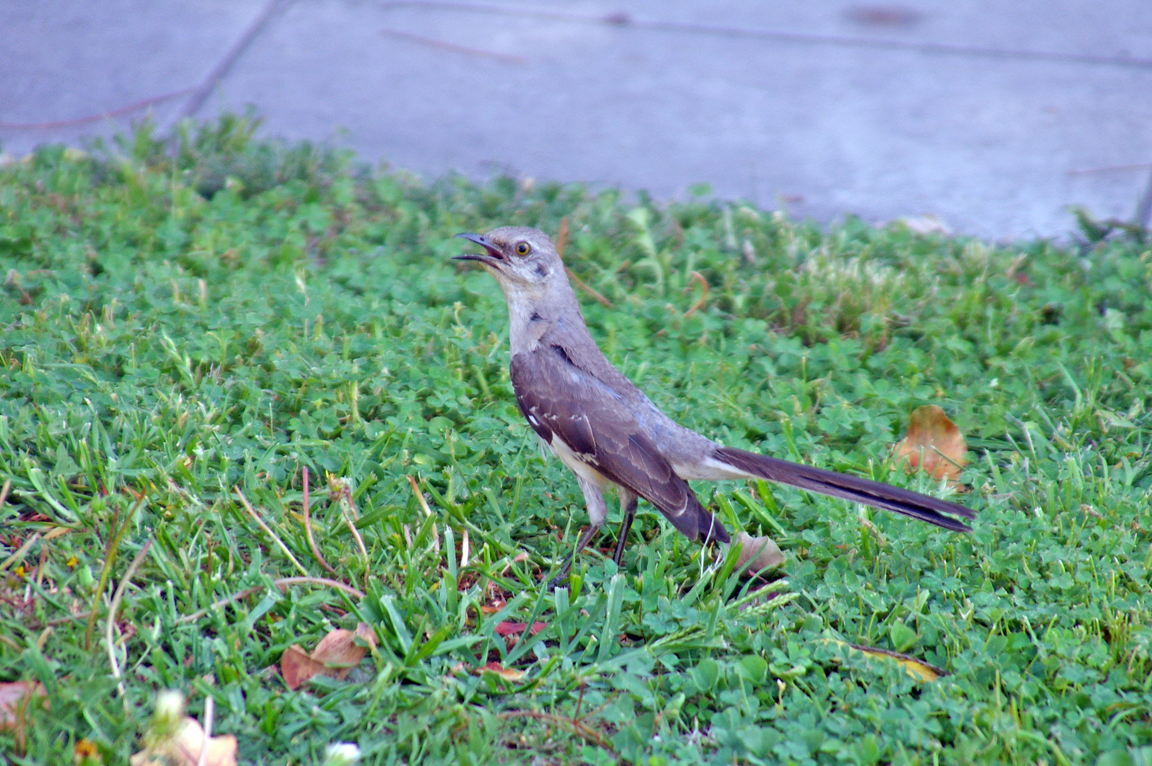
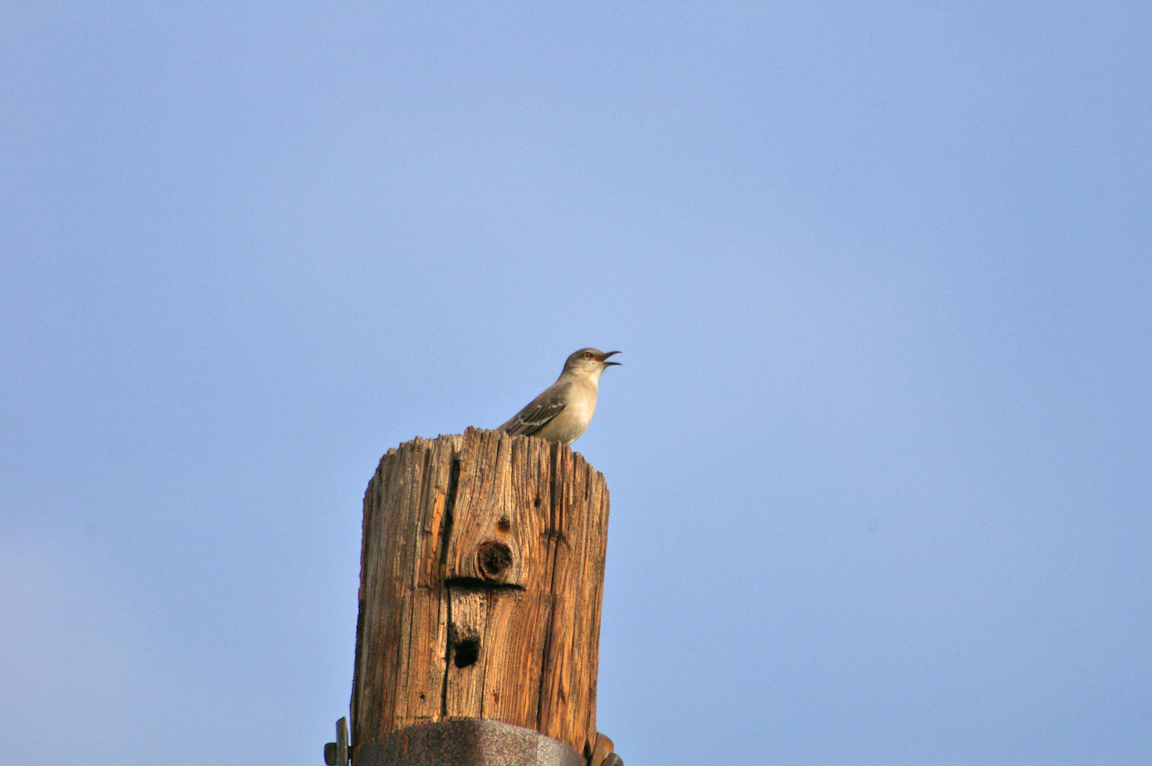
If you've been hearing an endless string of 10 or 15 different birds singing outside your house, you might have a Northern Mockingbird in your yard. These slender-bodied gray birds apparently pour all their color into their personalities. They sing almost endlessly, even sometimes at night, and they flagrantly harass birds that intrude on their territories, flying slowly around them or prancing toward them, legs extended, flaunting their bright white wing patches.
Interesting Information
-
The Northern Mockingbird frequently gives a "wing flash" display, where it half or fully opens its wings in jerky intermediate steps, showing off the big white patches. No one knows why it does this behavior, but some have suggested that it startles insects into revealing themselves. However, it does not appear to flush insects, and other mockingbird species that do not have white wing patches use the display, casting doubt on this idea.
-
The Northern Mockingbird is a loud and persistent singer. It sings all through the day, and often into the night. Most nocturnal singers are unmated males, which sing more than mated males during the day too. Nighttime singing is more common during the full moon. In well-lit areas around people, even mated males may sing at night.
-
A Northern Mockingbird continues to add new sounds to its song repertoire throughout its life.
-
The Northern Mockingbird typically sings throughout most of the year, from February through August, and again from September to early November. A male may have two distinct repertoires of songs: one for spring and another for fall. One study found only a one percent overlap in song types used in spring and fall.
-
The female Northern Mockingbird sings too, although usually more quietly than the male does. She rarely sings in the summer, usually only when the male is away from the territory. She sings more in the fall, perhaps to establish a winter territory.
Description
Adult Description
-
Size: 21-26 cm (8-10 in)
-
Wingspan: 31-35 cm (12-14 in)
-
Weight: 45-58 g (1.59-2.05 ounces)
-
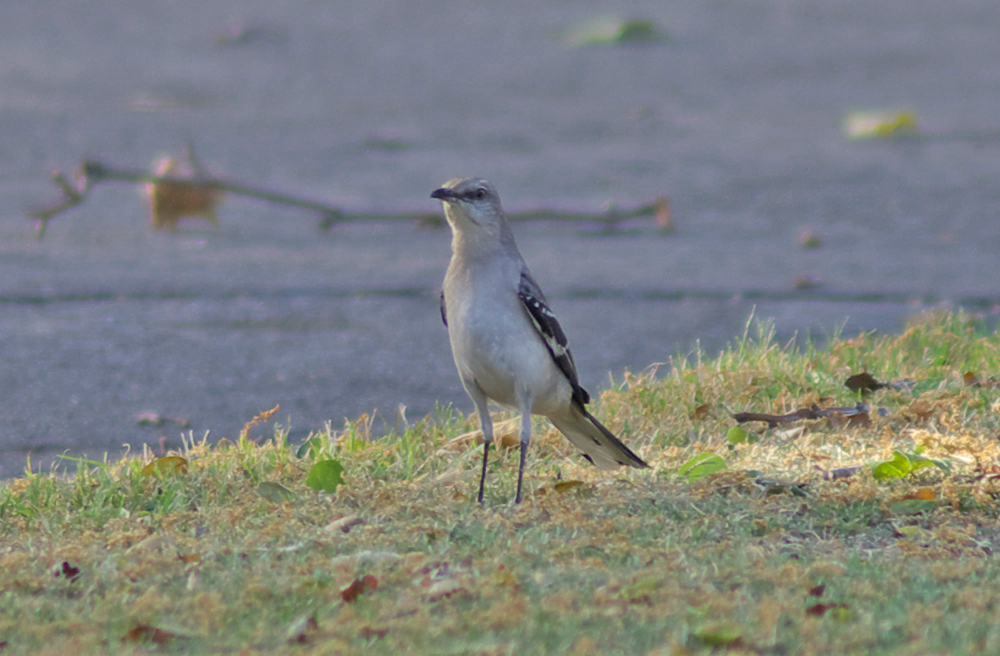
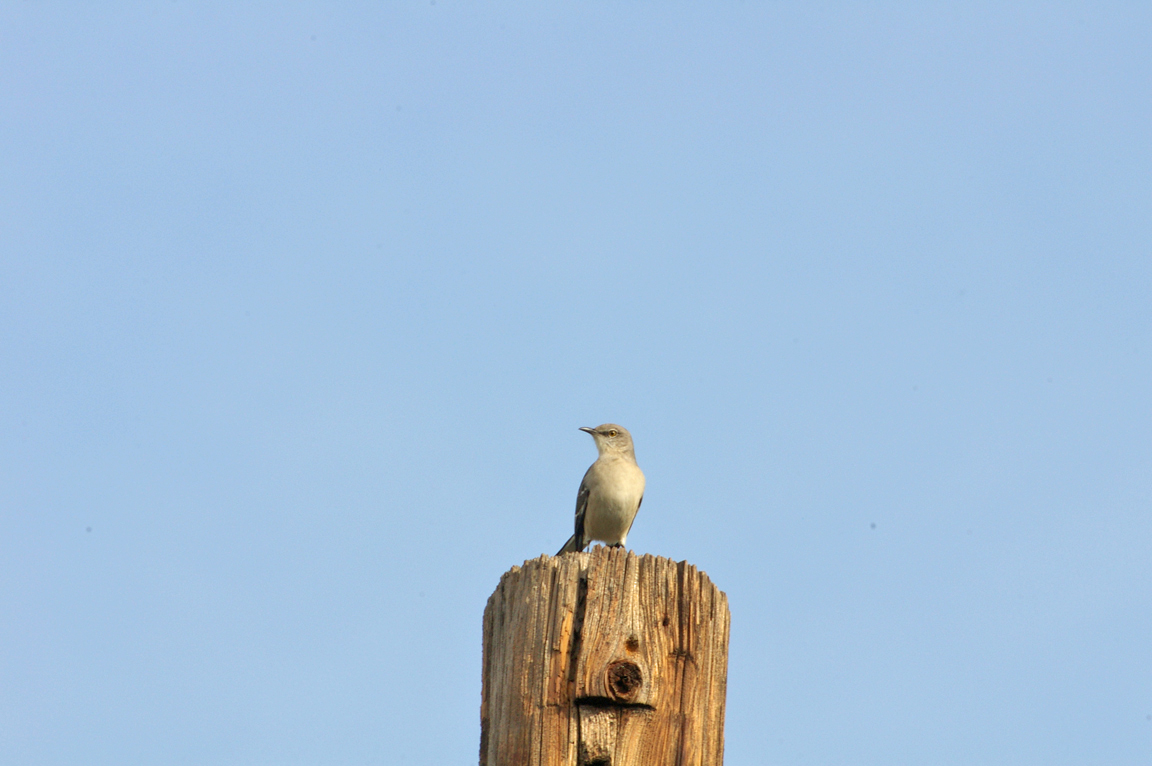
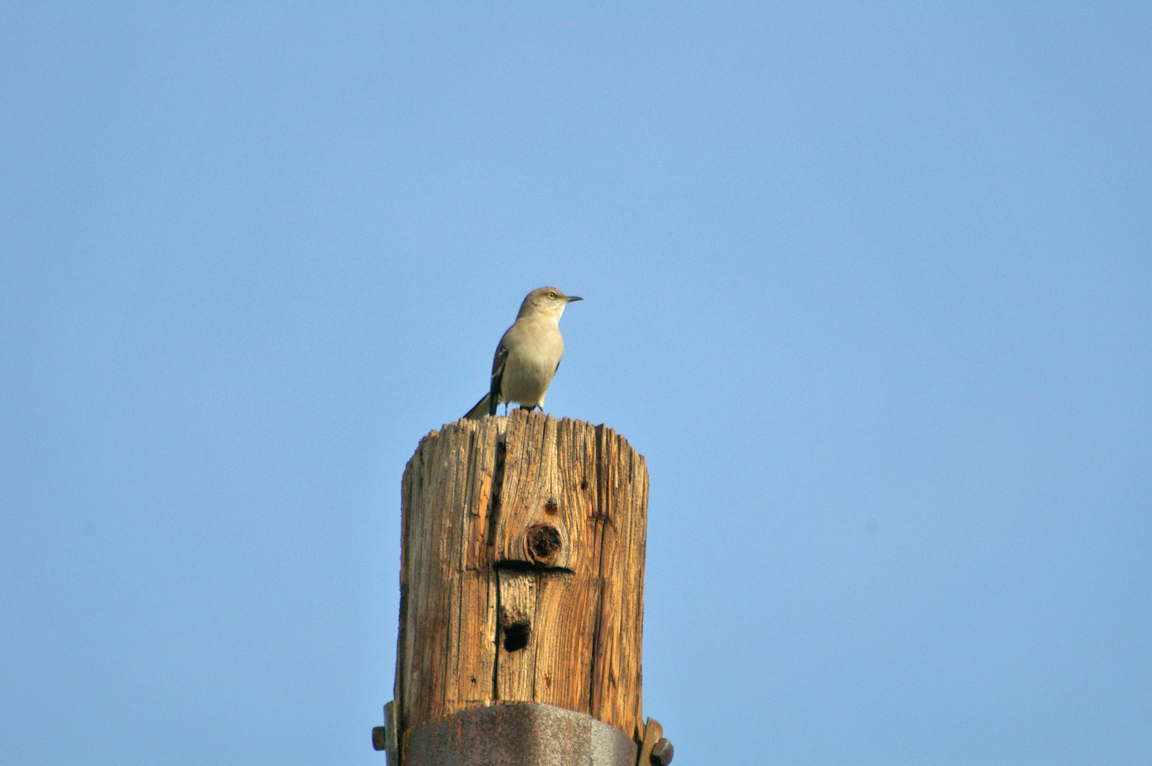
Medium-sized songbird.
-
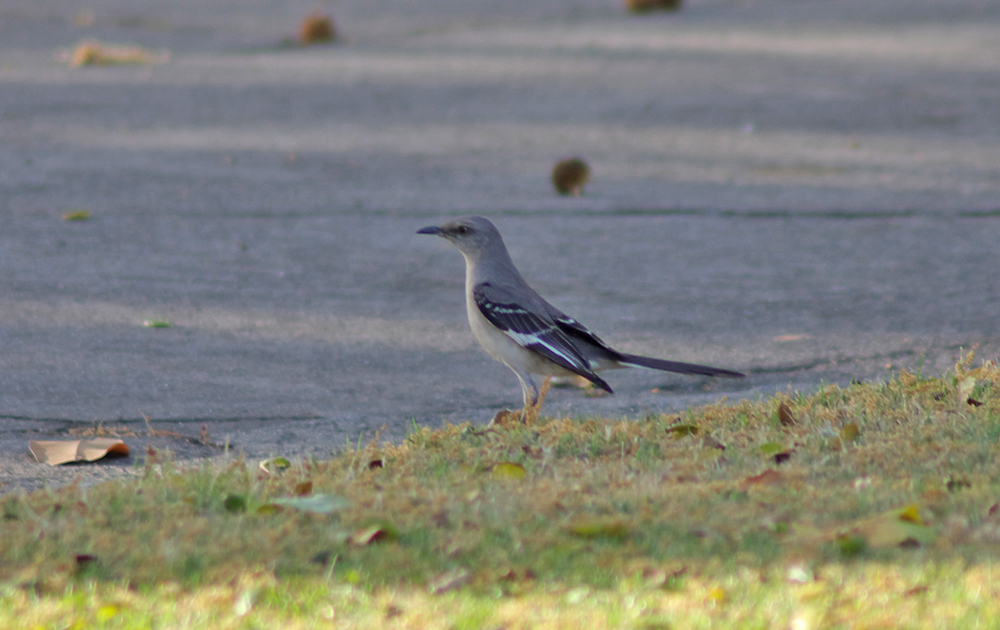
Long tail.
-
Pale gray above, whitish below.
-
Bill thin.
-
Two white wingbars.
-
Large white patches show in wings in flight.
-
White outer tail feathers.
-
Central tail feathers black.
-
Thin, dark eyeline.
-
Eyes yellow to orange.
-
Legs long and dusky.
-
Bill black with brown base.
Sex Differences
Sexes Similar
Immature
Juvenile similar to adult, but with faint spots on breast.
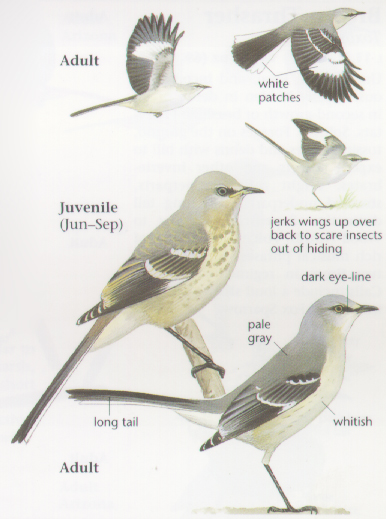
Photo taken from: The Sibley Field Guide by David Allen Sibley
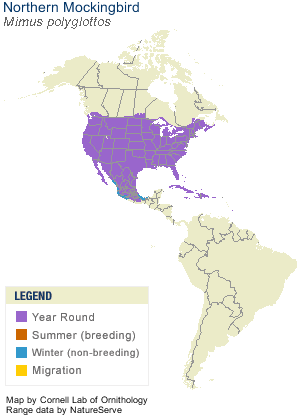
© 2003 Cornell Lab of Ornithology
|
Habitat |
|
Found in areas with open ground and shrubby vegetation, such as in parkland, cultivated land, and suburbs. |
|
Behavior |
|
Forages on ground and from perches. Picks fruit while perched on branch, but may hover to get some fruit. |
|
Food |
|
Fruits and insects. |
Taxonomy
| Kingdom: | Animalia |
| Phylum: | Chordata |
| Subphylum: | Vertebrata |
| Class: | Aves |
| Order: | Passeriformes |
| Family: | Mimidae |
| Genus: | Mimus |
| Species: | Mimus polyglottos |
| Subspecies: | Mimus polyglottos leucopterus |
| Mimus polyglottos polyglottos |
Similar Species |
|
|
Bird Sound |
|
Song is a series of varied phrases, with each phrase repeated many times in a row. Includes much mimicry of other bird songs and calls. Call a harsh dry "chew." |
|
Eggs look like this |
|
Photo taken from: ARCTOS Collaborative Collection Management Solution |
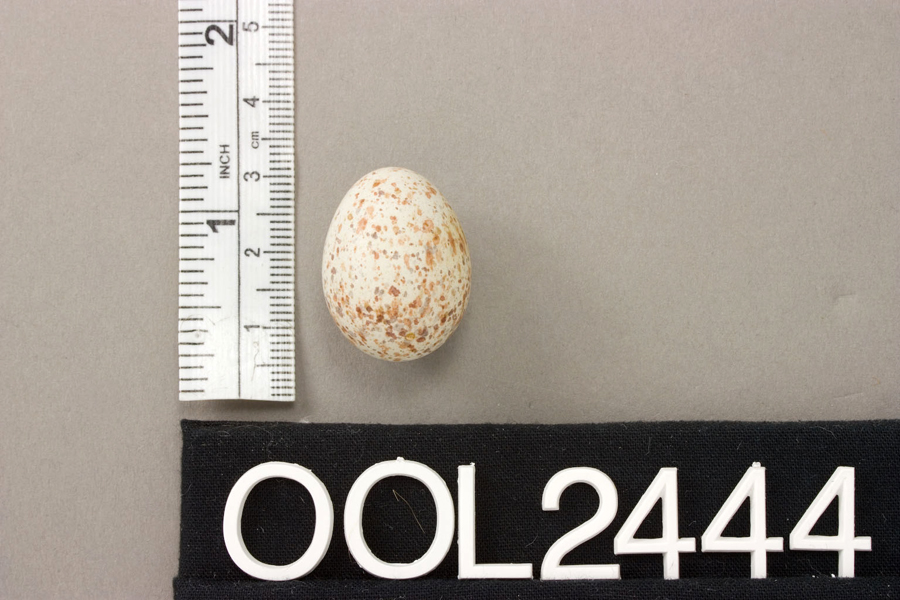



.png)


|
|
Sources Used To Construct This Page |
|||
|
||||
 |
 |
 |
 |
|
| All photos and videos © Rick Swartzentrover - Free for non-profit use. | ||||