|
|
|
 |
Red-whiskered Bulbul
|
| Pycnonotus jocosus | |
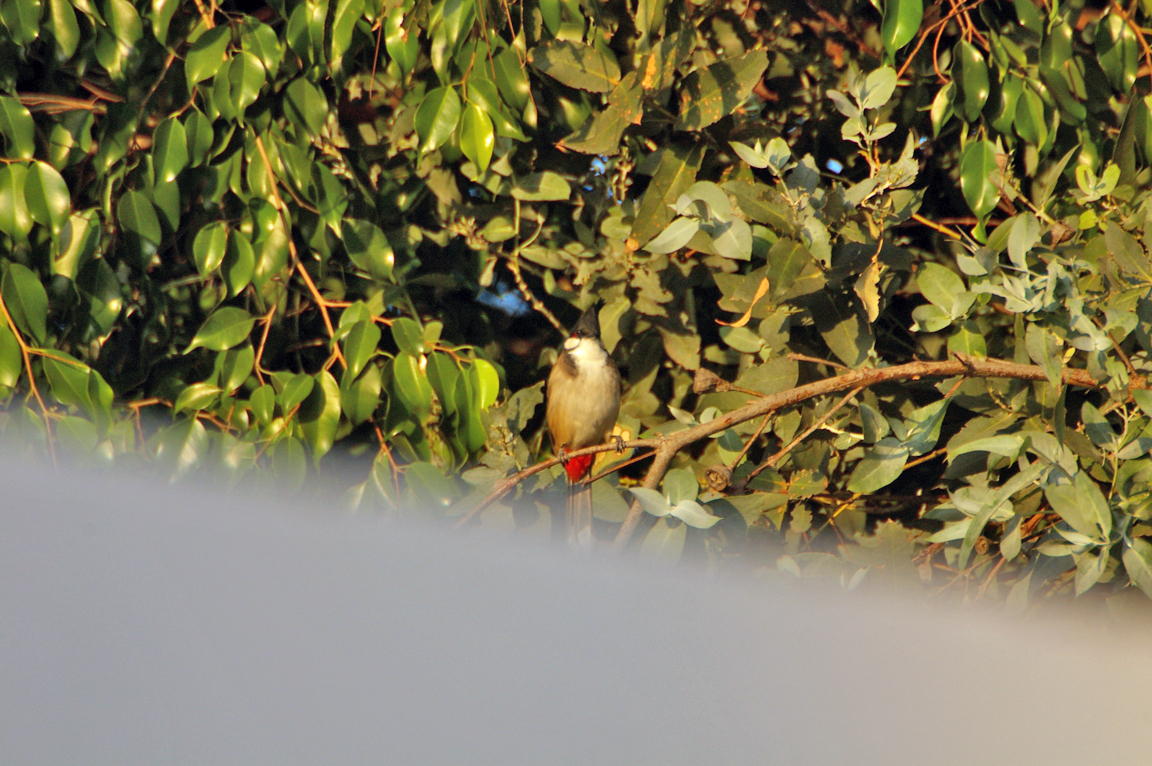
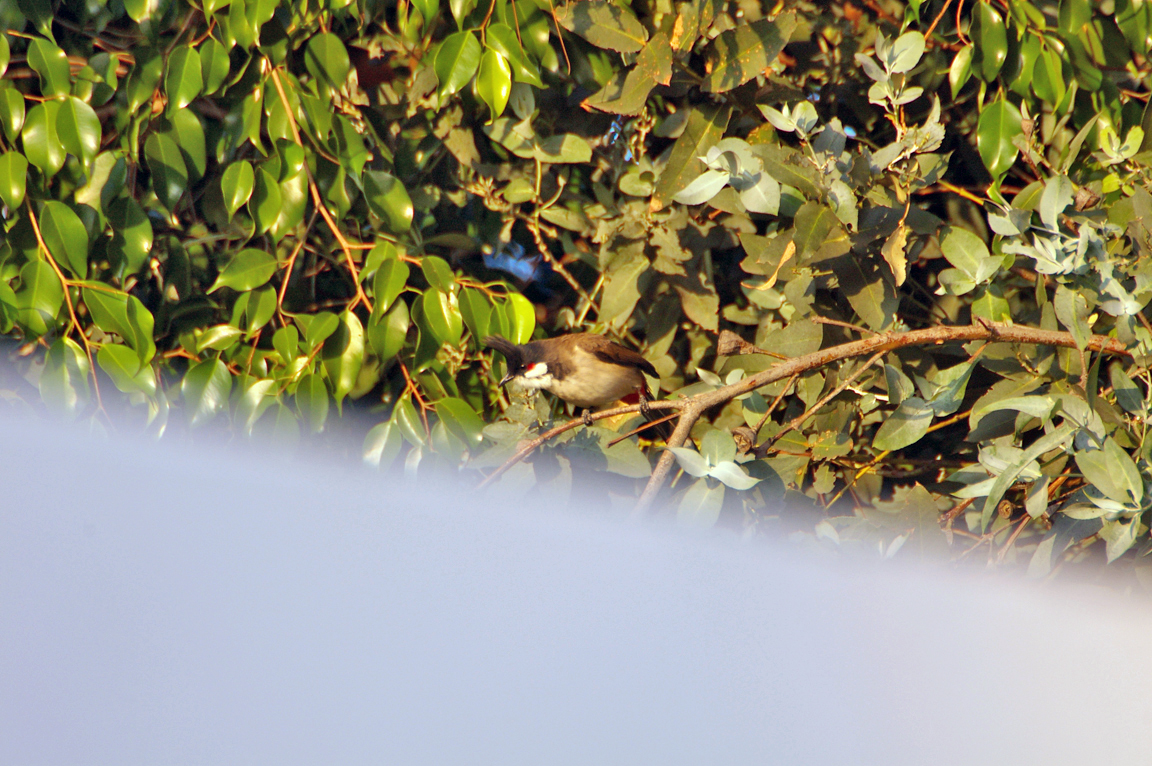
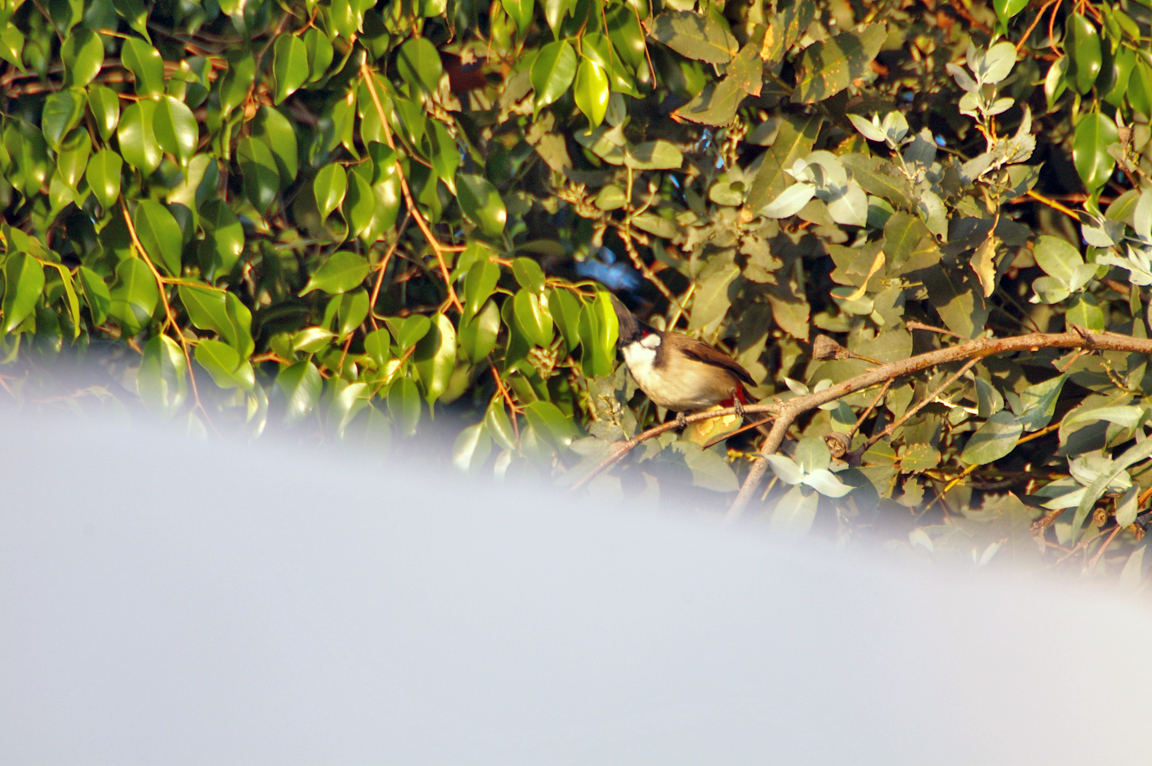
Red-whiskered Bulbul: Introduced to parts of North America as escaped caged birds. Brown upperparts, black crested head, mask, partial collar, orange-red patch behind eye, white cheek patch. Underparts are white with brown wash. Eats berries, fruits and insects. Direct flight with rapid wing beats.
Interesting Information
-
The Red-whiskered Bulbul was first described in 1758 by Carolus Linnaeus, Swedish botanist, physician and zoologist.
-
It gets its name from the red whisker patch located below its eye.
-
On Oahu they eat the orange morphs of the Monarch butterfly, causing a rise in the white morph population over the last twenty years.
-
The word bulbul may have come from a Turkish or Persian word for nightingale.
Description
Adult Description
The Red-whiskered Bulbul is not easily mistaken for any other species of bird in Australia. It has a pointed black crest, white cheeks, brown back, reddish under tail coverts and a long white-tipped tail. The red whisker mark, from which it gets its name, is located below the eye, but is not always easy to see. Both male and female birds are similar in plumage, while young birds are duller with a greyish-black crown.
-
Length Range: 18 cm (7 in)
-
Weight: 28 g (1 oz)
-
Size: Small (5 - 9 in)
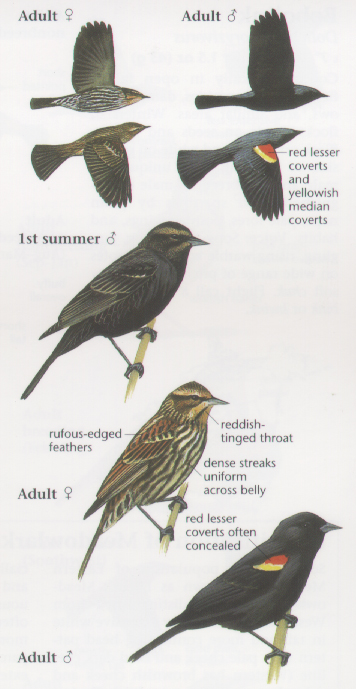
Photo taken from: The Sibley Field Guide by David Allen Sibley
|
Habitat |
|
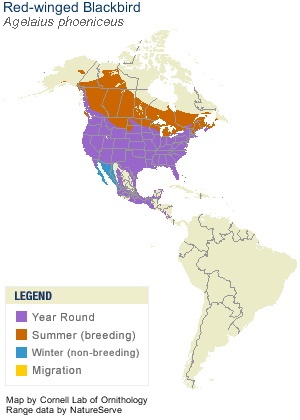
Red-whiskered Bulbul: Native to India, Nepal, Bangladesh, Burma and South China coast. Escaped caged birds introduced and established in North America south of Miami, Florida & Los Angeles. |
|
Food |
|
Red-whiskered Bulbul: Eats berries, fruit and insects which it finds in shrubs and trees. |
Taxonomy
| Kingdom: | Animalia |
| Phylum: | Chordata |
| Subphylum: | Vertebrata |
| Class: | Aves |
| Order: | Passeriformes |
| Family: | Pycnonotidae |
| Genus: | Pycnonotus |
| Species: | Pycnonotus jocosus |
Similar Species |
|
|
Bird Sound |
|
"queekey ", "lerrr" |
|
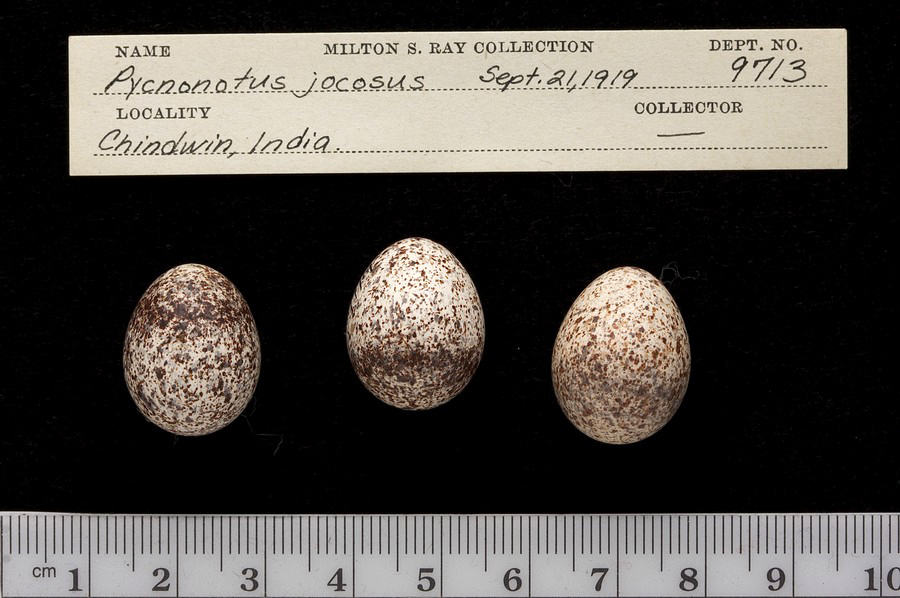
Eggs look like this |
|
Photo taken from: ARCTOS Collaborative Collection Management Solution |



.png)


|
|
Sources Used To Construct This Page |
|||
 |
 |
 |
 |
|
| All photos and videos © Rick Swartzentrover - Free for non-profit use. | ||||