|
|
|
 |
Western Scrub Jay
|
| Aphelocoma californica | |
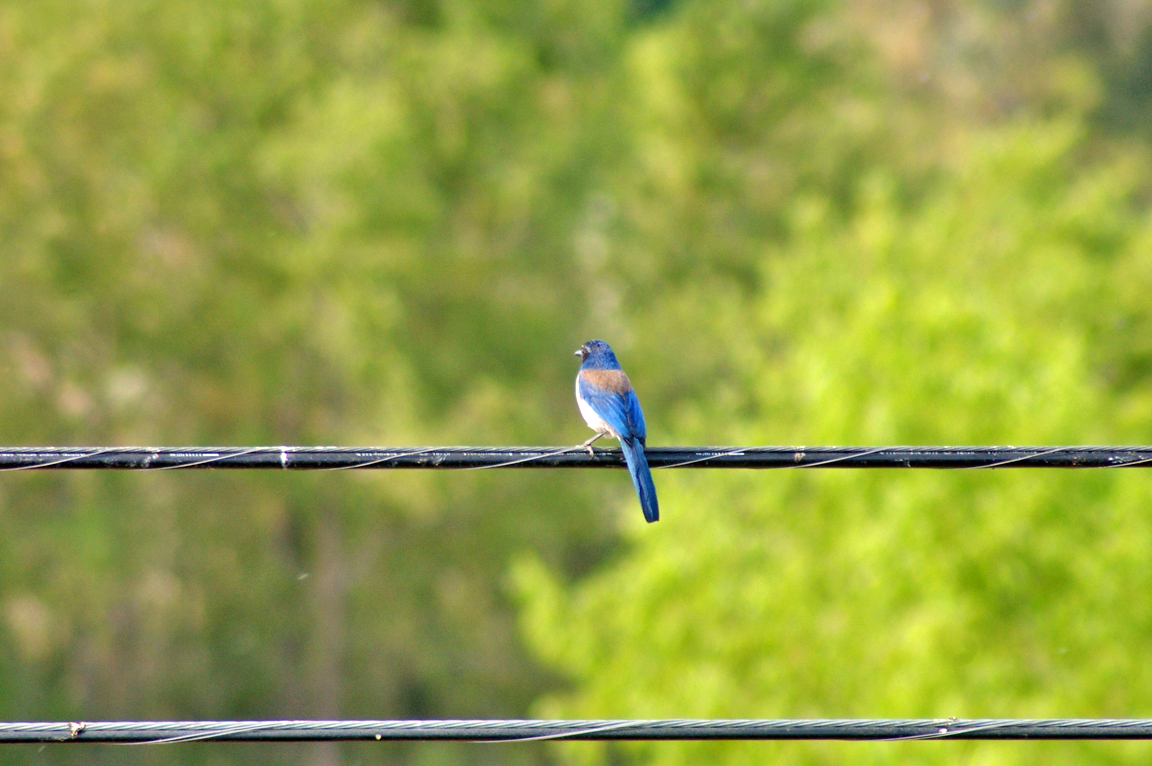
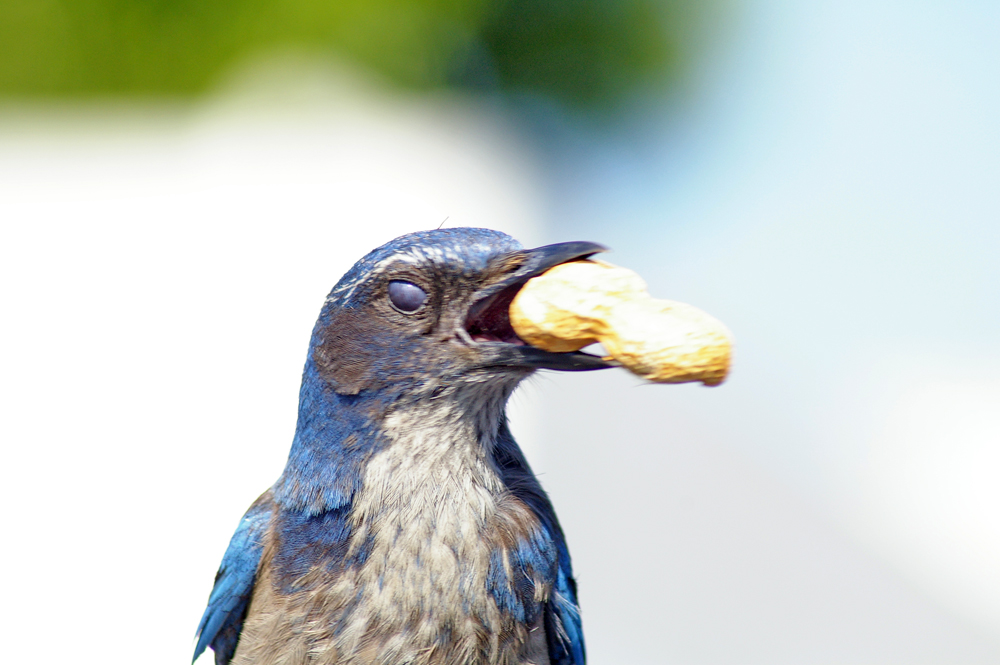
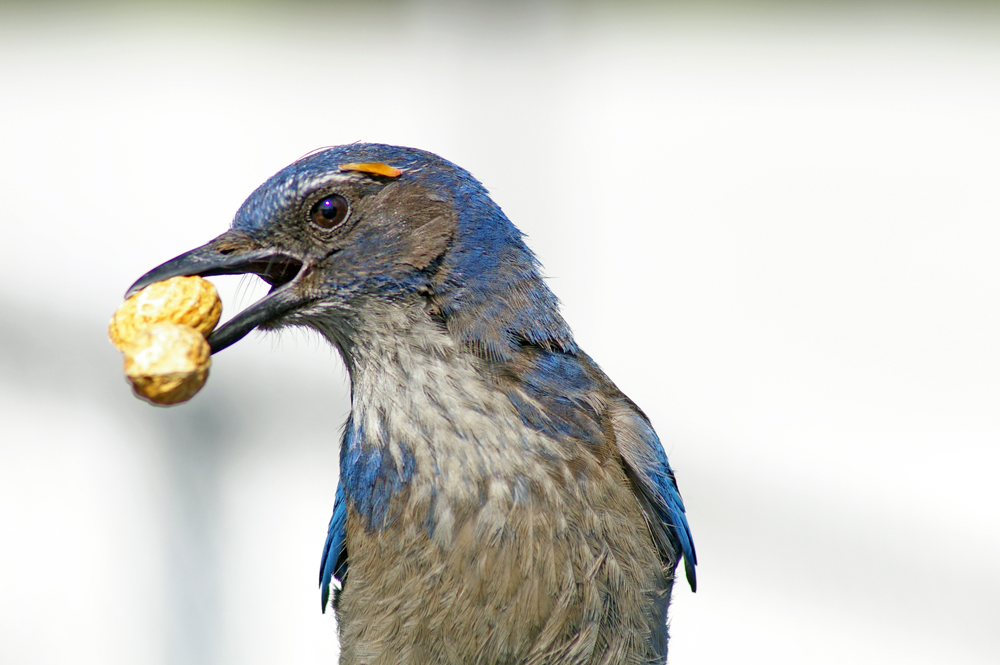
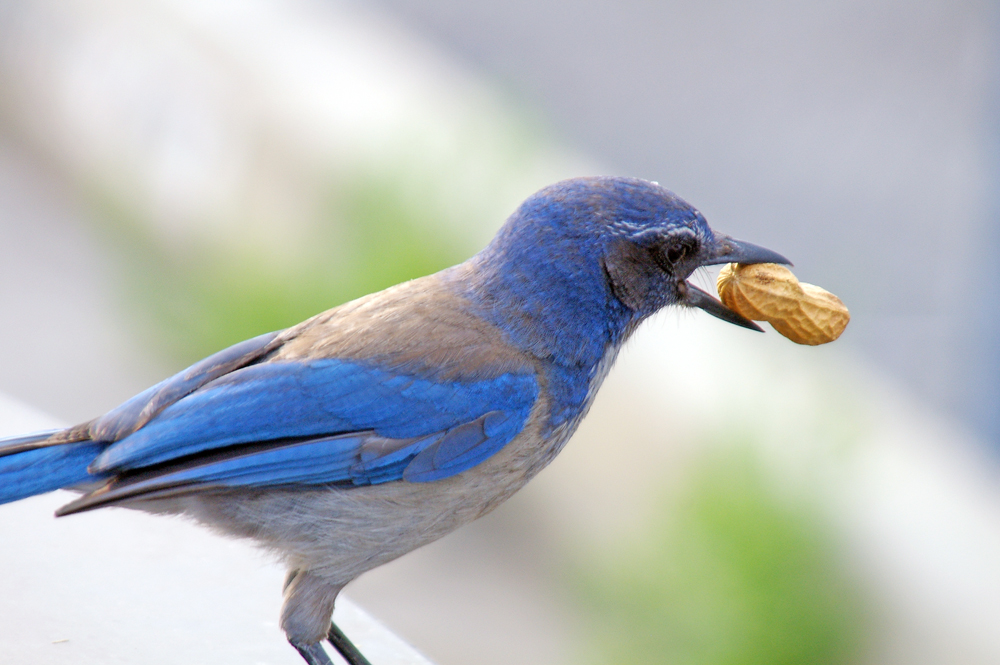
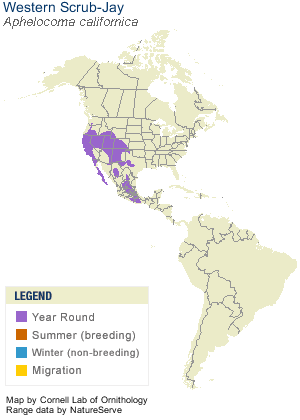
A bold and familiar jay of the American West, the Western Scrub-Jay is common throughout much of the western lowlands, especially in areas with oaks and pinyon pines. It has adapted well to suburbs and comes readily to bird feeders.
Interesting Information
-
The Western Scrub-Jay feeds on parasites on the body of mule deer, hopping over the body and head of the deer to get them. The deer often help the jays by standing still and holding their ears up.
-
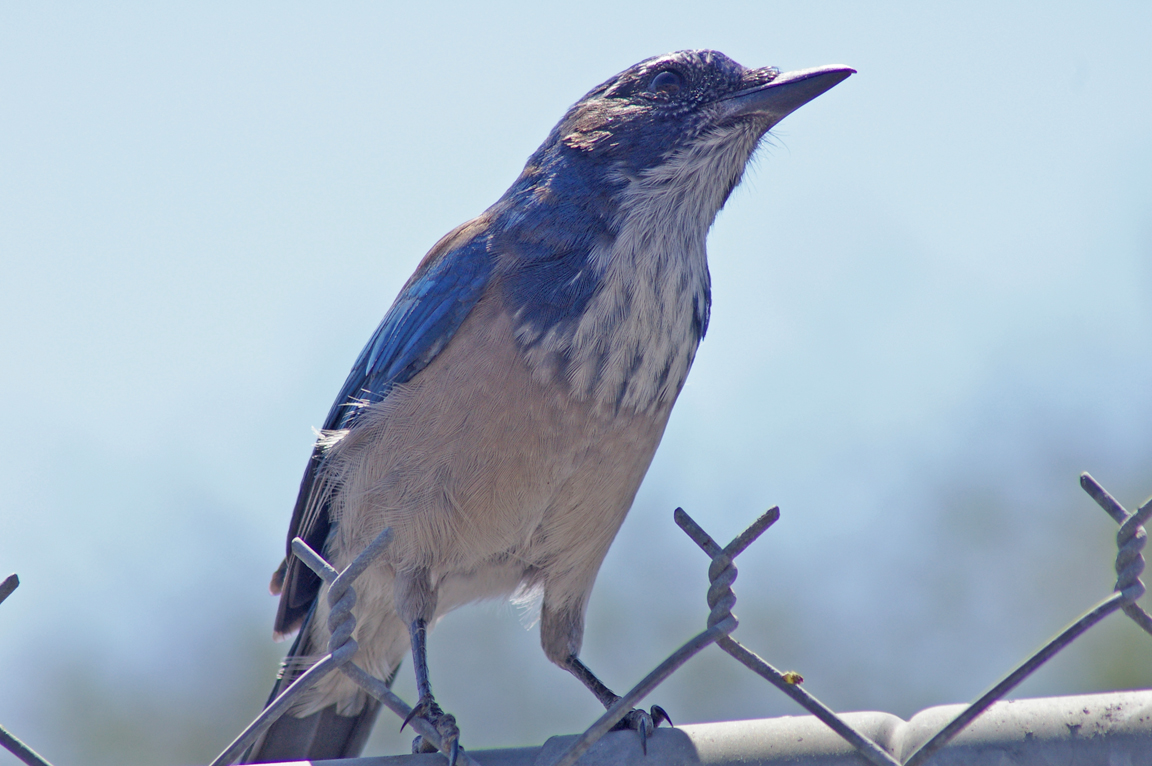
Western Scrub-Jays in areas where acorns are abundant have deep, stout, slightly hooked bills. Those in areas with lots of pinyon pine have long, shallow, pointed bills. The shape of the bill helps the jays open their preferred foods: a stout bill is good for hammering open acorns and the hook helps rip off the shell; a thinner, more pointed bill can get in between pine cone scales to get at the pine seeds.
-
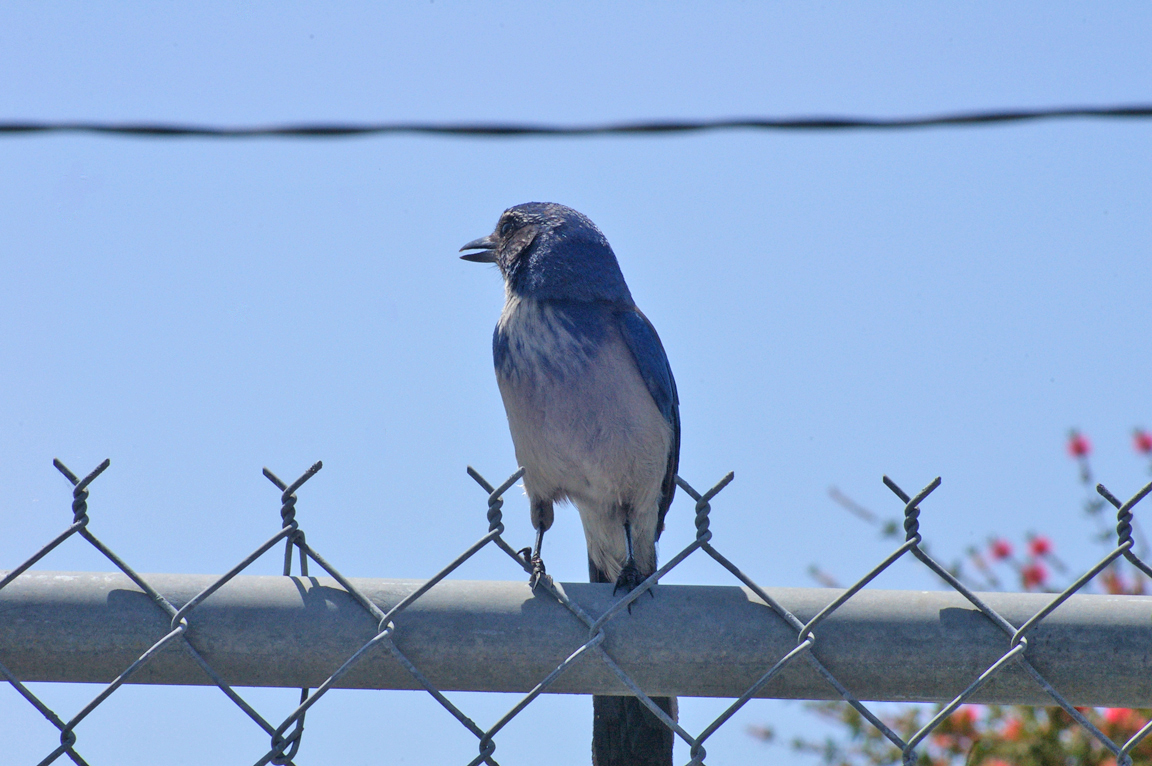
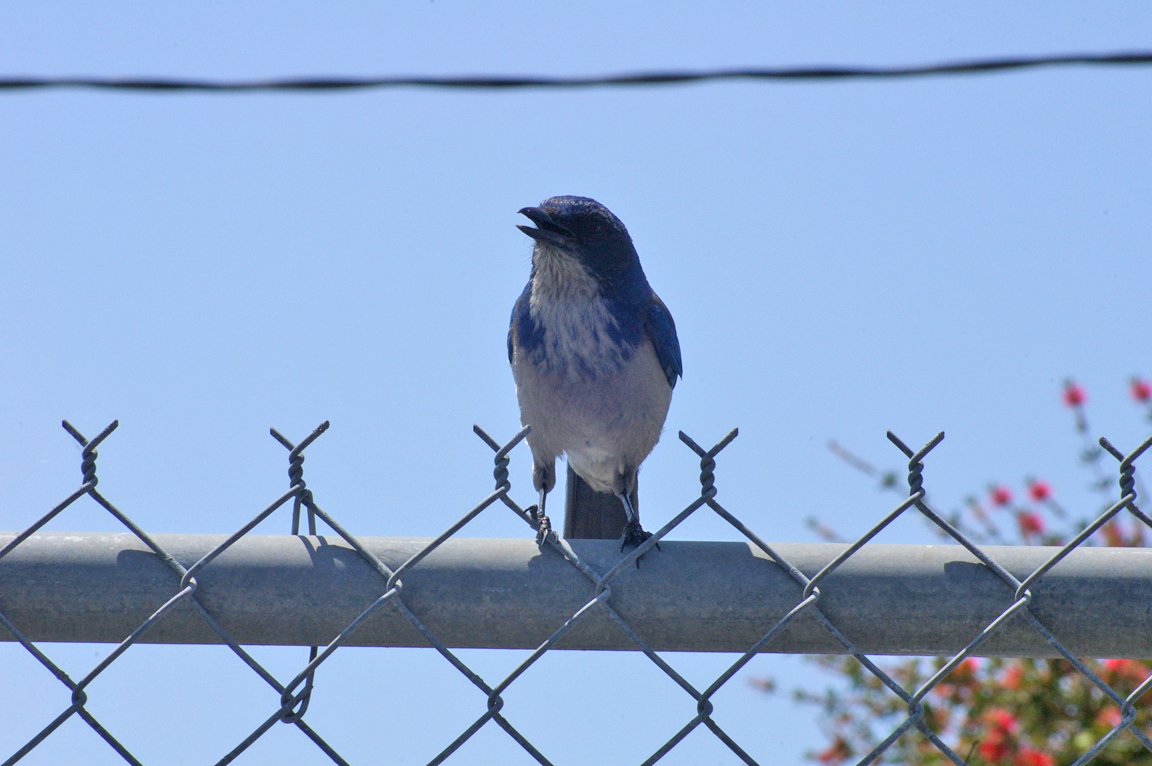
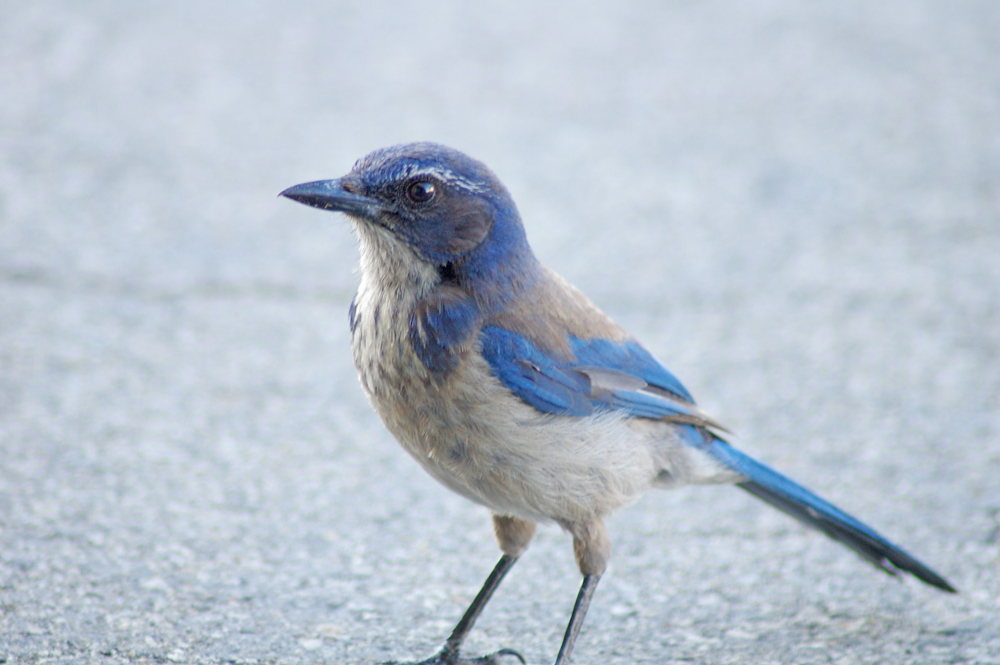
The species formerly known as "Scrub Jay" has been broken into three separate species: The Florida Scrub-Jay, the Island Scrub-Jay, and the Western Scrub-Jay. The Western Scrub-Jay can be divided into three forms, each of which may or may not be a separate species. The California Scrub-Jay of the Pacific coast has contrasting dark blue-and-white plumage, with a prominent blue necklace on a streaked white throat. The Woodhouse's Scrub-Jay of the Great Basin and eastward is duller and less well-marked, with little or no necklace. Sumichrast's Scrub-Jay of central Mexico has whiter underparts and little or no necklace.
-
The Western Scrub-Jay has been used in laboratory studies of its ability to hide (cache) and remember seeds. Jays that had stolen the caches of other jays noticed if other jays were watching them hide food. If they had been observed, they would dig up and hide their food again. Jays that had never stolen food did not pay any attention to whether other jays were watching them hide their food.
Description
Adult Description
-
Size: 28-30 cm (11-12 in)
-
Wingspan: 39 cm (15 in)
-
Weight: 70-100 g (2.47-3.53 ounces)
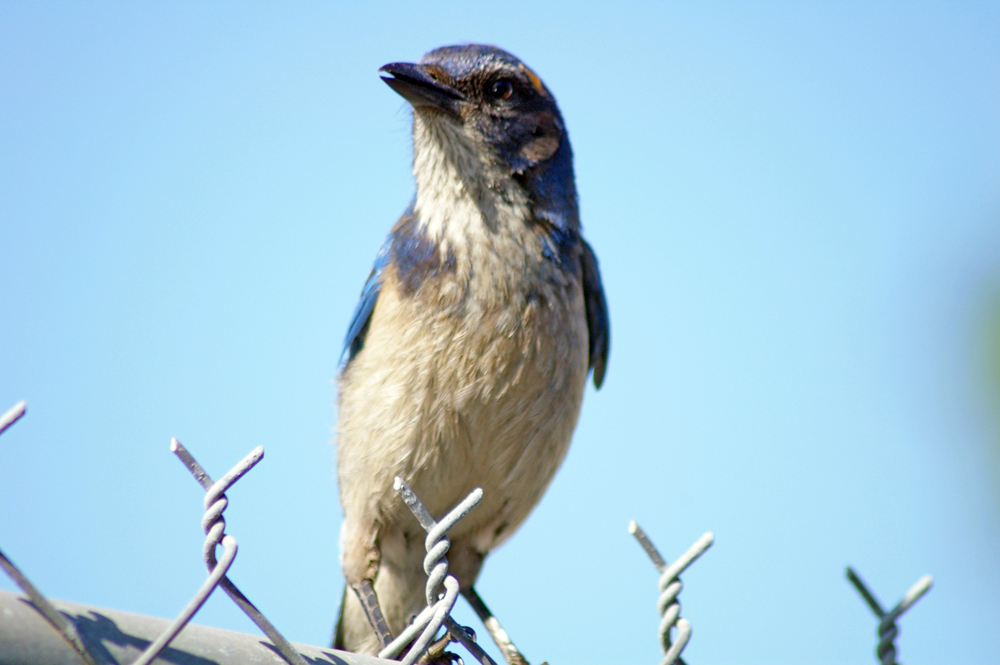
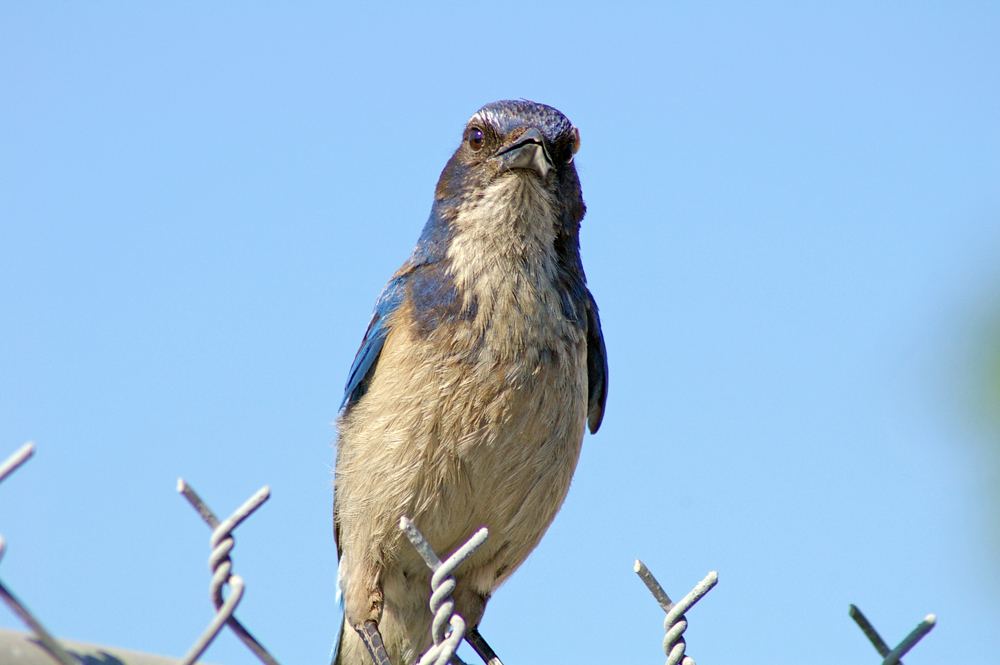
Large songbird.
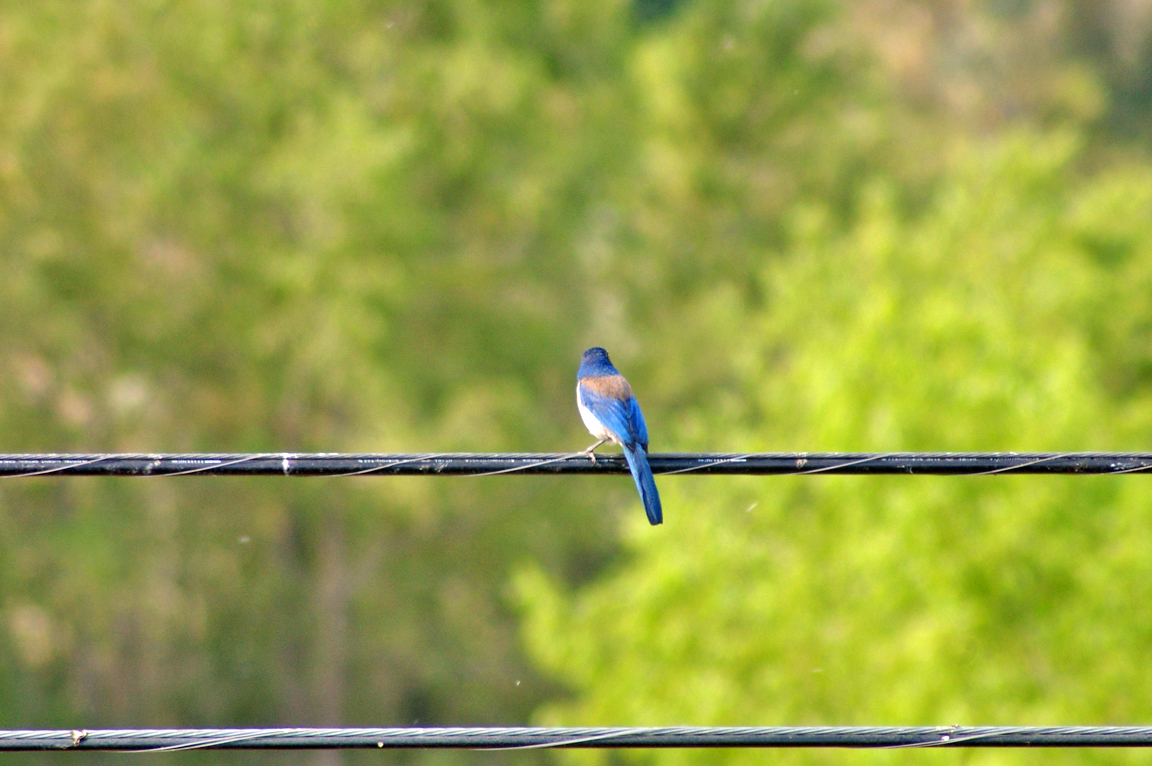
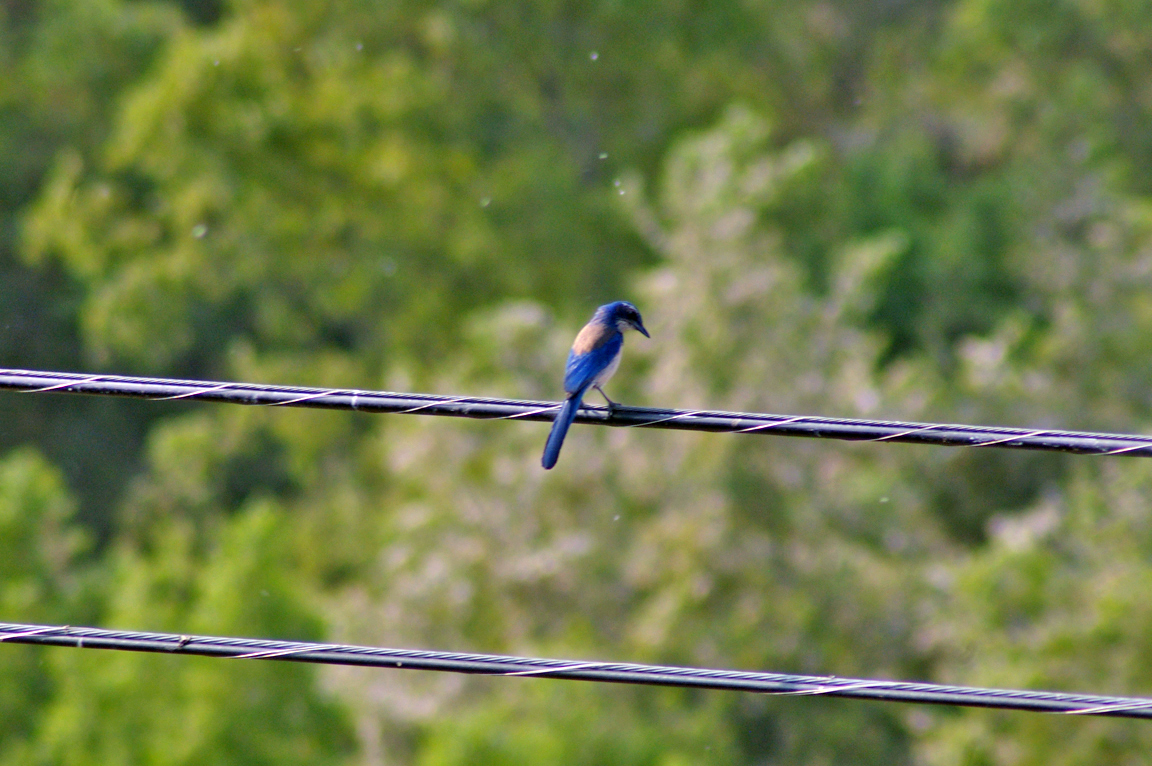
Blue head, wings, and tail.
Gray-brown back.
Grayish underparts.
Whitish throat with blue necklace.
Thin white eyebrow.
Tail long.
Bill dark.
Eye dark.
Legs dark.
Sex Differences
Sexes Similar
Immature
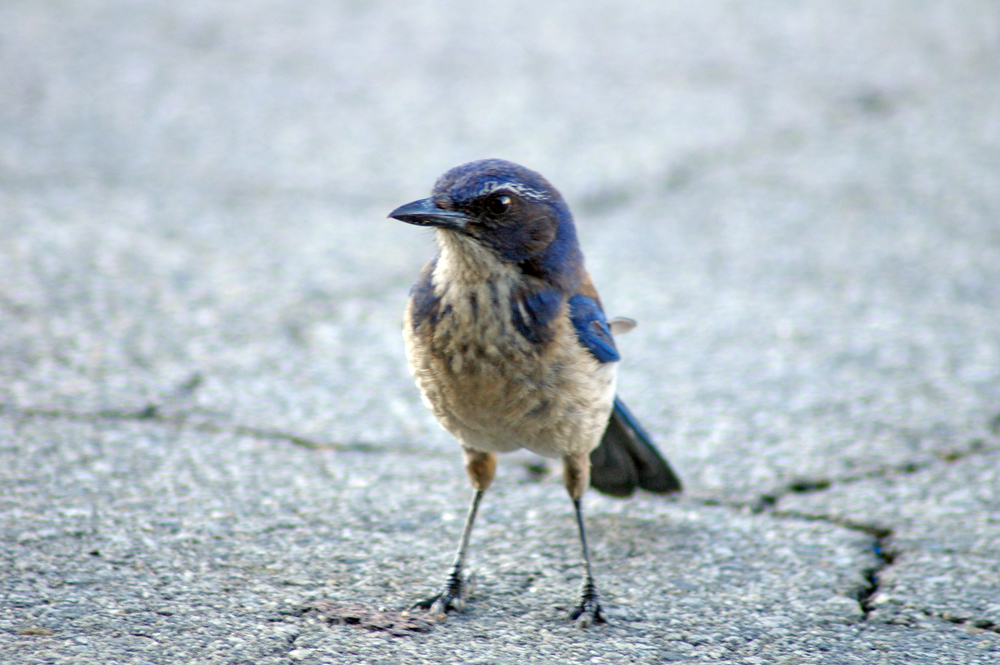
Juvenile with head entirely dull brown, blending into brown of back. Rest of body like adult.
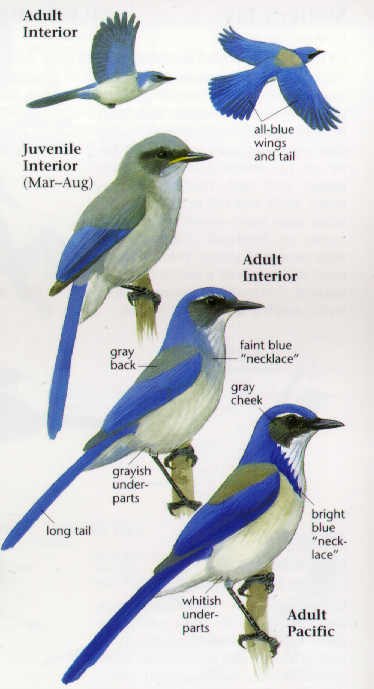
Photo taken from: The Sibley Field Guide by David Allen Sibley
© 2003 Cornell Lab of Ornithology
|
Habitat |
|
Found in oak and juniper scrub, chaparral, oak and pine woodland, riparian woodland, gardens, and orchards. |
|
Behavior |
|
Gleans food from ground and branches of shrubs. Stores thousands of acorns each year for later use. Holds food under feet to peck at it. |
|
Food |
|
Arthropods, small vertebrates, fruits, acorns, and seeds. |
Taxonomy
| Kingdom: | Animalia |
| Phylum: | Chordata |
| Subphylum: | Vertebrata |
| Class: | Aves |
| Order: | Passeriformes |
| Family: | Corvidae |
| Genus: | Aphelocoma |
| Species: | Aphelocoma californica |
Similar Species |
|
|
Bird Sound |
|
Calls harsh and scratchy. |
|
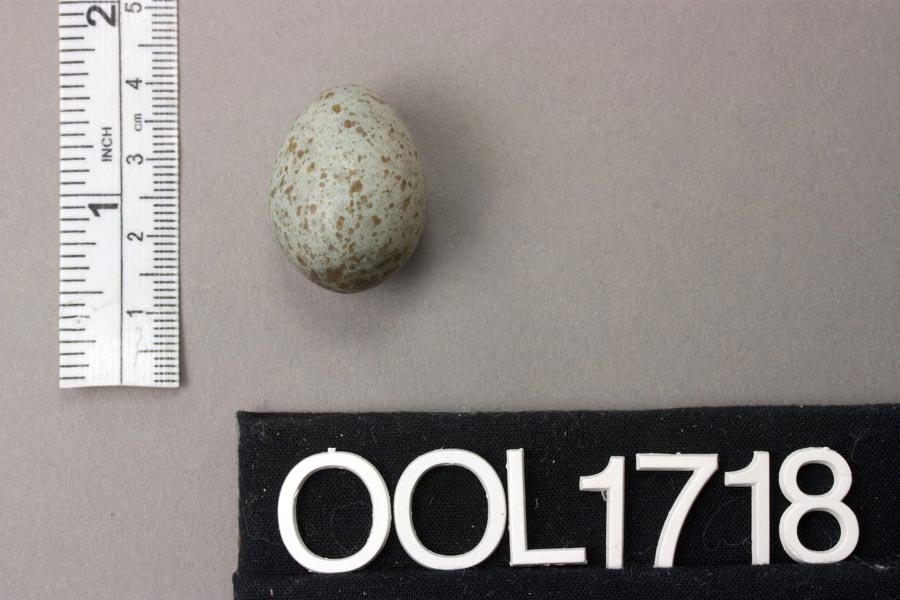
Eggs look like this |
|
Photo taken from: ARCTOS Collaborative Collection Management Solution |
Videos
Western Scrub-Jay
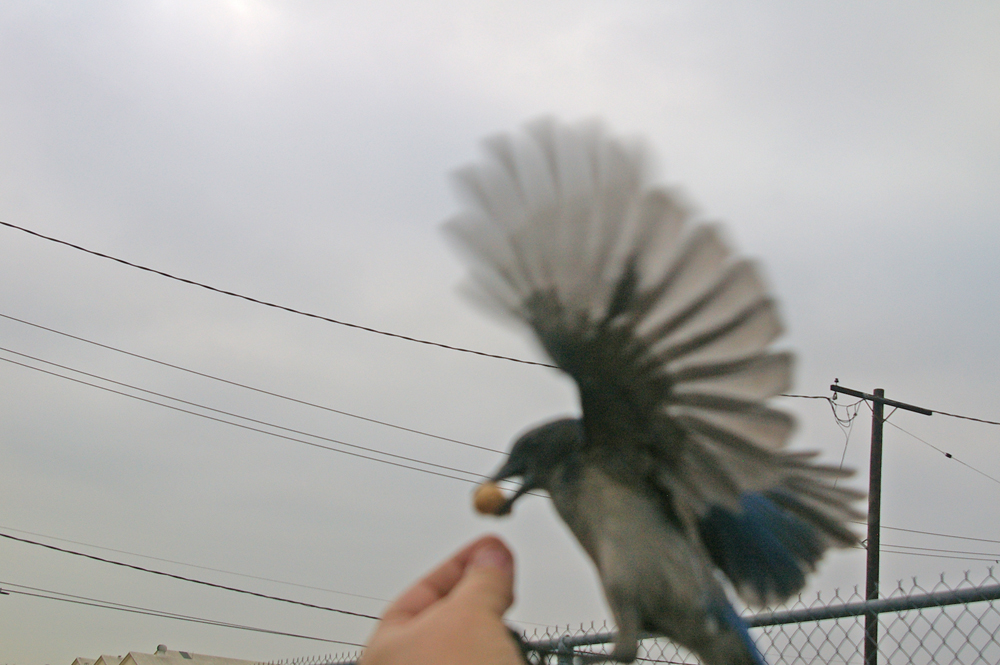
Hand feeding a Western Scrub Jay Peanuts



.png)


|
|
Sources Used To Construct This Page |
|||
|
Curry, R. L., A. T. Peterson, and T. A. Langen. 2002. Western Scrub-Jay (Aphelocoma californica). In The Birds of North America, No. 692 (A. Poole and F. Gill, eds.). The Birds of North America, Inc., Philadelphia, PA. |
||||
 |
 |
 |
 |
|
| All photos and videos © Rick Swartzentrover - Free for non-profit use. | ||||